




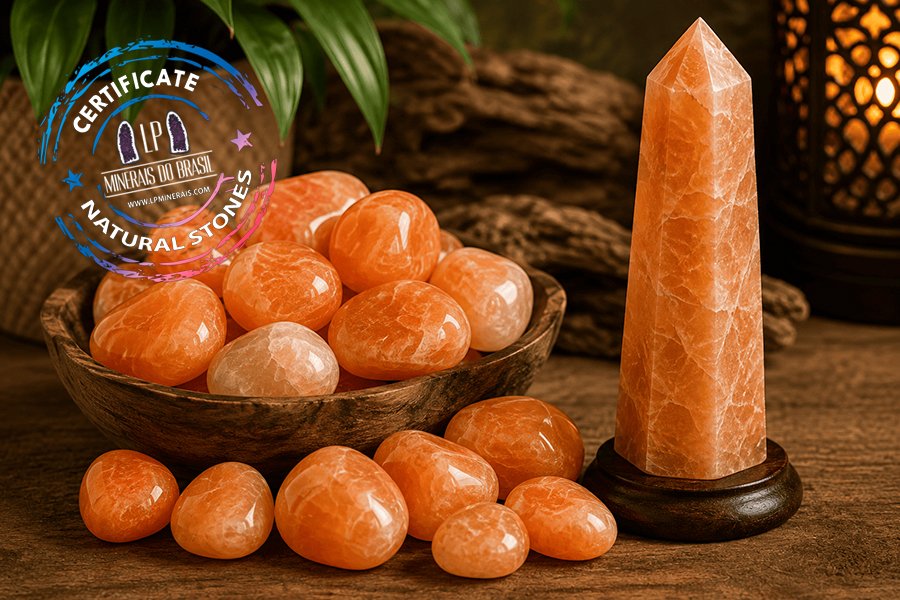
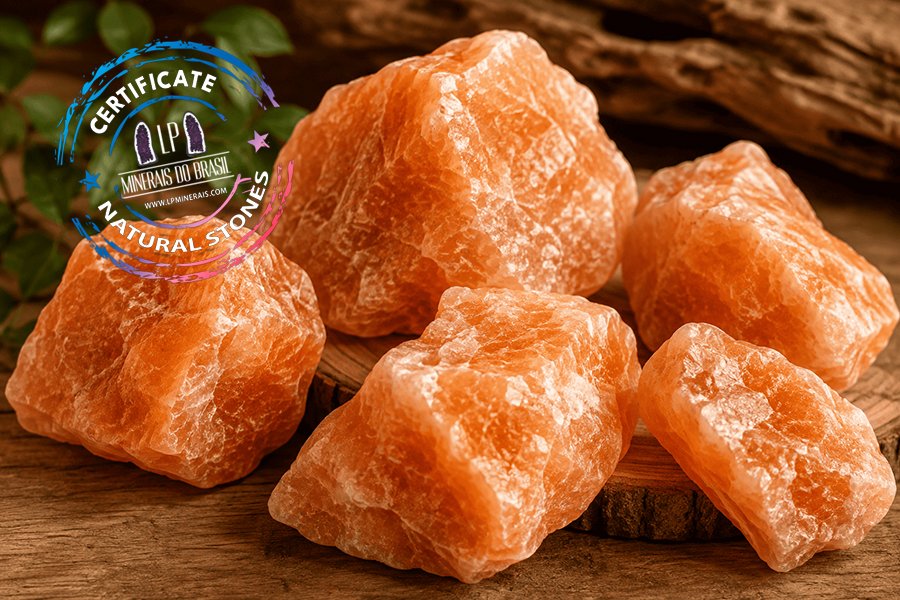
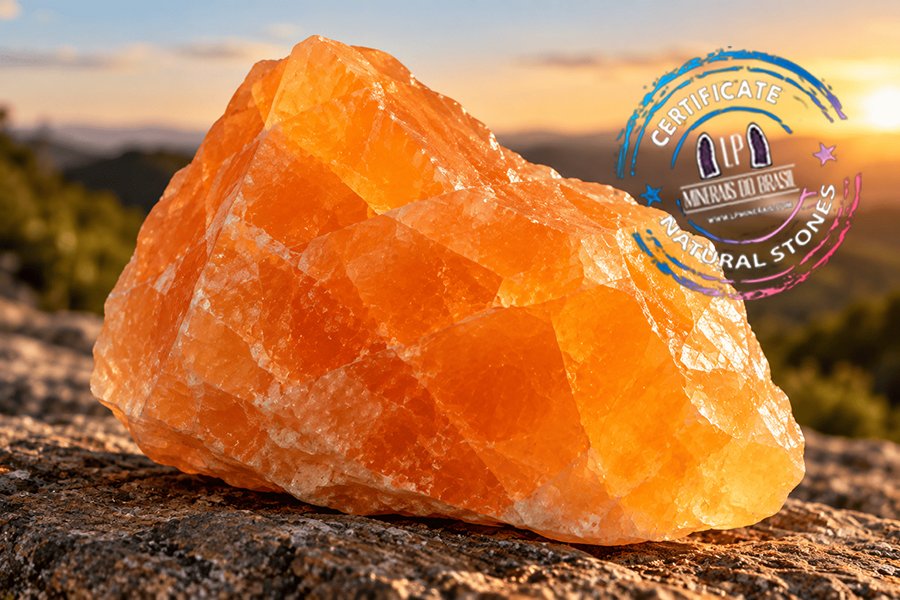
Orange Calcite is one of the most vibrant varieties in the calcite family. With hues ranging from light orange to deep amber, this stone catches the eye with its natural luminosity and the warm, inviting feel it conveys. Its appearance resembles the soft glow of a sunset, making it one of the most sought-after varieties among collectors, interior designers, and crystal enthusiasts.
Although it is often noted for its energetic symbolism, Orange Calcite is also of great mineralogical interest. Its formation is linked to geological processes that occurred over millions of years, resulting in crystals of great beauty and a wide variety of shapes and textures.
Found in various countries, including Brazil, this variety demonstrates how small impurities present during its crystallization can transform a relatively common mineral into an ornamental stone of great aesthetic value.
More than just a decorative crystal, Orange Calcite represents a convergence of science, nature, and tradition, sparking interest both for what it reveals about the Earth’s formation and for the meanings that different cultures have come to attribute to it.
Geological Origin and Formation
Orange Calcite forms primarily in sedimentary environments, where calcium-rich solutions slowly precipitate, giving rise to calcium carbonate deposits over thousands or millions of years. It can also occur in caves, hydrothermal veins, and metamorphic rocks, always associated with natural recrystallization processes.
Its color results from the presence of small amounts of iron, manganese, and other trace elements incorporated during the mineral’s formation. These natural impurities produce different shades of orange, ranging from the softest tones to specimens with intense color.
The main environments where it occurs include:
- limestone;
- caves with stalactites and stalagmites;
- hydrothermal deposits;
- metamorphic marbles;
- veins rich in calcium carbonate.
Major producers include Mexico, Brazil, Peru, the United States, Pakistan, and China.
Mineralogy and Properties
Orange Calcite belongs to the carbonate group and is composed of calcium carbonate (CaCO₃), the same mineral that makes up a large portion of the limestones and marbles found in nature.
One of its best-known characteristics is how readily it reacts with dilute hydrochloric acid, producing effervescence. Geologists widely use this behavior to quickly identify the presence of calcite in the field.
Its crystal system is trigonal, and the crystals can take on various shapes, although rhombohedrons are the most common. In many ornamental pieces, however, this structure is not visible due to polishing.
On the Mohs scale, it has a hardness of 3, making it a relatively soft stone. For this reason, it requires care when handled and is not recommended for jewelry subject to constant friction.
Colors, Transparency, and Natural Appearance
The hue of Orange Calcite varies depending on its chemical composition and crystallization conditions.
Some specimens have a uniform color, while others display delicate bands, translucent zones, and small mineral inclusions that highlight its natural origin.
It is common to find specimens that are:
- light orange;
- honey orange;
- amber;
- deep orange;
- orange with whitish areas.
Its transparency ranges from translucent to nearly opaque, and its vitreous luster contributes to the sense of luminosity that characterizes this variety.
History and Trivia
Since ancient times, minerals rich in calcite have been used in construction, sculpture, and the production of lime. However, Orange Calcite only began to gain prominence as an ornamental stone with the development of mineral collecting and decorative gem cutting.
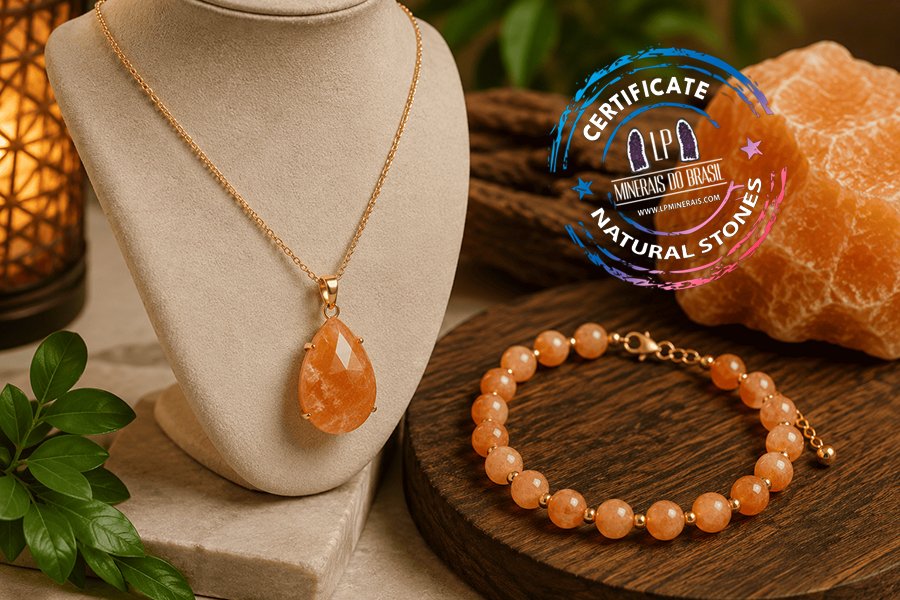
Today, it is found in sculptures, spheres, obelisks, tumbled stones, and decorative pieces that highlight its warm hues and naturally smooth texture.
An interesting fact is that calcite possesses an optical property known as double refraction. In transparent crystals of this species, light passes through the mineral, forming two images of the same object.
Although this effect is most evident in Optical Calcite (Iceland spar), it demonstrates one of the most fascinating physical properties of this mineral group.
Its combination of natural beauty, unique geological formation, and long history of human use makes Orange Calcite a stone that sparks interest far beyond its appearance, paving the way for an understanding of its applications, its market value, and the rich traditional symbolism associated with it.
Applications, Market, and the Significance of Orange Calcite
The delicate nature of Orange Calcite does not diminish its importance in the world of minerals. Quite the contrary. Its warm color and natural luminosity make it one of the most sought-after stones for decoration, collecting, and practices related to well-being. Although its hardness is relatively low, its beauty more than makes up for this characteristic, making it a standout piece in any setting.
Orange Calcite in Decor
Few stones can convey a feeling as welcoming as Orange Calcite. Its tones evoke the warmth of natural light, creating visually lighter and more pleasant spaces.
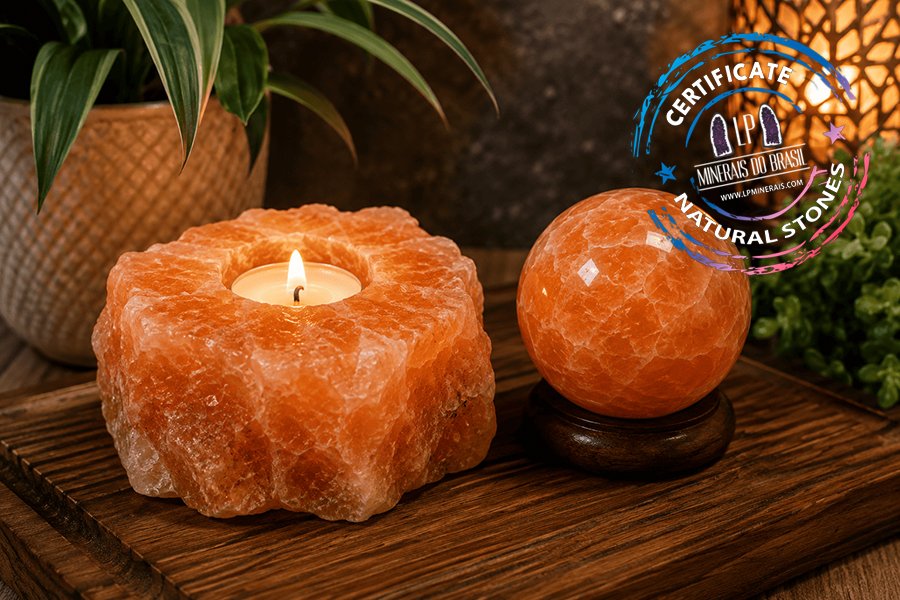
It is commonly found in living rooms, offices, medical offices, meditation spaces, and therapeutic environments, where its natural appearance blends easily with wood, natural fibers, and ornamental plants.
The most commonly used forms in interior design are:
- rough stones;
- tumbled stones;
- spheres;
- obelisks;
- sculptures;
- ornamental slabs.
Each piece features unique patterns and shades, ensuring that no two pieces are exactly alike.
Collectibility and Authenticity
Among collectors, Orange Calcite is prized primarily for its intense color, luster, and the quality of its crystallization. Well-formed crystals or cut pieces with an excellent finish tend to attract the most interest.
Because it is a relatively abundant mineral, imitations are less common than with other gemstones. Still, there may be dyed specimens or those marketed inaccurately.
Natural Orange Calcite typically exhibits:
- natural variations in color;
- small internal inclusions;
- a vitreous luster;
- a smooth texture;
- a softer feel compared to quartz.
Provenance remains one of the best indicators of authenticity and quality.
Market Value
Orange Calcite offers an excellent balance between beauty and cost, and is considered one of the most affordable ornamental stones on the market.
Its value depends mainly on factors such as:
- color intensity;
- size of the piece;
- transparency;
- quality of polish;
- crystalline structure;
- origin.
Large, transparent crystals or specimens with well-defined crystallization tend to command higher prices than ordinary pieces intended for decoration.
The Meaning of Orange Calcite in the Crystal Therapy Tradition
In the tradition of crystal therapy, Orange Calcite is often associated with emotional renewal, creativity, and enthusiasm. Its color, naturally linked to the hues of fire and sunrise, symbolizes new beginnings, vitality, and a zest for life.
According to this tradition, it is a stone that promotes movement. Rather than remaining tied to the past, it represents the ability to transform experiences into lessons, fostering a more optimistic outlook on life.
It is also traditionally used by people who wish to develop creativity, confidence, and spontaneity. In work or study environments, many choose it as a symbol of inspiration, while in social settings it is seen as a stone capable of conveying warmth and lightness.
During meditation practices, Orange Calcite is often used to support those seeking to overcome periods of discouragement, regain motivation, or strengthen their connection with their own emotions in a balanced way.
Traditionally, it is associated with:
- creativity;
- enthusiasm;
- joy;
- motivation;
- self-esteem;
- emotional renewal;
- confidence;
- personal expression.
In most crystal therapy traditions, its energy is associated with the Sacral Chakra, a symbolic center linked to creativity, emotions, and the joy of living. Some traditions also associate it with the Solar Plexus Chakra, reinforcing interpretations related to self-confidence and the strengthening of willpower.
It is common to find Orange Calcite combined with Citrine, Carnelian, Clear Quartz, and Selenite, forming combinations traditionally used to symbolize creativity, emotional balance, clarity, and energetic renewal.
Care, Cleaning, and Maintenance
With a hardness of 3 on the Mohs Scale, Orange Calcite requires some care to preserve its beauty. Contact with harder stones can cause scratches, while impacts can result in chips or breaks.
Physical cleaning should be done only with a soft, slightly damp cloth or mild soap and water, and the piece should be dried completely afterward.
According to crystal therapy tradition, its energetic cleansing can be performed through:
- smudging with natural herbs;
- gentle moonlight;
- selenite;
- quartz druse.
In general, prolonged use of water and chemicals should be avoided, both to preserve the mineral and its natural finish.
LP MINERAIS Technical Sheet ⛏💎📦🗺
🗺 Origin: Brazil, Mexico, Peru, the United States, China, and Pakistan.
⚛️ Chemical Composition: Calcium carbonate (CaCO₃).
🔩 Mohs Scale: 3.
🔢 Numerology: Traditionally associated with the number 8.
🔅 Meaning: Joy, creativity, renewal, and emotional balance.
🅰️ Summary: A variety of calcite known for its orange color and natural luster.
✅ Specifications: Carbonate group, trigonal crystal system.
🧩 Form: Natural crystals, compact masses, tumbled stones, and cut pieces.
⚒ Formation: Precipitation of calcium carbonate in sedimentary, hydrothermal, and metamorphic environments.
⚠️ Care: Avoid impacts, scratches, acids, and abrasive products.
🛁 Cleaning: Soft cloth, water, and mild soap; energetically, Moon, Selenite, or smudging.
🎨 Colors: Light orange, honey, amber, and deep orange.
☯️ Zodiac: Cancer, Leo, and Scorpio.
🪐 Solar System: Traditionally associated with the Sun.
➰ Chakras: Sacral and Solar Plexus.
♻ Element: Fire.
💎 Rarity: Relatively abundant.
🗳 Characteristics: A stone with a vitreous luster, low hardness, and high ornamental value.
Frequently Asked Questions (FAQ)
Is Orange Calcite a rare stone?
No. It is relatively abundant, although well-formed crystals with intense coloration are more highly valued.
Can Orange Calcite be used in jewelry?
Yes, but due to its low hardness, it is best suited for pieces worn occasionally and that experience little friction.
How can you identify natural orange calcite?
Look for natural variations in color, its characteristic luster, and low hardness, and always purchase from specialized suppliers.
Can Orange Calcite be left in the sun?
Brief exposure usually doesn’t cause problems, but it’s recommended to avoid intense and prolonged sunlight to preserve its appearance.
What is the meaning of Orange Calcite?
In crystal healing tradition, it is often associated with creativity, joy, emotional renewal, motivation, and boosting self-confidence.
Conclusion
With its natural luminosity and warm tones, Orange Calcite combines beauty, simplicity, and a long geological history in a single mineral. Whether as a decorative piece, a collector’s item, or a crystal used in wellness practices, it continues to spark interest for its ability to blend natural elegance with symbolism.
Its presence in different settings invites contemplation and creativity, while its formation reveals the geological processes that have shaped the Earth over millions of years. This combination of science, nature, and tradition makes Orange Calcite a stone that continues to enchant generations.
By: Doris S. Rosa.
Howlite: what lies behind the Stone of Calm and Inner Silence?
Moonstone: the Stone of Intuition, Feminine Energy, and the Mysteries of the Moon.
Jade: The Stone of Wisdom, Prosperity, and Harmony That Spans Millennia
Angelite: The Stone of Serenity, Intuition, and Spiritual Connection
Green Aventurine: the Stone of Prosperity, Opportunity, and New Paths
Orange Calcite: The Solar Energy That Awakens Creativity and Movement
Black Obsidian: origin, formation, properties, and meaning of one of the best-known protective stones.
Carnelian: origin, formation, mineralogy, and the vibrant energy of a stone linked to action.
Fluorite: Mineralogy, Formation, Colors, and Meaning of a Mineral that Organizes Light and Color
Red Jasper: Mineralogy, Vitality, and the Ancestral Strength of an Earth-Connected Stone