







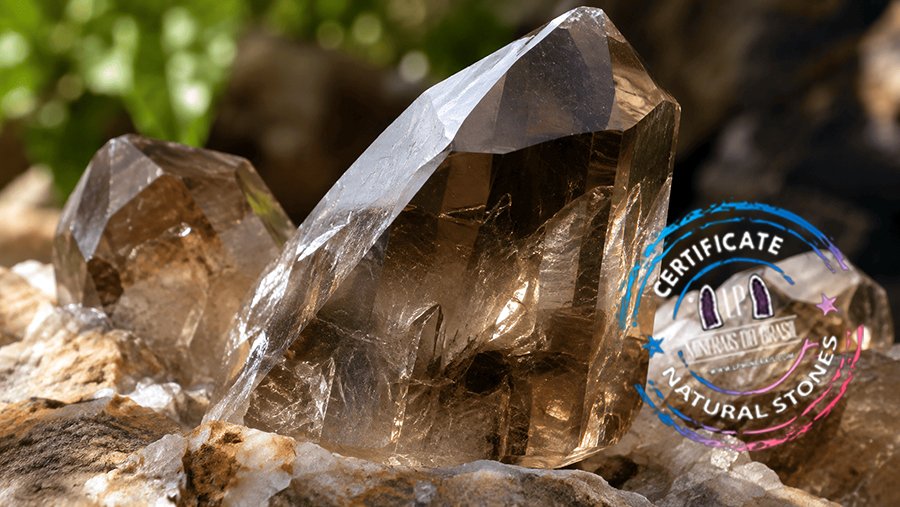
Smoky Quartz is one of the most fascinating varieties of quartz, recognized for its hues ranging from translucent light brown to deep brown, with some specimens appearing almost black. Its understated, elegant, and naturally mysterious appearance has earned it a place in mineralogy, jewelry, interior design, and spiritual traditions, where it is often associated with energetic protection, grounding, and inner stability.
Far beyond its beauty, Smoky Quartz has a particularly interesting geological history. Its coloration is related to changes in the crystalline structure caused by natural ionizing radiation, interacting with color centers associated primarily with the aluminum present in the quartz crystal lattice. This process can occur over extensive geological periods, transforming originally colorless crystals into specimens with smoky hues.
In Brazil 🇧🇷, especially in regions of Minas Gerais, Smoky Quartz is part of the mineral heritage of great gemological and commercial interest. Its crystals can exhibit excellent transparency, well-developed faces, and impressive dimensions—characteristics that make them ideal for use in jewelry, collecting, and decorative pieces. The diversity of forms, ranging from small natural crystals to large collector’s specimens, broadens its appeal in both the domestic and international markets.
In crystal therapy traditions, Smoky Quartz is considered a stone of protection and a symbolic connection to the Earth. Its significance is associated with the ability to maintain balance in the face of difficult situations, strengthen a sense of security, and represent the release of negative influences. This reputation has made it particularly popular among people seeking symbolic objects for meditation, personal protection, and harmonizing environments.
The combination of its geological origin, physical properties, commercial versatility, and spiritual symbolism makes Smoky Quartz a particularly significant material in the world of natural stones. Understanding its true identity requires examining both the scientific processes responsible for its formation and the cultural interpretations that have contributed to its value over time.
Geological Origin of Smoky Quartz: How Nature Produces Its Characteristic Color
Smoky Quartz belongs to the quartz family, one of the most abundant minerals in the Earth’s crust. It forms in various geological environments, including granitic pegmatites, hydrothermal veins, and rock cavities where silica-rich solutions promote crystal growth.
During crystallization, silicon and oxygen atoms organize themselves into a three-dimensional structure characteristic of silicon dioxide, SiO₂. Small amounts of elements such as aluminum may be incorporated into the structure, creating conditions favorable for the subsequent formation of color centers responsible for the smoky appearance.
Prolonged exposure to natural ionizing radiation, originating from radioactive elements present in the surrounding rocks, can alter the electronic states associated with these crystalline defects. The result is the selective absorption of certain bands of visible light, producing brown, grayish, or nearly black hues.
This phenomenon does not mean that natural Smoky Quartz is necessarily radioactive or dangerous to handle. Radiation plays a role in the color formation process, but the presence of the smoky hue does not indicate significant residual radioactivity.
Where is Smoky Quartz found?
Brazil has significant deposits of Smoky Quartz, especially in Minas Gerais, where pegmatitic and hydrothermal environments favor the development of quartz crystals of different varieties.
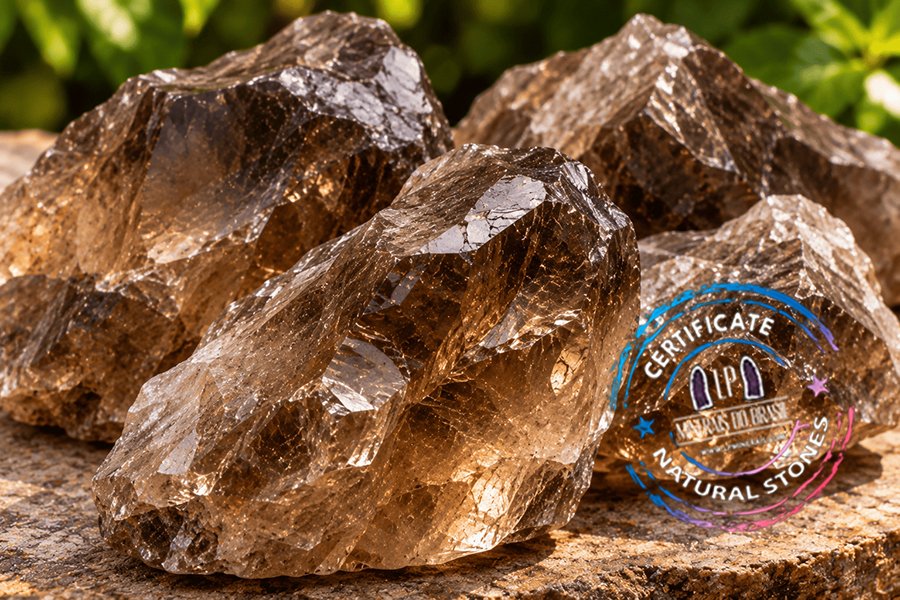
Other countries known for their deposits include Switzerland, Scotland, Madagascar, the United States, and Russia. In certain Alpine regions, smoky quartz crystals are particularly prized for their association with geological environments of great collector’s interest.
The origin influences the appearance of the specimens but does not, on its own, determine their quality. Transparency, color, integrity, dimensions, and crystalline characteristics also contribute to the evaluation.
Chemical Composition, Crystal System, and Mineralogical Properties
Smoky Quartz has the chemical composition SiO₂ and belongs to the trigonal crystal system, often forming crystals with a hexagonal prismatic habit. Its hardness is 7 on the Mohs scale, a characteristic that provides relatively high scratch resistance and makes it suitable for various ornamental applications.
Its luster is vitreous, while its transparency can range from transparent to translucent, depending on the intensity of the color, inclusions, and internal characteristics. The fracture is predominantly conchoidal, and the quartz does not exhibit well-developed true cleavage.
The smoky coloration may be unevenly distributed, with darker areas near certain parts of the crystal. In some specimens, the color is so intense that the material appears almost black when viewed without backlighting.
Smoky Quartz and Morion: What’s the Difference?
The term “Morion” is traditionally used to refer to varieties of Smoky Quartz with a very dark color, often nearly black. It is not a distinct mineral species, but rather a designation applied to specimens that exhibit a particularly high intensity of color.
The distinction is essentially visual and commercial. Smoky Quartz can exhibit light or medium shades, while Morion is usually reserved for the darkest specimens.
In both cases, the fundamental chemical composition remains SiO₂, and the mineralogical properties correspond to those of quartz.
Genuine Smoky Quartz: Authenticity, Treatments, and Differentiation
The authenticity of Smoky Quartz warrants special attention because its coloration can occur naturally or be produced by artificial treatments. Colorless quartz subjected to controlled irradiation can develop shades similar to those observed in natural specimens. Thus, the smoky appearance alone does not prove that the coloration developed exclusively through geological processes.
In gemological evaluation, it is important to distinguish three aspects: the identification of the mineral species, the origin of the coloration, and the possible presence of treatments. Irradiated quartz remains genuine quartz, but its commercial presentation must adequately disclose any known treatments. This transparency is especially relevant for materials intended for jewelry, collecting, and export.
Natural specimens may exhibit color zones, fluid inclusions, internal fractures, and characteristic growth patterns. However, these characteristics do not allow for determining with absolute certainty whether the coloration is natural. Professional identification may require spectroscopic analysis, investigation of provenance, and documentation provided by the dealer.
How can you tell the difference between Smoky Quartz, Obsidian, and other dark stones?
The visual similarity between dark materials can lead to confusion, especially when they are presented in polished forms. Obsidian, for example, is a natural volcanic glass, while Smoky Quartz is a crystalline mineral. Black Tourmaline belongs to another mineralogical group and has different physical and chemical properties.
Smoky Quartz can also be confused with certain varieties of artificial glass or with brown-colored gemstones. Correct identification depends on characteristics such as refractive index, density, optical properties, and mineralogical structure.
For buyers, certain precautions are essential:
- Request information about the stone’s origin and any treatments it has undergone.
- Check the piece’s integrity and the quality of its presentation.
- Avoid home tests that could cause damage.
- Seek a gemological certification when the value warrants it.
- Distinguish between the natural origin of the mineral and its color.
Commercial trust stems from a combination of technical knowledge and transparent communication. This principle is particularly important for companies that work with natural minerals and seek to build lasting relationships in the market.
Smoky Quartz and Spiritual Protection: The Meaning of the Energetic Shield
Among the spiritual interpretations attributed to Smoky Quartz, protection occupies a central position. In contemporary crystal therapy literature—particularly in the works of Judy Hall, Robert Simmons, and Naisha Ahsian—the mineral is often associated with grounding, stability, the symbolic transmutation of negative energies, and a conscious connection to the material world.
Its earthy color contributes to this meaning. Unlike stones symbolically associated with spiritual expansion and intuitive perception, Smoky Quartz represents the need to remain present, recognize limits, and develop inner security. Protection, in this context, is interpreted as a quality related to discernment and the ability to face challenges without losing one’s stability.
In certain holistic traditions, it is believed that Smoky Quartz acts as a shield against unwanted energetic influences. It is also described as a stone capable of promoting spiritual cleansing and the symbolic transformation of patterns considered negative. These interpretations are part of belief systems and do not correspond to scientifically proven energetic properties.
Protection Against Negative Energies and Spiritual Grounding
The concept of grounding, often referred to as “grounding” in holistic practices, represents a symbolic connection to concrete reality, the body, and the present moment. Smoky Quartz is one of the stones traditionally most associated with this interpretation, due to its color and its symbolic connection to the Earth element.
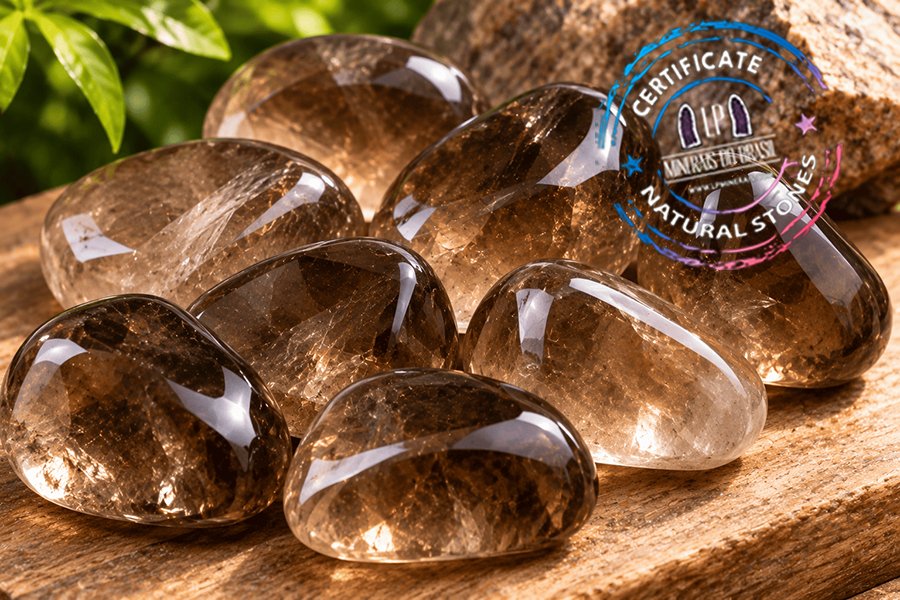
In contemplative practices, the mineral can represent the intention to regain focus, organize thoughts, and develop a more stable mindset when facing challenging situations. Some people use it during moments of reflection, associating its presence with serenity and the establishment of personal boundaries.
The idea of protection is also linked to the symbolic warding off of negative thoughts and external influences. However, the stone should not be viewed as a substitute for concrete safety measures, health care, or emotional support when needed.
Among its main traditional associations are:
- Spiritual protection and the strengthening of boundaries.
- Grounding and inner stability.
- Symbolic transformation of negative energies.
- Discernment and mindful presence.
- Courage to face change.
The meaning of Smoky Quartz is, therefore, deeply connected to the symbolic ability to remain steadfast, even when the environment presents challenges or uncertainties.
Smoky Quartz, Emotional Balance, and Inner Strength
The relationship between Smoky Quartz and emotional stability is frequently mentioned in crystal therapy traditions. The mineral is described as a symbol of serenity, inner resilience, and the ability to navigate periods of transformation. Its subtle, deep color lends itself to interpretations related to introspection and the recognition of one’s own needs.
In holistic approaches, Smoky Quartz often represents the symbolic release of worries and the development of a more balanced relationship with situations that cause tension. This is not a proven psychological or therapeutic effect, but rather a cultural interpretation that can accompany mindful practices of reflection.
The archetype associated with the stone is often that of stability: the ability to remain grounded in reality, acknowledge difficulties, and act responsibly. This image also explains its association with protection, as personal safety involves both external factors and conscious choices.
In daily life, the stone can serve as an object of personal significance, reminding us of the importance of setting priorities, respecting boundaries, and cultivating moments of tranquility.
Chakras, the Earth Element, and Spiritual Associations of Smoky Quartz
In traditions that link minerals to the body’s energy centers, Smoky Quartz is often associated with the base chakra, also known as the root chakra or Muladhara. This center is symbolically interpreted as related to security, stability, survival, and connection to the physical world.
Some approaches also associate the mineral with the sacral chakra, especially when interpreting its brown hues as representations of life force and emotional integration. However, the root chakra remains the most widely accepted association.
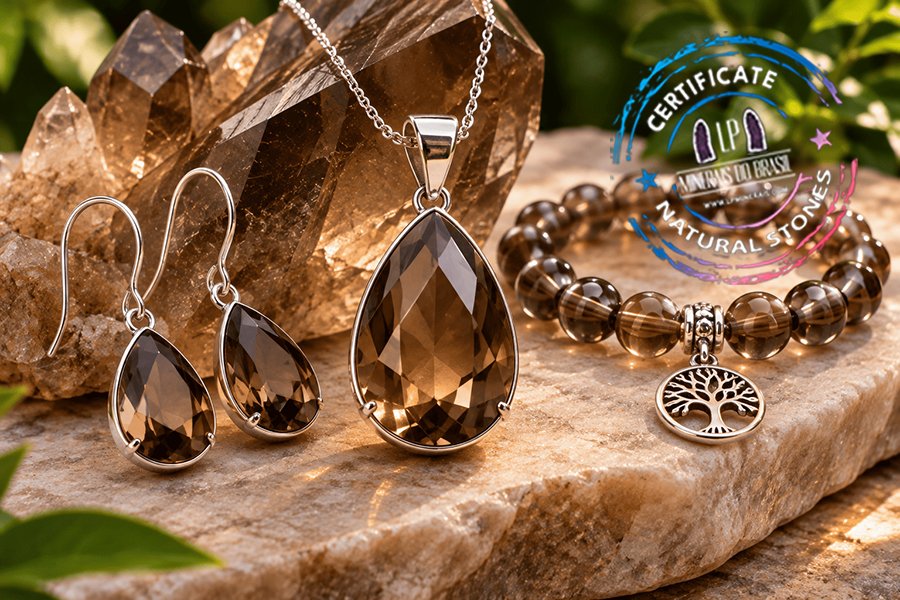
The Earth element is another important association. In symbolic traditions, it represents structure, permanence, responsibility, and sustenance. Smoky Quartz expresses these concepts through its appearance, its geological formation, and its cultural significance.
Smoky Quartz in Meditation and Protection Practices
During meditation, Smoky Quartz can be used as an object of focus. Its surface, transparency, and color variations provide visual cues that help direct attention during contemplative practices.
Some people prefer to hold it during breathing exercises or place it near their meditation spot. Others use it as a symbolic representation of their intention to let go of worries and cultivate greater mindful presence.
In holistic traditions, it also features in rituals of protection and harmonization, often accompanied by prayers, personal affirmations, or moments of silence.
These practices may have cultural and personal value, but they do not demonstrate that the mineral produces measurable energetic changes or specific therapeutic effects.
Smoky Quartz for Protecting the Home and Professional Environments
The use of natural stones in decor can combine aesthetics, cultural identity, and personal meaning. Smoky Quartz stands out in this context for its neutral and elegant tones, which complement wood, metals, light-colored surfaces, and natural materials.
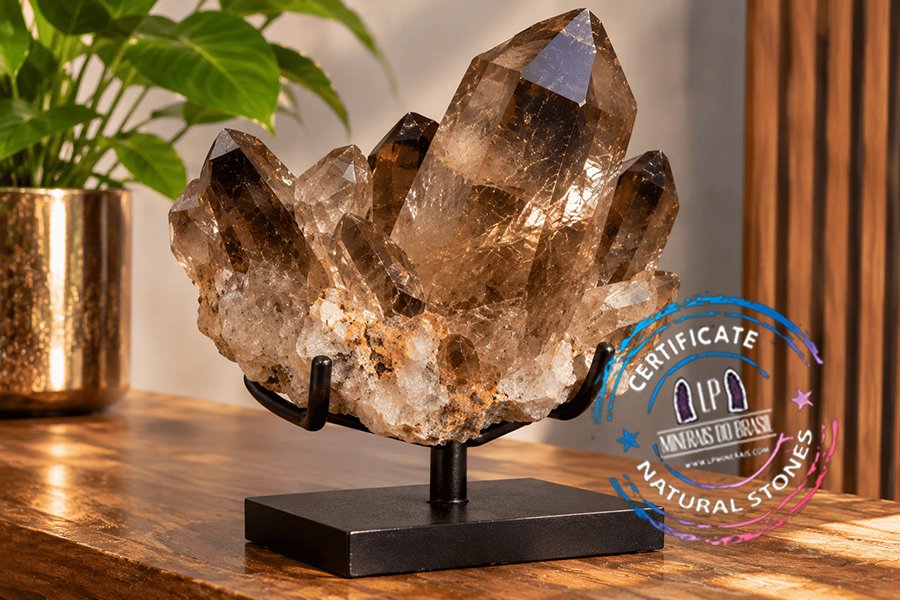
In holistic practices, the mineral is often placed in entryways, living rooms, offices, and meditation spaces as a symbol of protection and stability. The choice of setting typically reflects the intention to create a visually calm and welcoming atmosphere.
In professional settings, pieces of Smoky Quartz can be incorporated into desks, bookshelves, or display cases. Their presence can symbolize focus, organization, and responsibility, while also enhancing the decor with an authentic geological element.
The most common symbolic uses include:
- Home entryway: a symbol of protection and hospitality.
- Living room: a decorative element associated with stability.
- Office: a symbol of concentration and discernment.
- Meditation space: an object for contemplation and grounding.
- Personal use: jewelry or a pocket stone with individual significance.
The harmonizing properties attributed to the mineral should be understood as a spiritual interpretation. The decorative effect, in turn, can be appreciated directly for its aesthetic and material qualities.
Combinations of Smoky Quartz with Other Protective Stones
Smoky Quartz is often combined with minerals that have complementary meanings in crystal healing traditions. These combinations seek to bring together symbolism of protection, stability, clarity, and contemplation, creating arrangements that can be used in personal spaces or practices.
Black Tourmaline is one of the best-known combinations. Traditionally associated with protection and grounding, it complements the symbolism of Smoky Quartz. Amethyst, in turn, is associated with serenity and reflection, while Rose Quartz represents warmth and compassion.
Clear Quartz also appears in these arrangements and is often interpreted as a symbol of clarity and intention. Together, these stones can form decorative arrangements that highlight different colors, textures, and crystalline structures.
There is no scientific evidence that this combination produces specific energetic effects. The choice should take into account personal meaning, aesthetics, and the physical care required to preserve each material.
Smoky Quartz in Jewelry: Elegance, Durability, and Versatility
Smoky Quartz possesses characteristics that make it well-suited for use in jewelry. Its hardness of 7 on the Mohs scale offers relatively high resistance to scratching, while its transparency and variety of hues allow for different cutting styles.
Light-colored gemstones can exhibit a delicate luster and a sophisticated appearance. Darker specimens offer interesting contrasts in settings made of silver, yellow gold, white gold, and other metals used in jewelry.
Oval, round, rectangular, and teardrop cuts are available on the market. Cabochons and faceted stones also have distinct commercial applications, depending on the quality of the material and the intended aesthetic.
Despite its hardness, Smoky Quartz can fracture or chip when subjected to impact. Therefore, scratch resistance should not be confused with absolute resistance to shock.
Who buys Smoky Quartz jewelry?
The target audience includes consumers who value natural gemstones with neutral tones, designers seeking versatile materials, and people drawn to the symbolic meaning of protection.
Designer jewelry finds an interesting alternative in Smoky Quartz for elegant pieces, especially when the design emphasizes the gem’s natural origin and identity.
Transparency regarding treatments and provenance strengthens buyer confidence and contributes to responsible marketing.
Smoky Quartz in Decor, Collectibles, and Mineral Design
In interior design, Smoky Quartz offers great versatility. Rough crystals, natural points, crystalline clusters, and cut pieces can be incorporated into various settings, ranging from contemporary interiors to organically inspired arrangements.
Large specimens can be used as focal points in display cases and exhibition spaces. Smaller crystals are suitable for tables, shelves, and private collections, especially when presented on unobtrusive bases that highlight their natural form.
Collectible value is determined by the quality of crystallization, transparency, color intensity, integrity, and provenance. Crystals with interesting inclusions or mineralogical associations may hold additional value for specialized collectors.
In mineral design, the choice between a rough and polished finish influences the aesthetic language. The rough material preserves evidence of crystalline growth, while polishing can highlight transparency, reflections, and internal zones of coloration.
Valuing these characteristics underscores the importance of knowing the mineralogical identity before transforming the stone into an ornamental product.
Rarity, Market Value, and Relevance to the Mineral Industry
Smoky Quartz is not considered an extremely rare variety of quartz. Its occurrence in various geological environments allows for a relatively abundant supply, especially when compared to gemstones with very limited geographic distribution.
However, exceptional specimens can hold significant value. Large crystals with good transparency, well-preserved faces, and attractive coloration can attract the interest of collectors and specialized dealers.
In the gemological market, value also depends on the quality of the cut, visual uniformity, weight, and information regarding treatments. Ornamental pieces are evaluated based on different criteria, including aesthetics, stability, and presentation.
The buyer profile varies depending on the intended use. Jewelers seek materials suitable for cutting; interior designers value proportions and visual impact; collectors examine mineralogical characteristics; and holistic consumers consider traditional symbolism.
Brazilian Smoky Quartz, Fair Trade, and Exports
Brazil 🇧🇷 plays a significant role in supplying quartz to various commercial sectors. Smoky Quartz is part of this market, with potential for commercialization as a raw material, cut gemstone, rough crystal, and ornamental piece.
Responsible sourcing is a key differentiator. Understanding the origin, mining conditions, processing methods, and suppliers involved contributes to greater transparency in the mineral supply chain.
The Fair Trade principles upheld by LP MINERAIS ⛏💎📦🗺 are centered on building fairer commercial relationships, respecting the people involved, and demonstrating economic and environmental responsibility. The adoption of these principles must be accompanied by verifiable practices, avoiding certification claims without supporting documentation.
In international operations, correct product identification, tax classification, and compliance with customs requirements are essential. The export market values suppliers capable of providing consistent technical information and transparent commercial terms.
Cleaning and Care for Smoky Quartz
Although it has relatively high hardness, Smoky Quartz requires care to preserve its integrity and appearance. Impacts can cause fractures, especially in crystals with internal fissures or delicate edges. Cut pieces can also be damaged when they come into contact with harder materials.
Unmounted specimens can be cleaned with room-temperature water, mild soap, and a soft cloth, followed by rinsing and careful drying. However, pieces with settings, adhesives, coatings, or combinations with other minerals require individual assessment.
Excessive heating should be avoided, as certain thermal conditions can alter the color of Smoky Quartz. Prolonged exposure to intense light is also not recommended for specimens whose color stability is unknown.
In holistic practices, some people perform symbolic cleansing rituals through meditation, prayer, or setting intentions. These procedures do not replace physical care and have no scientifically proven energetic efficacy.
⛏💎 Technical and Energetic Profile | LP MINERAIS
🗺 » ORIGIN: Brazil, Switzerland, Scotland, Madagascar, the United States, Russia, and other regions with favorable geological environments.
⚛️ » CHEMICAL COMPOSITION: SiO₂ — silicon dioxide, with color centers associated with crystal defects and impurities, especially aluminum.
🔩 » MOHS SCALE: 7.
🔢 » NUMEROLOGY: No universally established numerological correspondence; interpretations vary depending on the esoteric school.
🔅 » MEANING: Spiritual protection, grounding, stability, inner strength, and symbolic transformation of negative energies.
🅰️ » SUMMARY: A variety of quartz ranging in color from brown to nearly black, valued for its transparency, ornamental versatility, and symbolism of protection.
✅ » SPECIFICATION: A mineral of the quartz family, with a trigonal crystal system, vitreous luster, conchoidal fracture, and no well-developed true cleavage.
🧩 » STATE: Crystalline solid, found as rough crystals, clusters, tumbled stones, cut gemstones, and ornamental pieces.
⚒ » FORMATION: Crystallization of silica in suitable geological environments, followed by the formation of color centers through exposure to natural ionizing radiation.
⚠️ » CARE: Avoid impacts, excessive heat, abrasion, and prolonged exposure to conditions that may compromise the stability of the coloration.
🛁 » CLEANING: Room-temperature water, mild soap, and a soft cloth, when suitable for the piece. Energetic cleansing is only a symbolic practice.
🎨 » COLOR: Light brown, smoky gray, brown, dark brown, and nearly black.
☯️ » ZODIAC: Often associated with Capricorn and Scorpio in contemporary esoteric interpretations, though this association is not universal.
🪐 » SOLAR SYSTEM: Saturn, in certain symbolic interpretations related to structure, responsibility, and stability; this association is not universal.
➰ » CHAKRAS: Primarily the base or root chakra; some traditions also relate the mineral to the sacral chakra.
♻ » ELEMENT: Earth.
💎 » RARITY: Relatively common; specimens of exceptional quality, large size, and excellent preservation are less frequent.
🗳 » CHARACTERISTICS: Smoky-hued crystalline quartz, with a hardness of 7, a vitreous luster, and coloring related to color centers produced by irradiation processes.
Frequently Asked Questions About Smoky Quartz (FAQ)
1. Is Smoky Quartz a stone of spiritual protection?
In crystal healing traditions, Smoky Quartz is often associated with protection, grounding, and the symbolic transformation of negative energies. These interpretations are cultural and spiritual in nature, with no scientific evidence of specific energetic effects.
2. How can you tell if Smoky Quartz is real?
Identification involves gemological and mineralogical properties, such as hardness, refractive index, crystalline structure, and optical characteristics. The brown appearance alone is not sufficient to confirm authenticity or determine whether the stone has been treated with radiation.
3. Is natural Smoky Quartz radioactive?
Its natural coloration is related to geological exposure to ionizing radiation, but this does not mean the stone exhibits dangerous residual radioactivity. The safety of any specimen suspected of having undergone improper treatment must be evaluated by qualified professionals.
4. What is the difference between Smoky Quartz and Morion?
Morion is a traditional name applied to very dark-colored Smoky Quartz, often nearly black. Both belong to the same mineral species, quartz.
5. Can Smoky Quartz be used at the entrance to a home?
Yes. It can be used as a decorative piece or a personal symbol of protection and stability. In holistic traditions, the entrance to the home is one of the places associated with this meaning, although there is no evidence of energetic changes produced by the stone.
6. Which chakra is associated with Smoky Quartz?
The base chakra, also known as the root chakra or Muladhara, is the most common association in crystal therapy literature.
7. Can Smoky Quartz be combined with Black Tourmaline?
Yes. In holistic practices, both are traditionally associated with protection and grounding. The combination has symbolic significance and can also be used in decorative arrangements.
8. Can Smoky Quartz be exposed to sunlight?
It is recommended to avoid prolonged exposure to intense sunlight and excessive heat, especially when the stability of the color is unknown. Certain conditions may cause the color to change.
9. Is Smoky Quartz rare and expensive?
It is not an extremely rare variety. However, specimens of high quality, with great transparency, attractive color, impressive dimensions, and documented provenance may command a higher market value.
10. Can Smoky Quartz be used in rings and pendants?
Yes. Its hardness of 7 makes it suitable for jewelry applications, although impacts and friction should be avoided. The choice of setting should take into account the gem’s shape and integrity.
11. Where can Smoky Quartz be found in Brazil?
Minas Gerais is among the Brazilian regions known for quartz deposits, including smoky varieties. The specific locality must be confirmed by documentation of origin.
12. Does Brazilian Smoky Quartz have an export market?
Yes. The material can be used in international trade as rough crystal, cut gemstone, or ornamental piece, provided that applicable legal and commercial requirements are met.
Conclusion: Smoky Quartz, the Earth’s Power, and the Value of Symbolic Protection
Smoky Quartz represents a unique combination of natural beauty, mineralogical knowledge, and cultural significance. Its formation is related to silica crystallization processes and the development of color centers that transform quartz crystals into specimens with deep, elegant hues.
From a scientific perspective, it is distinguished by its SiO₂ composition, a hardness of 7 on the Mohs scale, and a trigonal crystal structure. These characteristics explain its versatility in jewelry, home decor, and collecting, while also providing the basis for its identification and conservation.
In holistic traditions, its association with spiritual protection, grounding, and inner stability contributes to its popularity. The symbolism of Smoky Quartz represents the ability to remain steadfast, set boundaries, and develop a mindful relationship with everyday challenges.
For LP MINERAIS ⛏💎📦🗺, Smoky Quartz also expresses the importance of Brazil’s mineral heritage 🇧🇷, responsible sourcing, and the promotion of transparent business relationships. The integration of technical expertise, Fair Trade practices, and respect for the supply chain strengthens the presence of Brazilian natural materials in both domestic and international markets.
More than just a smoky-colored stone, this mineral represents the Earth’s history preserved in crystalline form—an expression of stability, transformation, and natural beauty.
Doris S. Rosa
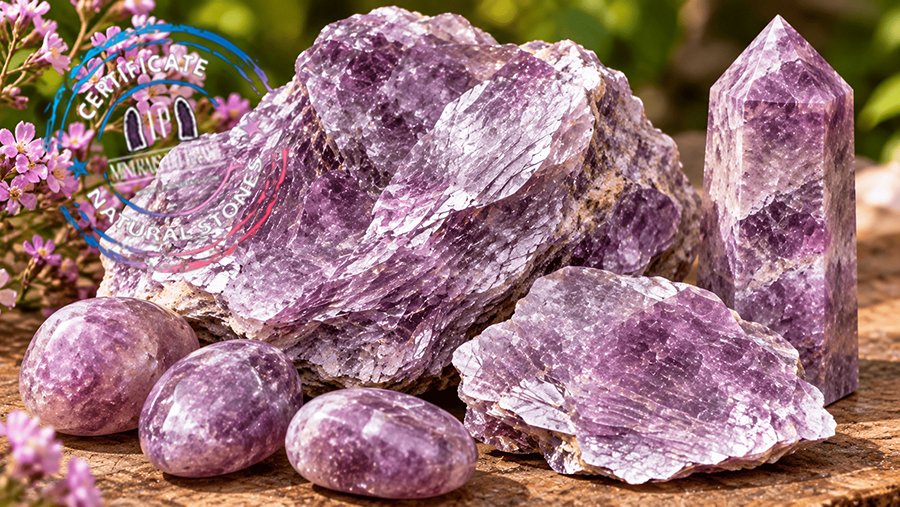
Lepidolite: properties, geological origin, spiritual meaning, and applications of this lilac-colored stone
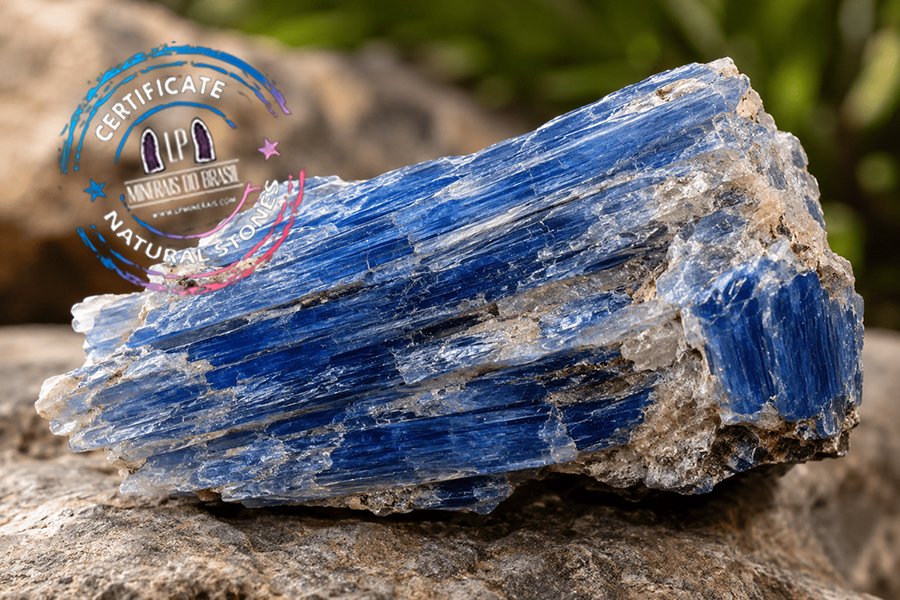
Blue Kyanite: why is this stone of spiritual protection known as the Sword of Archangel Michael?
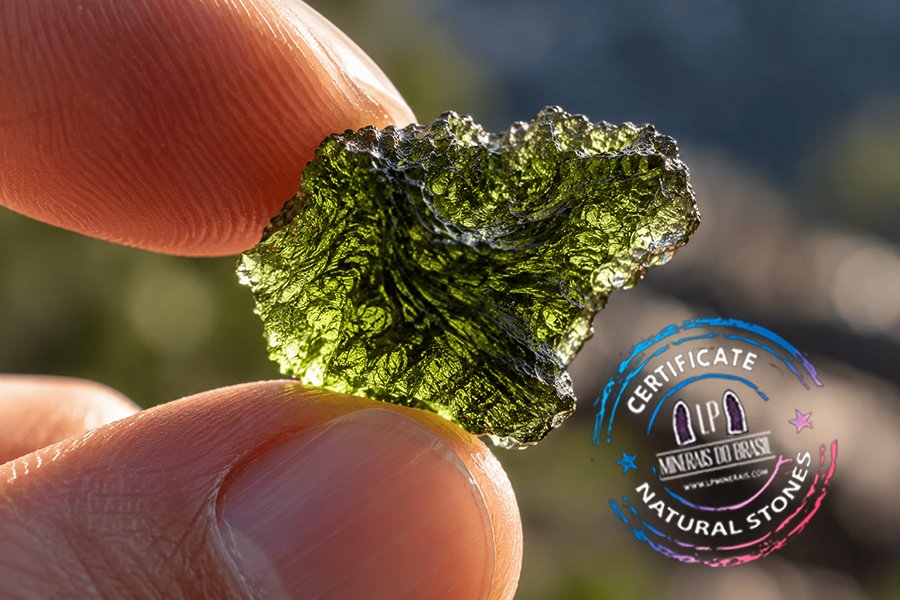
Moldavite: the stone born from a meteorite impact that became a symbol of transformation
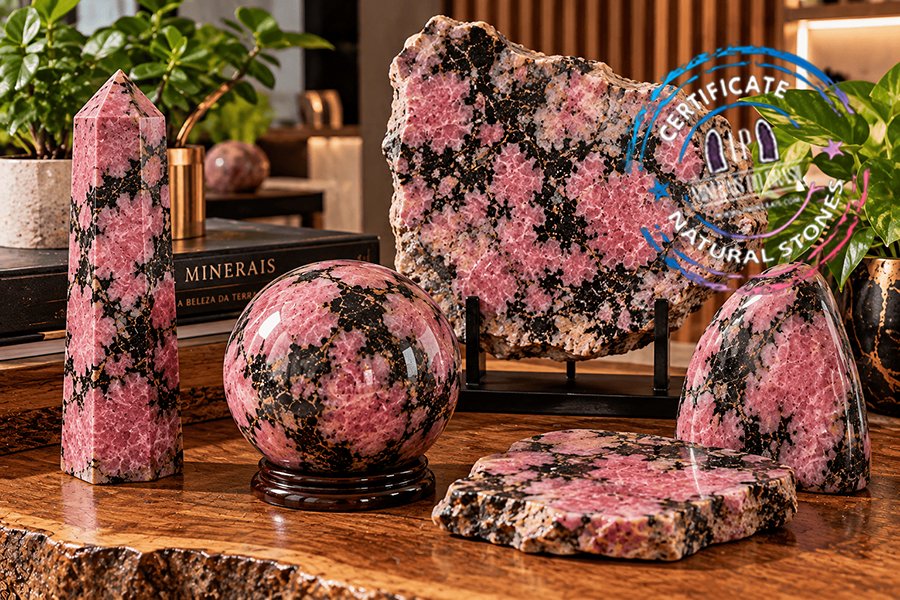
Rhodonite: Why Is It Known as the Stone of Forgiveness and Emotional Healing?
Howlite: what lies behind the Stone of Calm and Inner Silence?
Moonstone: the Stone of Intuition, Feminine Energy, and the Mysteries of the Moon.
Jade: The Stone of Wisdom, Prosperity, and Harmony That Spans Millennia
Angelite: The Stone of Serenity, Intuition, and Spiritual Connection
Green Aventurine: the Stone of Prosperity, Opportunity, and New Paths
Orange Calcite: The Solar Energy That Awakens Creativity and Movement