







A geological rarity formed approximately 14.7 million years ago, whose indirect extraterrestrial origin, natural beauty, and spiritual symbolism capture the interest of collectors, researchers, and enthusiasts of unique stones.
Moldavite: When a Cosmic Impact Transforms Earthly Matter
Among the natural materials prized in the world of gemstones and collectible minerals, few have a history as unique as that of Moldavite. Its formation is linked to an impact event that occurred in Central Europe, when an extraterrestrial body struck the Earth’s surface with enough energy to melt and eject geological materials into the atmosphere. During this process, part of the molten material cooled rapidly, forming fragments of natural glass that, millions of years later, would become known as Moldavite.
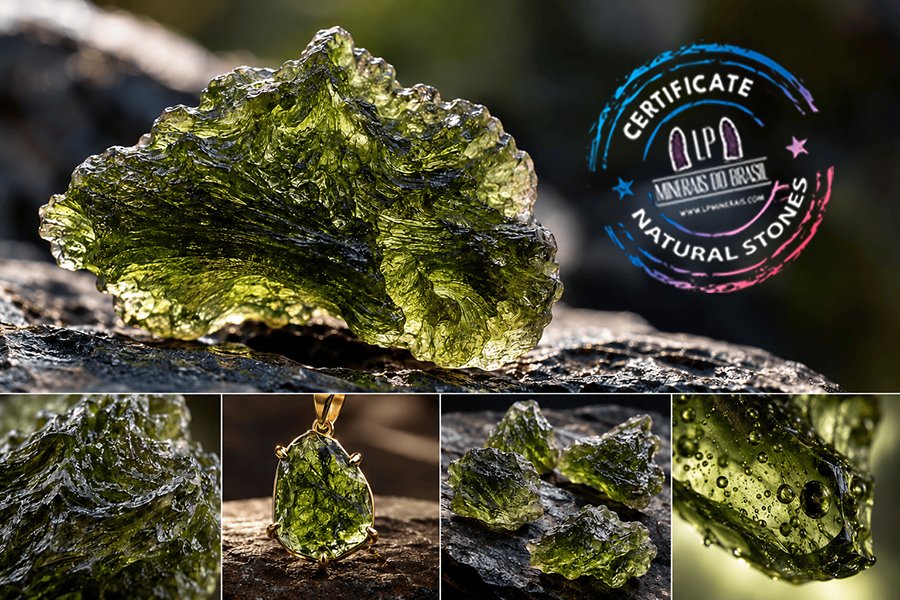
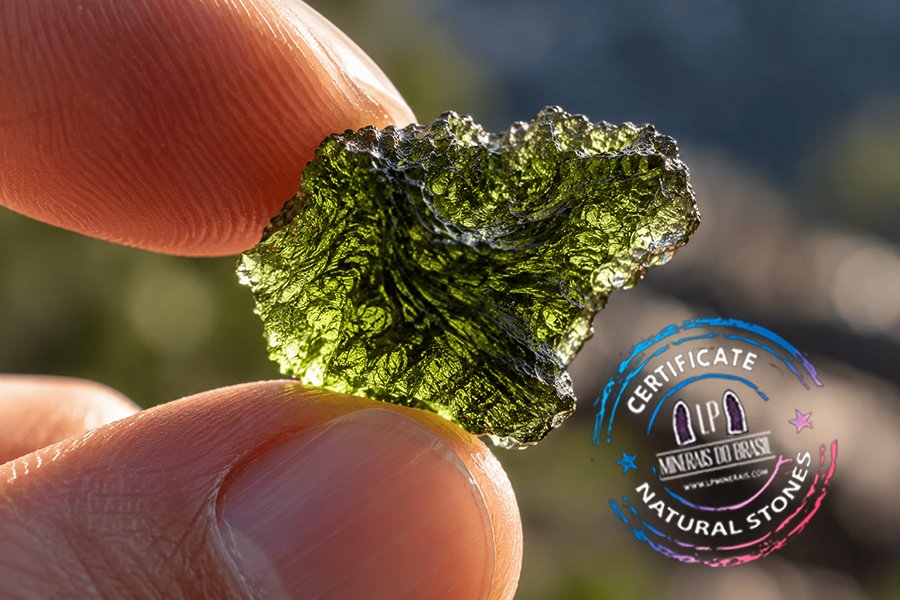
Its green color, deeply sculpted surfaces, and relative rarity have contributed to making this material an object of gemological, scientific, and commercial interest. Unlike stones that grow slowly within rocks, Moldavite was born from an extremely rapid and exceptional geological event.
There is, however, a fundamental distinction: Moldavite is neither a crystalline mineral nor a meteorite fragment. It is a variety of tektite—that is, a natural impact glass composed predominantly of molten terrestrial material. This classification explains its physical characteristics and helps us understand its authenticity, value, and applications.
On the international market, Moldavite combines three particularly significant attributes: its rare geological origin
, limited availability, and strong recognition among tektite collectors and practitioners of spiritual traditions. This combination requires a careful approach capable of distinguishing scientific facts, cultural interpretations, and commercial expectations.
Geological Origin of Moldavite: The Connection to the Ries Crater
The history of Moldavite is linked to the impact that formed the Nördlinger Ries structure, located in present-day Germany. The event occurred approximately 14.7 million years ago, during the Miocene, and produced a dispersion of molten material that reached regions of the present-day Czech Republic.
The high energy released by the impact triggered shock waves, extreme heating, melting, and the ejection of near-surface materials. Some of this material followed ballistic trajectories before solidifying, giving rise to the tektites currently found in sedimentary deposits.
Moldavite therefore belongs to a broader family of natural impact glasses. Other tektites occur in different regions of the planet, but Moldavite stands out for its characteristic green color and its association with the Central European dispersal field.
Where is Moldavite found?
The classic occurrences are concentrated mainly in the Czech Republic, particularly in areas of South Bohemia and Moravia. Historically known localities include regions near České Budějovice, Besednice, and Chlum nad Malší.
Fragments are recovered from sedimentary deposits that preserved the material after its formation and geological redistribution. The external appearance may vary depending on the depositional environment, transport, and surface alteration processes.
- South Bohemia: an important region for occurrences and of interest to collectors.
- Moravia: an area associated with specimens exhibiting distinctive visual characteristics.
- Germany: location of the impact structure related to the origin of tektites.
- Brazil: not a recognized region for the natural occurrence of Moldavite.
This restricted geographic distribution is one of the reasons why provenance must be treated as essential information in the specialized trade.
Chemical Composition, Amorphous Structure, and Physical Properties
From a chemical standpoint, Moldavite is a silicate-rich natural glass, generally rich in silicon dioxide (SiO₂), accompanied by varying proportions of aluminum, iron, calcium, potassium, and sodium oxides, as well as other minor constituents.
Its composition does not correspond to a single mineral chemical formula. This is because the material results from the fusion of different geological components, the proportions of which can vary depending on the impact conditions and the nature of the rocks involved.
Its internal structure is amorphous, a characteristic that distinguishes it from crystalline minerals. While a crystal exhibits long-range periodic atomic organization, Moldavite lacks a defined crystal system. Its rapid cooling prevented the development of a regular crystal lattice.
Among its most notable physical properties are:
- Classification: tektite, natural impact glass.
- Composition: silicate glass, predominantly rich in SiO₂.
- Hardness: approximately 5.5 to 6 on the Mohs scale.
- Crystal system: none; amorphous structure.
- Luster: vitreous.
- Fracture: predominantly conchoidal.
- Transparency: translucent to transparent in certain areas.
- Color: olive green, brownish green, and related shades.
The color is primarily associated with the glass’s chemical composition, including the presence and oxidation state of iron. Thickness, inclusions, and optical characteristics also influence its appearance.
Why does the surface of Moldavite feature natural sculptures?
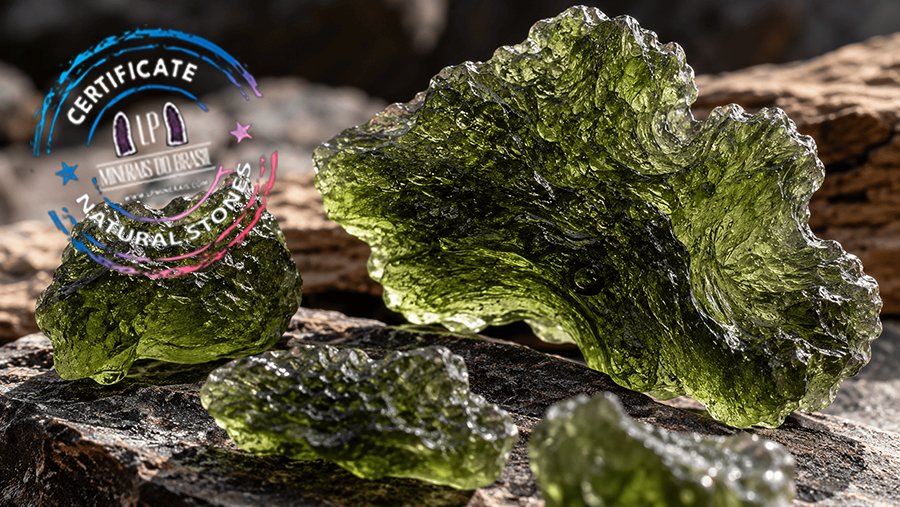
One of the most admired characteristics of raw Moldavite is its irregular surface, often marked by grooves, depressions, cavities, and raised areas that resemble microscopic sculptures.
These structures should not be interpreted simply as marks produced during atmospheric flight. Much of the characteristic surface ornamentation is related to subsequent processes of chemical corrosion and natural alteration of the glass during its time in geological environments.
The intensity and distribution of these textures vary among specimens. Some pieces feature delicately textured surfaces, while others exhibit deep reliefs and highly complex patterns.
For collectors, these differences can represent important aesthetic attributes. However, the presence of grooves alone does not prove authenticity, as artificial materials can also develop similar textures.
Genuine Moldavite: How to Identify and Recognize Imitations
The commercial value of Moldavite has made authenticity one of the market’s primary concerns. Imitations made from industrial glass can replicate its greenish hue, its translucency, and even certain aspects of its external texture.
For this reason, identification should not depend solely on appearance. A visually convincing piece may be artificial, while a genuine Moldavite may exhibit characteristics less spectacular than those shown in commercial photographs.
Gemological evaluation considers the combination of physical, optical, and microscopic properties. In more complex cases, specialized laboratory analyses may be necessary.
Characteristics Observed in Natural Specimens
When investigating authenticity, professionals examine aspects such as morphology, surface texture, the distribution of internal bubbles, any flow structures, and the material’s optical behavior.
Some natural Moldavites feature elongated bubbles and inclusions known as lechatelierites, which are related to the extreme conditions of their formation. However, not all specimens display these characteristics in a readily visible manner.
Among the points worthy of attention are:
- Natural textures consistent with geological processes.
- Variations in color and translucency.
- Internal structures consistent with impact glass.
- Consistent information about the region of origin.
- Evaluation by professionals or specialized laboratories.
It is important to note that none of these aspects, considered in isolation, guarantees authenticity. Risky home tests involving heat or impact can damage the piece and are not recommended methods.
Moldavite, green glass, and obsidian: what are the differences?
Although they are all vitreous materials, their origins are distinct. Moldavite is associated with meteorite impacts; obsidian is a natural glass produced by the rapid cooling of lava; and industrial glass results from controlled technological processes.
The visual similarity between these materials can cause confusion, especially when the piece is cut and polished. For this reason, provenance and gemological identification are essential.
Moldavite in Jewelry, Decor, and Collecting
In jewelry, Moldavite is prized for its unusual origin and the beauty of its green hues. It can be used in pendants, earrings, rings, and other custom-designed pieces, both in its rough and cut forms.
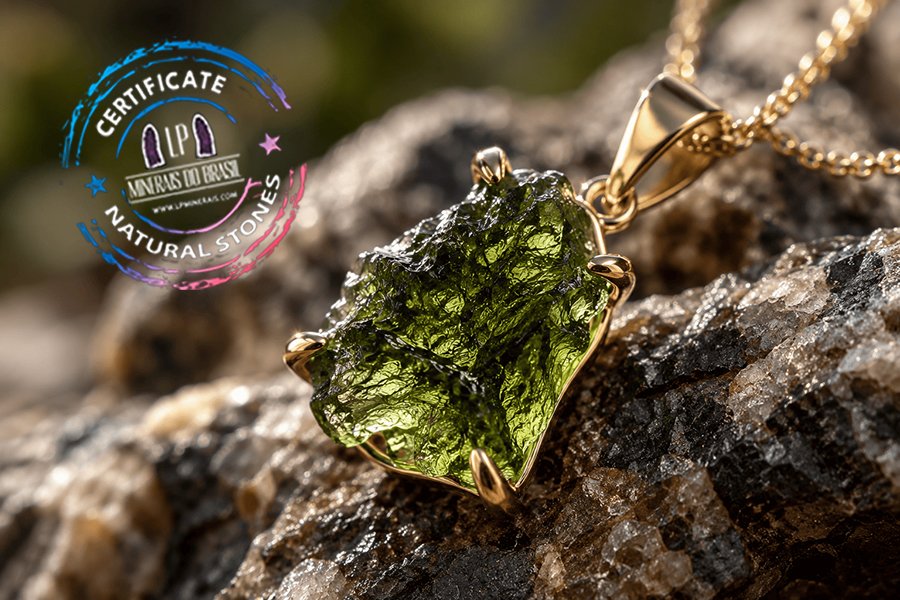
However, its moderate hardness and glassy nature require care. The material can suffer scratches, chips, and fractures when subjected to impact. Therefore, protective settings and designs that minimize exposure to shocks are especially important.
In decorative settings, rough specimens can be incorporated into display cases, small exhibitions, and special mineral arrangements. Aesthetic appreciation typically focuses on the texture, transparency, and natural geometry of the fragments.
In collecting, pieces with documented provenance, interesting morphology, and good preservation can generate significant interest. Specimens from recognized localities are also important for collections organized by geographic origin.
Who typically buys Moldavite?
The audience interested in this material is diverse. Collectors value its formation and rarity; jewelry designers seek its visual identity; natural stone enthusiasts are drawn to its history; and practitioners of holistic traditions attribute symbolic meaning to its origin.
For the mineral industry, this diversity creates opportunities but also increases commercial responsibility. Clear information on authenticity, origin, treatment, and conservation is essential for building trust.
Market Value and Rarity of Moldavite
Moldavite is considered a relatively rare material in the gemstone and tektite trade, especially when compared to more widely available natural glasses. Its limited geographic occurrence and the non-renewable nature of the event that created it contribute to this perception.
However, geological rarity and commercial value are not identical concepts. The price of a piece depends on factors that include quality, size, preservation, aesthetics, demand, and documentation of provenance.
Raw specimens with striking natural relief features may be prized by collectors, while cut pieces are also evaluated based on transparency, color, yield, and the quality of the finish.
The main commercial factors include:
- Authenticity: confidence in the identification of the material.
- Provenance: documented geographic origin.
- Weight and dimensions: characteristics that influence availability.
- Color and transparency: important attributes for jewelry.
- Surface texture: especially relevant for rough stones.
- Integrity: absence of significant damage.
- Demand: interest from collectors and specialized consumers.
There is no universal price per gram applicable to all Moldavites. Prices must be assessed based on market conditions, individual quality, and the reliability of the offer.
In international trade, transparent descriptions and consistent documentation can be just as important as the piece’s appearance.
Spiritual Meaning of Moldavite: Transformation, Consciousness, and Renewal
In addition to its geological significance, Moldavite holds a prominent place in contemporary crystal therapy literature. Traditionally associated with inner transformation, the expansion of consciousness, and the renewal of perspectives, it has become known among holistic practitioners as a symbol of profound change.
Its geological history lends itself to a particular symbolic interpretation: an earthly material transformed by an event originating in space. This narrative inspires associations with transition, the breaking of patterns, and openness to new possibilities.
In spiritual traditions, Moldavite is often linked to the archetype of transformation. This does not necessarily refer to an immediate external change, but rather to a symbolic willingness to recognize habits, reevaluate choices, and develop greater awareness of personal experiences.
These interpretations belong to the cultural and spiritual realms. There is no robust scientific evidence that Moldavite produces specific energetic effects, alters emotional states through vibrational properties, or brings about personal transformations.
Moldavite and the Symbolism of Protection and Spiritual Evolution
In holistic practices, Moldavite is often described as a stone of transformation, spiritual expansion, and inner perception. Some traditions associate it with the symbolic release from old patterns and the pursuit of greater authenticity.
Its use during moments of reflection can serve as an object of personal intention. By holding the stone during a contemplative practice, for example, the practitioner can associate it with a question, a commitment, or a phase of change.
Unlike stones traditionally linked to grounding, Moldavite is often interpreted as a symbol of movement and expansion. For this reason, some approaches suggest symbolically pairing it with minerals associated with stability, such as Black Tourmaline or Smoky Quartz.
These combinations do not represent scientifically proven physical or energetic interactions, but rather symbolic constructs found in certain traditions of crystal use.
Chakras, Meditation, and Harmonizing Environments
In crystal therapy interpretations, Moldavite is often associated with the heart chakra, due to its green color, and with the higher centers of consciousness, especially the third eye and the crown chakra.
This association brings together two symbolic dimensions: the heart as a representation of openness and emotional integration, and the higher centers as metaphors for perception, contemplation, and spiritual development.
In meditation, Moldavite can be used as a visual or tactile aid to promote concentration during practice. Its natural appearance, textures, and history can serve as focal points during contemplative exercises.
In home or professional settings, the stone can also be incorporated into spaces dedicated to study, reflection, and creativity. Its role in this context is symbolic and decorative, not to physically alter the energy of a place.
Some traditional uses include:
- Meditation: an object of focus and intention.
- Work environment: a symbol of creativity and renewal.
- Personal spaces: a representation of new cycles.
- Altars: an element of spiritual contemplation.
- Personal use: jewelry associated with individual commitments and meanings.
Symbolic Combinations with Other Stones
Moldavite can be found in combinations with Rose Quartz, Amethyst, Smoky Quartz, and Black Tourmaline. In holistic traditions, these combinations seek to bring together complementary meanings.
Rose Quartz typically represents acceptance and compassion; Amethyst, contemplation and spiritual clarity; Smoky Quartz, stability; and Black Tourmaline, symbolic protection.
There is no need to use multiple stones at the same time. Your choice may be based on aesthetics, personal intention, cultural context, and individual preference.
Caring for Moldavite: Maintenance and Cleaning
Moldavite requires care appropriate for its glass-like structure. Although it is hard enough for certain ornamental applications, it can suffer mechanical damage, especially on thin edges and delicate surfaces.
Ideally, each piece should be stored separately, avoiding contact with harder materials. Jewelry pieces should be protected from drops, impacts, and excessive pressure.
For physical cleaning, use a soft, dry cloth or one that is slightly dampened, depending on the piece’s condition. When necessary, gently clean with room-temperature water, followed by careful drying, provided the jewelry’s setting allows it.
Avoid:
- Ultrasonic and steam cleaning.
- Thermal shocks.
- Harsh chemicals.
- Abrasive brushes.
- Exposure to impacts and intense friction.
In symbolic energy-cleansing practices, some people prefer contemplation, prayer, setting an intention, or brief exposure to indirect light. These practices are not a substitute for physical cleaning and have no scientifically proven energetic efficacy.
⛏💎 Technical-Energetic Profile | LP MINERALS
🗺 » ORIGIN: Primarily the Czech Republic, especially South Bohemia and Moravia; related to the impact that formed the Nördlinger Ries crater in Germany.
⚛️ » CHEMICAL COMPOSITION: Natural silicate glass, predominantly SiO₂, with oxides of aluminum, iron, calcium, potassium, sodium, and other constituents in varying proportions.
🔩 » MOHS SCALE: Approximately 5.5 to 6.
🔢 » NUMEROLOGY: No universally established numerological correspondence.
🔅 » MEANING: Transformation, inner renewal, and expansion of consciousness in crystal therapy traditions.
🅰️ » SUMMARY: Natural green tektite, formed from molten terrestrial material during a meteorite impact, valued for its origin and symbolism.
✅ » SPECIFICATION: Natural impact glass; amorphous material with no crystalline structure.
🧩 » STATE: Glassy solid, found in rough fragments, polished pieces, or cut stones.
⚒ » FORMATION: Fusion and ejection of terrestrial material during a high-energy impact, followed by rapid cooling.
⚠️ » CARE: Avoid impacts, abrasion, thermal shocks, ultrasound, and harsh chemicals.
🛁 » CLEANING: Soft cloth and gentle physical cleaning; energy practices are purely symbolic.
🎨 » COLOR: Olive green, brownish green, and variations of green, influenced by the glass’s composition and thickness.
☯️ » ZODIAC: Has no single or universally accepted astrological association.
🪐 » SOLAR SYSTEM: No universally established traditional planetary correspondence.
➰ » CHAKRAS: Heart, third eye, and crown, according to holistic interpretations.
♻ » ELEMENT: Fire, in symbolic interpretations related to transformation; association is not universal.
💎 » RARITY: Relatively rare, with geographically restricted natural occurrences.
🗳 » CHARACTERISTIC: Natural impact glass, with an amorphous structure, vitreous luster, and characteristic surface textures.
Frequently Asked Questions About Moldavite (FAQ)
1. How can you tell if a Moldavite is real?
Identification takes into account physical, optical, and microscopic characteristics, as well as information on its provenance. The green color or textured surface alone is not sufficient to prove authenticity. For higher-value pieces, a specialized gemological evaluation is recommended.
2. Is Moldavite a meteorite?
No. Moldavite is a tektite formed primarily from terrestrial material melted during a meteorite impact. Its origin is related to the impact, but its composition does not correspond to that of a typical meteorite fragment.
3. Is there natural Moldavite in Brazil?
Brazil is not recognized as a natural source of Moldavite. Specimens sold in the country are generally imported, and their origin must be disclosed by the supplier.
4. Why is Moldavite considered rare and valuable?
Its formation depended on an exceptional geological event, and its known occurrences are limited. Its value also depends on authenticity, quality, size, provenance, condition, and market demand.
5. Can Moldavite be used in rings and pendants?
Yes. However, since it is a natural glass, it requires protection against impacts and abrasion. Pendants and earrings are typically less exposed to shocks than rings worn daily.
6. What is the difference between Moldavite and Obsidian?
Both are natural glasses, but they have different origins. Moldavite is related to a meteorite impact, while obsidian is formed by the rapid cooling of volcanic lava.
7. What is the spiritual significance of Moldavite?
In crystal therapy literature, it is traditionally associated with transformation, inner renewal, and the expansion of consciousness. These interpretations are symbolic and do not constitute scientifically proven properties.
8. Can Moldavite get wet?
Brief and careful contact with room-temperature water generally poses no problem for intact natural glass. However, metal settings, adhesives, cracks, and the specific condition of the piece require attention. It is not recommended to leave it submerged for extended periods.
9. Can Moldavite be used in the workplace?
Yes, as a decorative object, collector’s item, or personal symbol of creativity and transformation. There is no evidence that it directly alters productivity or the physical energy of the environment.
10. What should you look for when purchasing Moldavite for a collection or for export?
It is important to assess its authenticity, provenance, integrity, commercial description, and applicable documentation. For international transactions, the customs and regulatory requirements of the countries involved must also be verified.
Conclusion: Moldavite and the Convergence of Science, Nature, and Symbolism
Moldavite represents one of the most fascinating examples of how extraordinary geological events can produce materials of great scientific, aesthetic, and cultural interest. Its formation, linked to a meteorite impact, its vitreous structure, and its natural textures make it a unique specimen in the world of tektites.
In jewelry, it stands out for the beauty of its green hues and the story of its origin. Among collectors, it sparks interest due to its provenance, morphology, and state of preservation. In holistic traditions, it has become a symbol of transformation and renewal, adding a cultural dimension to its history.
For LP MINERAIS ⛏💎📦🗺, understanding special materials like Moldavite also means valuing technical information, authenticity, and responsibility in business relationships. A commitment to provenance, transparency, and Fair Trade principles contributes to a more socially responsible mineral sector, both in Brazil 🇧🇷 and on the international market.
To know the true nature of a stone is to recognize not only its beauty, but also the processes, territories, and stories that make it special.
Doris S. Rosa
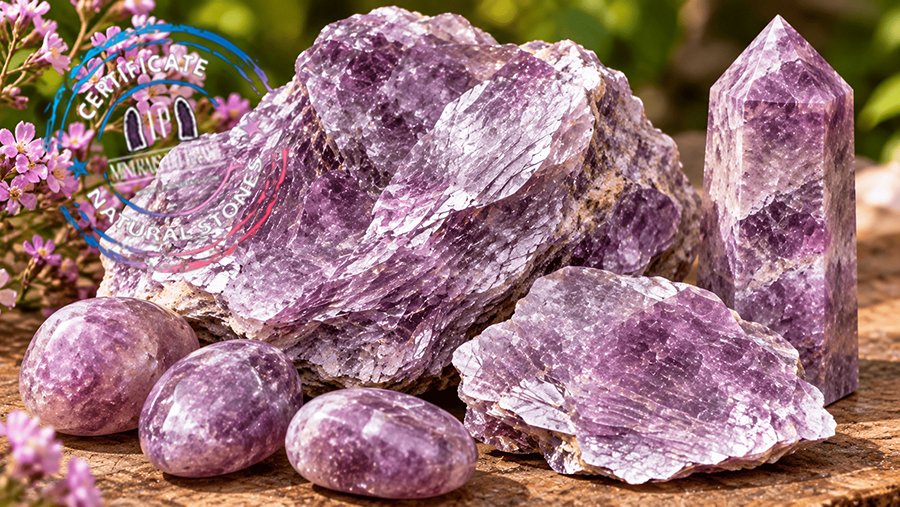
Lepidolite: properties, geological origin, spiritual meaning, and applications of this lilac-colored stone
Smoky Quartz: the stone of energetic protection, grounding, and inner strength
Blue Kyanite: why is this stone of spiritual protection known as the Sword of Archangel Michael?
Rhodonite: Why Is It Known as the Stone of Forgiveness and Emotional Healing?
Howlite: what lies behind the Stone of Calm and Inner Silence?
Moonstone: the Stone of Intuition, Feminine Energy, and the Mysteries of the Moon.
Jade: The Stone of Wisdom, Prosperity, and Harmony That Spans Millennia
Angelite: The Stone of Serenity, Intuition, and Spiritual Connection
Green Aventurine: the Stone of Prosperity, Opportunity, and New Paths
Orange Calcite: The Solar Energy That Awakens Creativity and Movement