






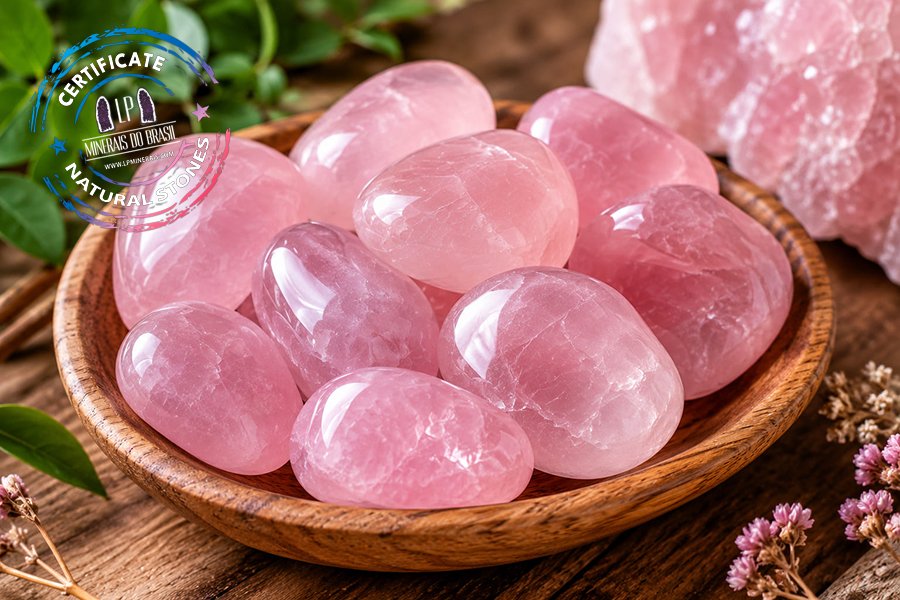
Rose Quartz is one of the world’s best-known and most admired gemstones, both for its delicate color and for the symbolism traditionally associated with love, compassion, and emotional harmony. Present in various cultures throughout history, this mineral has found its place not only in jewelry and home decor but also in wellness and spiritual practices that value its gentle, welcoming energy.
In the world of crystals, Rose Quartz is often associated with strengthening emotional bonds, self-love, and the pursuit of emotional balance. Its delicate appearance contrasts with a resistant and stable mineral structure, making it a versatile stone for collectors, holistic therapists, interior designers, and mineral enthusiasts.
In addition to its widely recognized symbolism, Rose Quartz holds significant geological importance. It is a variety of quartz, one of the most abundant minerals in the Earth’s crust, found in various regions of the world, including major deposits in Brazil, a country internationally recognized for the quality of its natural minerals and crystals.
What is Rose Quartz?
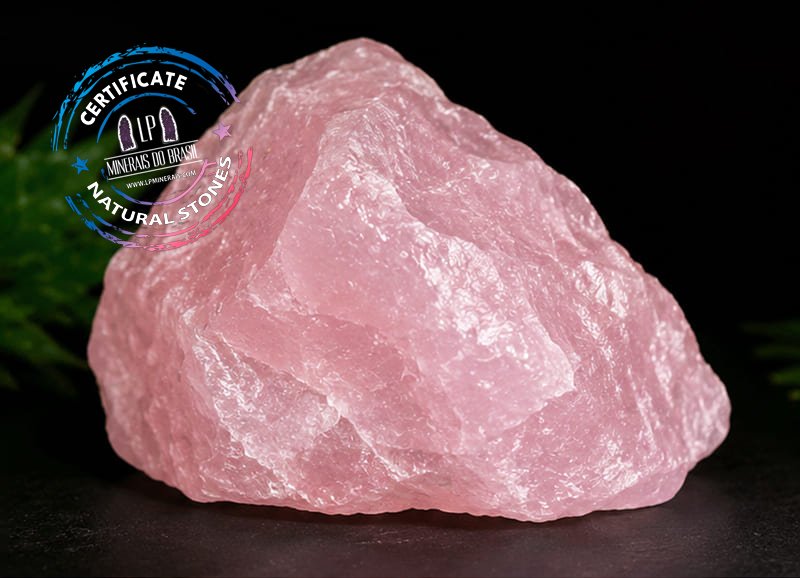
Rose Quartz is a variety of quartz whose color ranges from soft shades of light pink to a more intense pink. This hue is related to the presence of trace elements and microscopic inclusions in its crystalline structure, although the exact mechanism responsible for the color is still the subject of mineralogical studies.
Belonging to the silicate group, Rose Quartz shares the fundamental characteristics of common quartz, including good physical resistance, a vitreous luster, and widespread geological occurrence. Its natural beauty and relative abundance have contributed to its popularity in various segments of the mineral market.
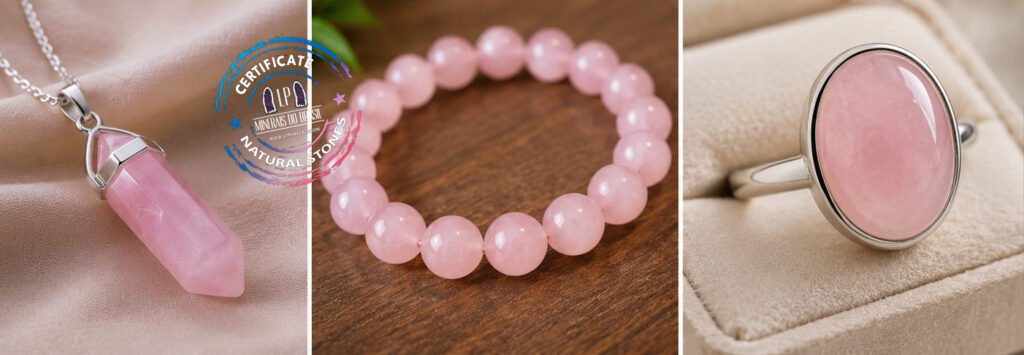
Among its most common applications are:
- Jewelry and accessories;
- Ornamental sculptures;
- Decorative objects;
- Mineral collecting;
- Meditation and relaxation spaces;
- Gifts with symbolic meaning.
Its combination of beauty, affordability, and symbolism makes Rose Quartz one of the most sought-after natural stones on the global market.
Geological Origin and Mineralogical Formation
The formation of Rose Quartz is primarily associated with pegmatitic and hydrothermal environments. These geological environments are characterized by slow crystallization processes, allowing for the development of well-defined mineral structures.
Granitic pegmatites, where Rose Quartz frequently occurs, are known for concentrating minerals of great economic and collectible interest. During magma cooling, silica-rich solutions promote the crystallization of quartz into different varieties, including the rose variety.
The main producing countries include:
- Brazil
- Madagascar
- India
- Mozambique
- South Africa
- United States
Brazil holds a prominent position in the international market for natural minerals and crystals, recognized for the quality of its specimens and the importance of its mineral production chain.
Mineralogical Properties of Rose Quartz
From a technical standpoint, Rose Quartz exhibits characteristics similar to other varieties of quartz.
Main Characteristics
- Mineral class: Silicates
- Chemical composition: SiO₂ (Silicon Dioxide)
- Crystal system: Trigonal
- Mohs hardness: 7
- Luster: Vitreous
- Transparency: Translucent to transparent
- Fracture: Conchoidal
- Cleavage: Absent
Its relatively high hardness makes it suitable for use in jewelry, decorative objects, and items intended for everyday use.
Traditional Meaning of Rose Quartz
Among the stones traditionally associated with the emotional realm, few have achieved the popularity of Rose Quartz. In various schools of crystal therapy, it is often linked to love in its various forms, including affection, friendship, empathy, acceptance, and self-love.
It is important to note that these associations belong to the realm of cultural and spiritual traditions and do not constitute scientifically proven properties.
Traditionally, Rose Quartz is used by people who wish to create more harmonious environments, strengthen interpersonal relationships, or develop greater emotional balance during periods of personal transformation.
Its presence in residential settings, therapeutic spaces, and places designed for relaxation is linked to the symbolic perception of gentleness, warmth, and serenity.
Energy, Symbolism, and Spiritual Use
Over the past few decades, Rose Quartz has become one of the most widely used stones in energy and meditative practices. Its delicate color contributes to its symbolic association with feelings of affection, understanding, and emotional balance.
Traditionally, it is described as a stone focused on fostering healthy relationships, promoting self-care, and creating emotionally balanced environments. In many holistic practices, the crystal is used as a supportive element during moments of introspection and personal reflection.
It is frequently associated with:
- Self-love;
- Emotional harmony;
- Empathy;
- Compassion;
- Kindness;
- Emotional balance;
- Inner serenity.
Many people also use Rose Quartz in relaxation spaces, offices, meditation rooms, and areas dedicated to well-being, seeking to create a more welcoming atmosphere.
Rose Quartz in Interior Design and Space Harmonization
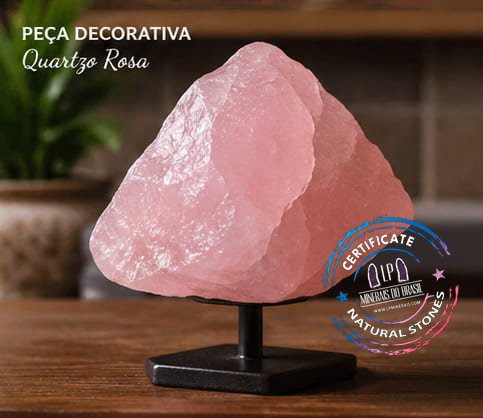
In addition to its mineralogical value, Rose Quartz has great decorative significance. Its soft hue allows it to blend seamlessly with different interior styles, from classic settings to contemporary designs.
Ornamental pieces made from Rose Quartz are frequently used in:
- Living rooms;
- Bedrooms;
- Offices;
- Corporate reception areas;
- Therapeutic spaces;
- Meditation spaces.
In the context of harmonizing environments, the choice of these materials is generally driven by the desire to create visually serene and welcoming spaces.
Applications in Jewelry
Rose Quartz is widely used in jewelry making due to its natural beauty and good resistance to wear and tear.
Among the most common pieces are:
- Necklaces;
- Pendants;
- Bracelets;
- Rings;
- Earrings;
- Cut sculptures.
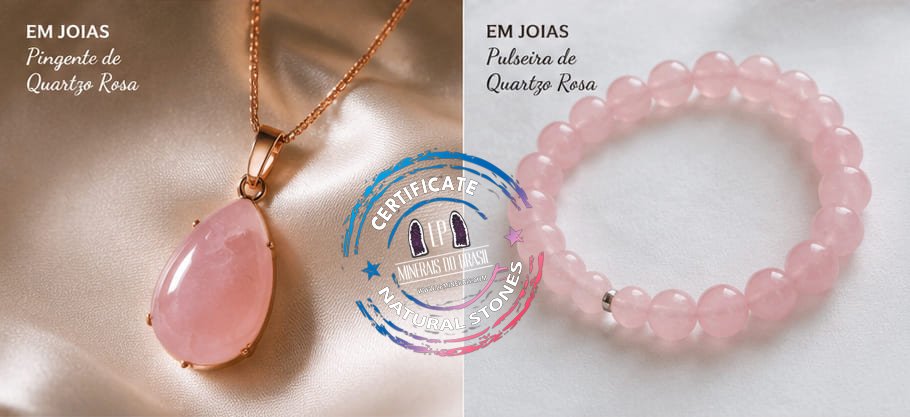
Its delicate hue allows for elegant combinations with metals such as silver, yellow gold, and rose gold, expanding its presence in the national and international jewelry market.
Mineral Market, Collectibles, and Commercial Value
Rose Quartz is considered a relatively abundant mineral when compared to rare gemstones. However, factors such as transparency, color intensity, size, and cut quality directly influence its market value.
High-quality specimens can attract significant interest among:
- Collectors;
- Jewelry designers;
- Architects;
- Interior designers;
- Specialty retailers;
- Mineral exporters.
In Brazil, the appreciation of natural minerals is directly linked to the growing demand for responsibly sourced products with known provenance and careful selection.
The adoption of practices aligned with Fair Trade principles strengthens the economic and environmental sustainability of the mineral supply chain, adding value to the final product and expanding its acceptance in international markets.
🗺 LP MINERAIS Technical Section ⛏💎📦🗺
🗺 » ORIGIN – Brazil, Madagascar, India, Mozambique, South Africa, and other pegmatite deposits.
⚛️ » CHEMICAL COMPOSITION – SiO₂ (Silicon Dioxide).
🔩 » MOHS SCALE – 7.
🔢 » NUMEROLOGY – There is no mineralogical or scientific consensus regarding a specific numerological meaning.
🔅 » MEANING – Traditionally associated with love, emotional harmony, and self-care.
🅰️ » SUMMARY – A pink variety of quartz widely used in jewelry, home decor, and holistic practices.
✅ » SPECIFICATION – Silicate belonging to the quartz group.
🧩 » STATE – Natural mineral.
⚒ » FORMATION – Silica-rich pegmatitic and hydrothermal processes.
⚠️ » CARE – Avoid strong impacts and prolonged exposure to conditions that may compromise its appearance.
🛁 » CLEANING – Running water, soft cloth, and periodic physical cleaning.
🎨 » COLOR – Light pink to deep pink.
☯️ » ZODIAC – There are traditional associations in some esoteric traditions, but there is no universally recognized consensus.
🪐 » SOLAR SYSTEM – There is no formal astronomical or scientific association.
➰ » CHAKRAS – Often associated with the heart chakra in holistic traditions.
♻ » ELEMENT – There is no universal consensus among different esoteric schools.
💎 » RARITY – Considered relatively abundant.
🗳 » CHARACTERISTICS – Soft coloration, vitreous luster, and strong symbolic appeal.
FAQ – Frequently Asked Questions About Rose Quartz
How can you tell if Rose Quartz is real?
Authentication should be performed through gemological analysis, observation of natural characteristics, and purchase from specialized and reliable suppliers.
Is Rose Quartz a rare stone?
No. It is a relatively abundant variety of quartz, although high-quality specimens may have greater commercial value.
What is Rose Quartz used for?
In the mineral market, it is used in jewelry, decoration, collecting, and crafts. In holistic traditions, it is often associated with emotional harmony and self-love.
Can Rose Quartz be used in professional settings?
Yes. It is common to find decorative pieces in offices, reception areas, clinics, and corporate spaces.
What is the difference between Rose Quartz and Clear Quartz?
The main difference is the color. Both belong to the same mineral group, but Rose Quartz has a characteristic pink hue.
Can Rose Quartz get wet?
Yes. The mineral exhibits good stability when in contact with water under normal conditions of use.
What is the origin of Brazilian Rose Quartz?
Most Brazilian specimens come from pegmatite environments found in states with a mining tradition.
Is Rose Quartz used in mineral exports?
Yes. It is one of the most internationally traded varieties of quartz, both in its raw and cut forms.
Conclusion
Rose Quartz combines natural beauty, mineralogical significance, and strong cultural symbolism. Its widespread use in jewelry, interior design, and collecting demonstrates the versatility of a mineral that remains among the most admired in the world.
In addition to its geological importance, the crystal remains traditionally associated with emotional harmony, warmth, and the strengthening of emotional bonds. This combination of aesthetic value, symbolic meaning, and commercial availability explains its constant presence in the global mineral market.
For companies committed to ethical sourcing, careful selection, and the promotion of a responsible mineral supply chain, Rose Quartz represents an example of the mineral wealth that connects nature, culture, and the market in a single stone.
By: Doris S. Rosa
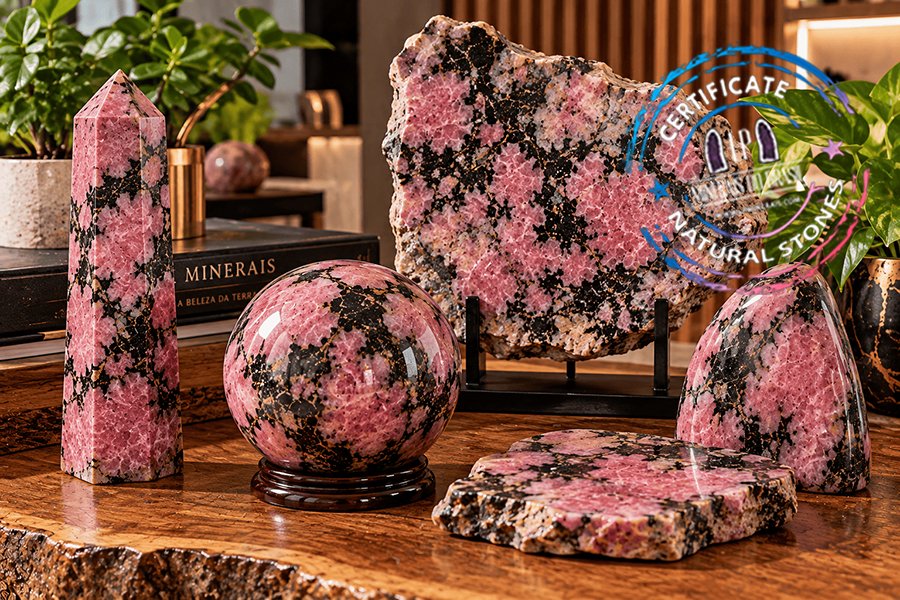
Rhodonite: Why Is It Known as the Stone of Forgiveness and Emotional Healing?
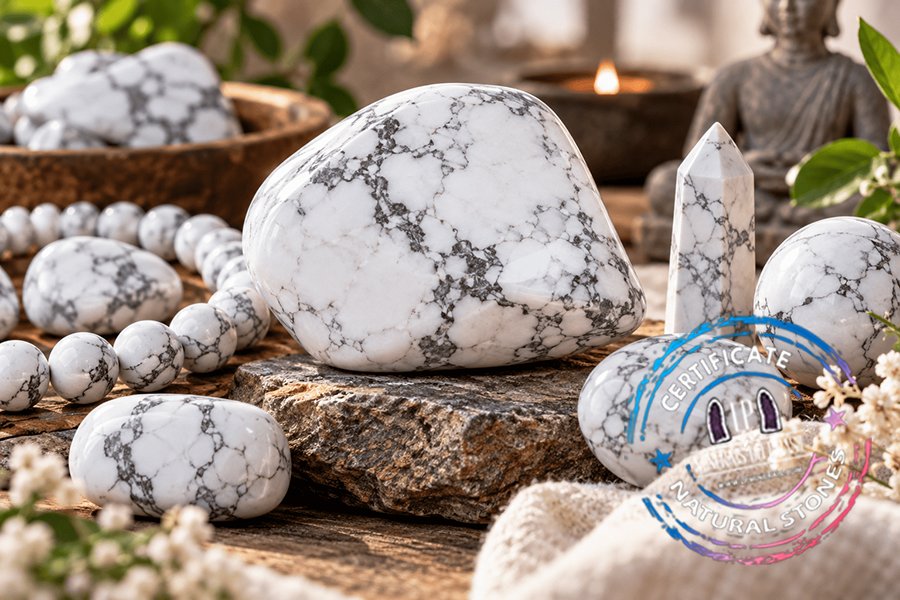
Howlite: what lies behind the Stone of Calm and Inner Silence?
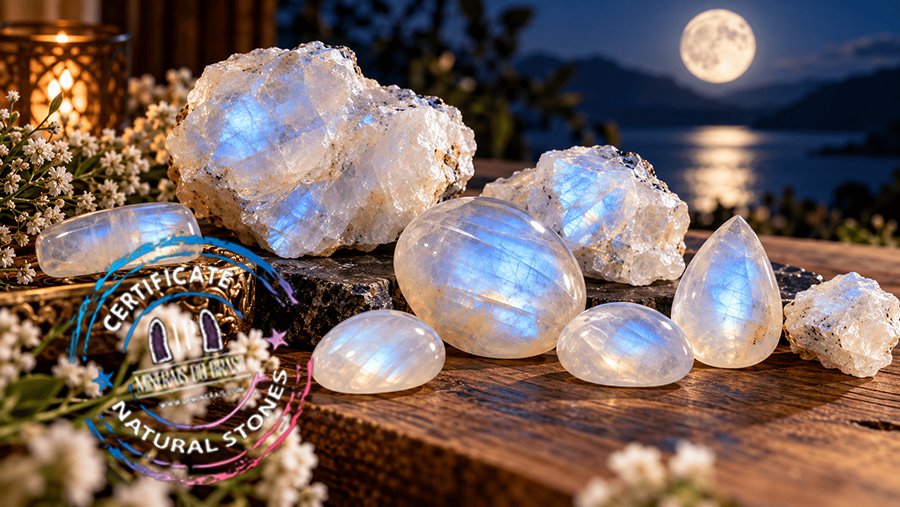
Moonstone: the Stone of Intuition, Feminine Energy, and the Mysteries of the Moon.
Jade: The Stone of Wisdom, Prosperity, and Harmony That Spans Millennia
Angelite: The Stone of Serenity, Intuition, and Spiritual Connection
Green Aventurine: the Stone of Prosperity, Opportunity, and New Paths
Orange Calcite: The Solar Energy That Awakens Creativity and Movement
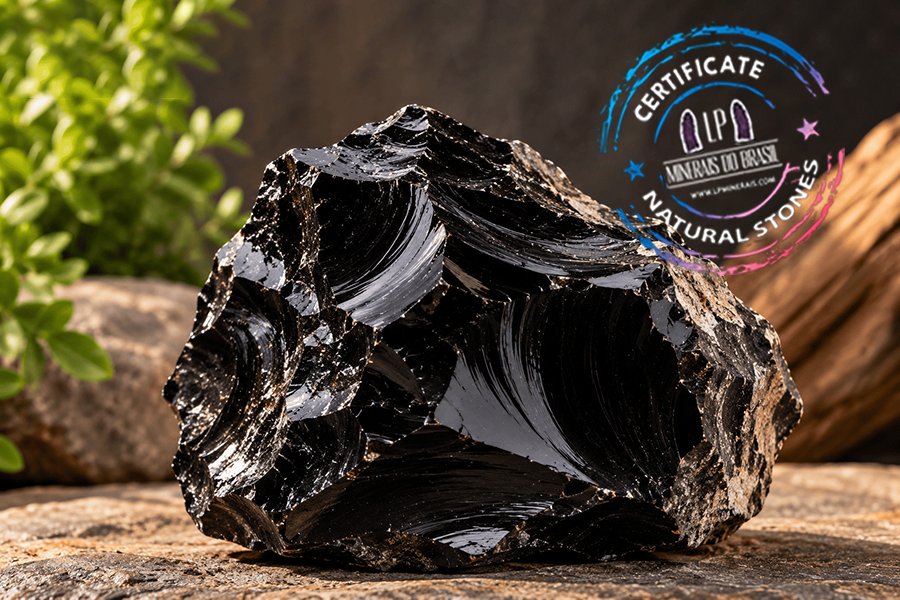
Black Obsidian: origin, formation, properties, and meaning of one of the best-known protective stones.
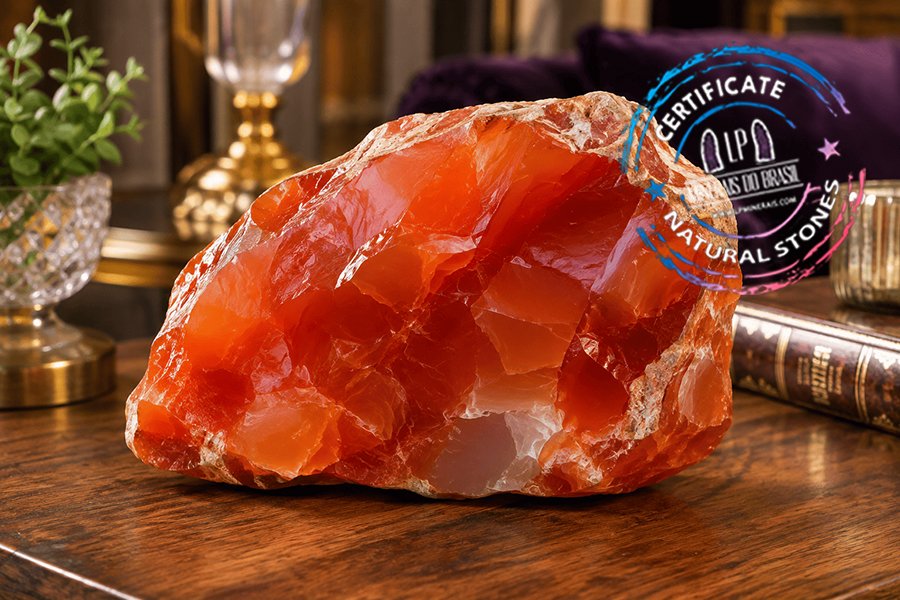
Carnelian: origin, formation, mineralogy, and the vibrant energy of a stone linked to action.
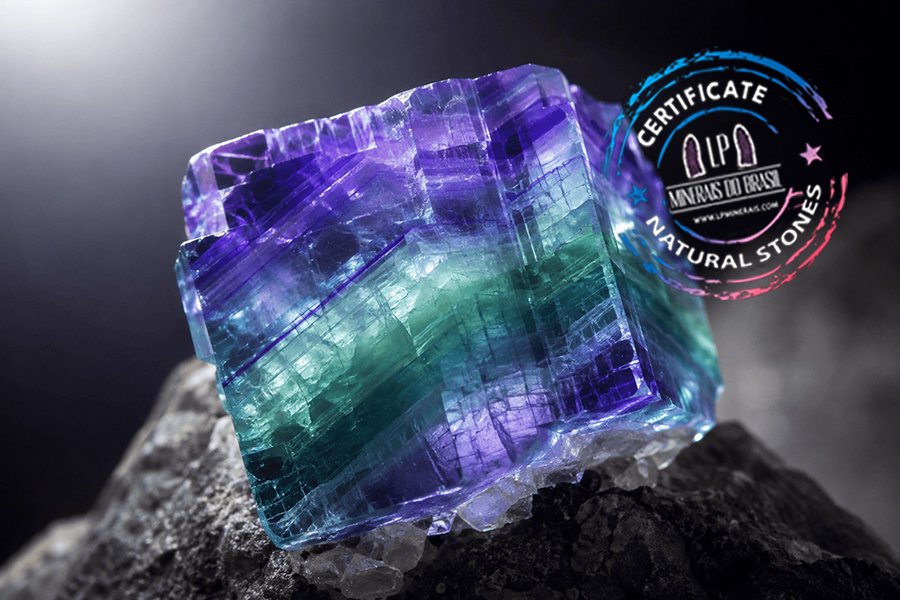
Fluorite: Mineralogy, Formation, Colors, and Meaning of a Mineral that Organizes Light and Color