










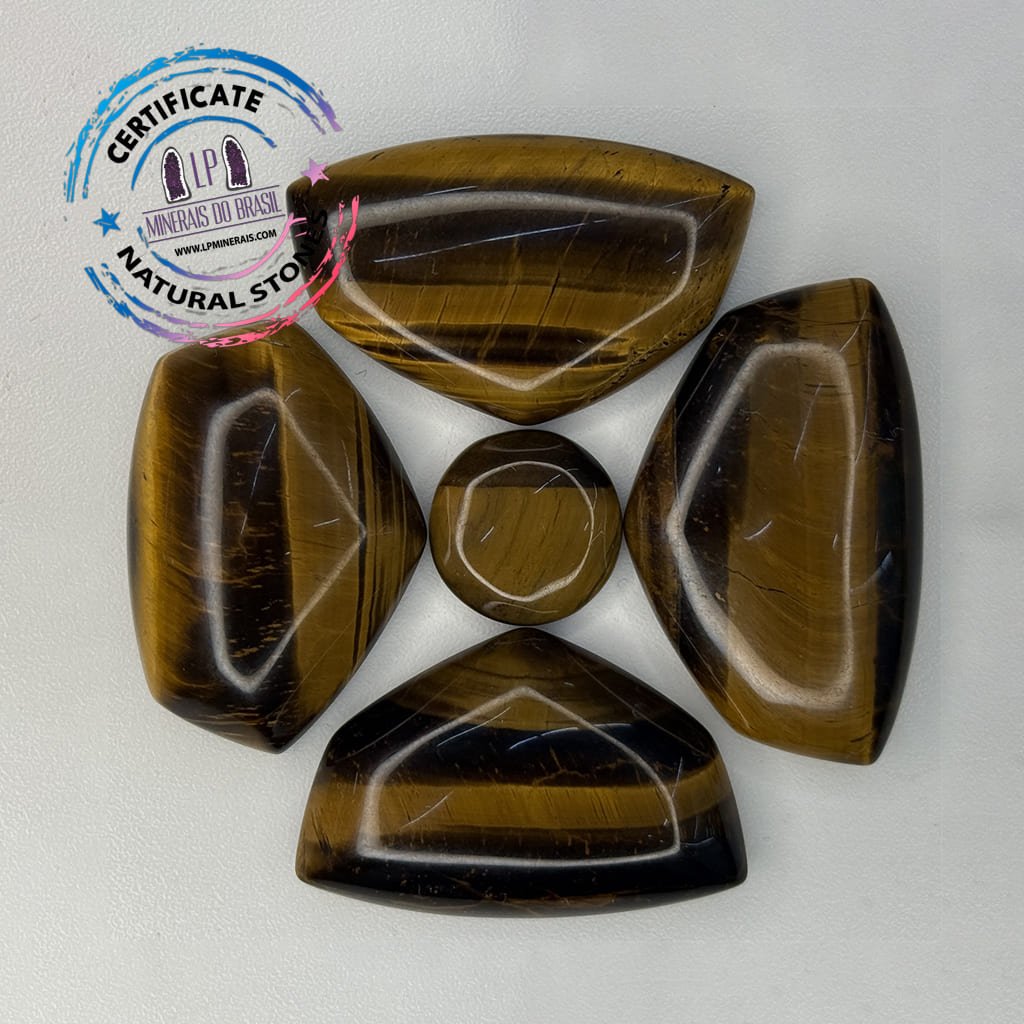
An Introduction to Tiger’s Eye in the Context of Minerals and Commerce
Tiger’s Eye is one of the most recognizable and widely traded gemstones in the mineral world, particularly for its unique appearance, characterized by the optical phenomenon known as chatoyancy—the “cat’s eye” effect that creates a shifting band of light across the stone’s surface. This characteristic gives the mineral a distinctive aesthetic value, making it extremely popular both in the jewelry industry and in decorative and energetic applications.
In the context of LP MINERAIS ⛏💎📦🗺, Tiger’s Eye represents one of the entry points for new consumers into the world of crystals, while remaining relevant to collectors and international distributors. Its wide availability, combined with its striking beauty, facilitates large-scale export operations, especially when associated with Fair Trade practices and Brazilian origin.
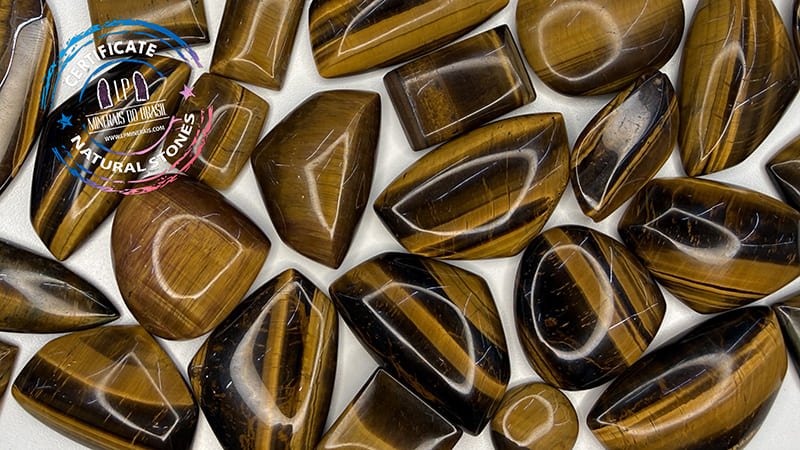
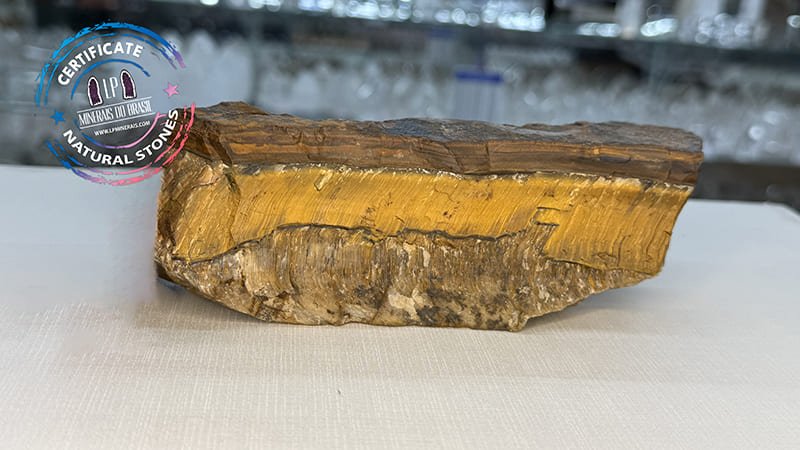
From a technical standpoint, it is a variety of pseudomorphic quartz formed by the gradual replacement of crocidolite fibers with silica, while retaining the original fibrous structure. This geological transformation is what gives rise to its characteristic visual effect.
Geological Formation and Mineralogical Origin
The Process of Mineral Formation and Transformation
Tiger’s Eye is the result of a fascinating geological process involving mineral replacement (pseudomorphism), in which crocidolite—a type of blue asbestos—is gradually replaced by quartz (SiO₂), without losing its original fibrous structure.O Olho de Tigre é resultado de um processo geológico fascinante que envolve a substituição mineral (pseudomorfismo), onde a crocidolita — um tipo de asbesto azul — é progressivamente substituída por quartzo (SiO₂), sem perder sua estrutura fibrosa original.
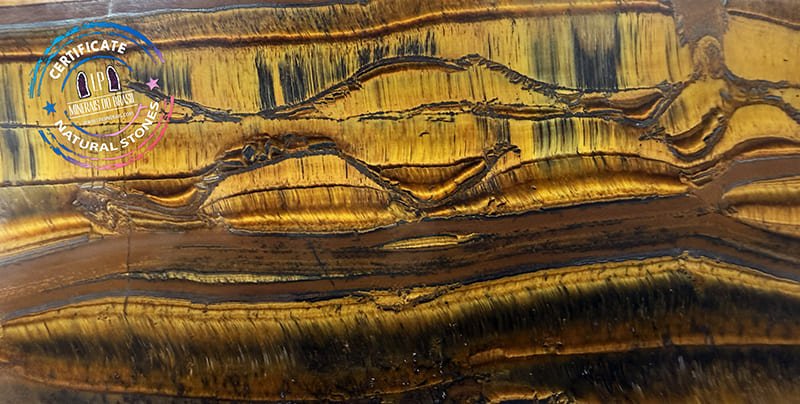
This process occurs in silica-rich environments, typically in metamorphic and hydrothermal formations, where mineral fluids infiltrate the rocks and drive chemical transformation over millions of years. The result is a stone with a silky luster and golden to brown bands, highly prized in the mineral market.
Key characteristics of the process:
This origin gives Tiger’s Eye not only beauty, but also structural stability and durability, essential factors for commercial applications.
- Replacement of crocidolite with silica
- Preservation of the fibrous structure
- Formation of the chatoyant optical effect
- Association with metamorphic environments
This origin gives Tiger’s Eye not only beauty, but also structural stability and durability—essential qualities for commercial applications.
Major Deposits and Global Origin
The main sources of tiger’s eye are located in regions with a geological history rich in metamorphic formations. Notable among these are:
- South Africa (the world’s leading producer)
- Australia
- India
- Brazil (a growing player in the export market)
- Namibia
In Brazil, the mineral is found in deposits associated with banded iron formations, which reinforces LP MINERAIS’ strategic position as a supplier of ethically sourced and traceable materials.
The growing recognition of Brazilian origin in the international market is directly linked to the quality of the material, transparency in the supply chain, and a commitment to sustainable practices.
Physical, Chemical, and Crystalline Properties
Tiger’s Eye possesses technical properties that make it an excellent gemstone for a wide range of applications.
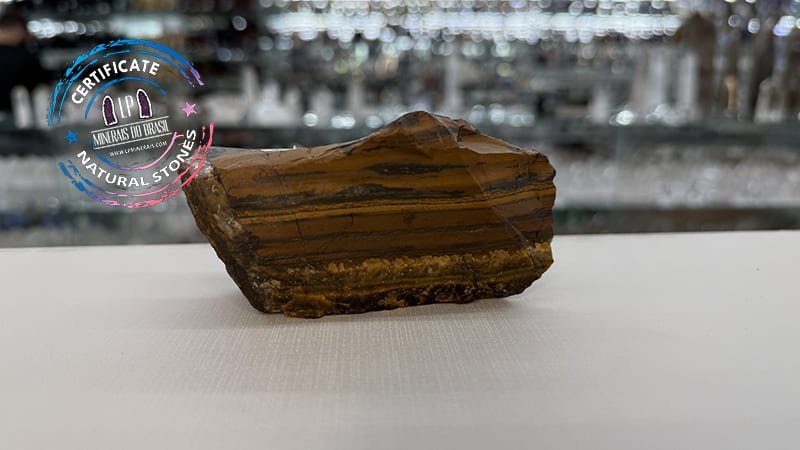
Its chemical composition is based on silicon dioxide (SiO₂), a characteristic common to quartz, but it contains fibrous inclusions that create a unique optical effect.
Main properties:
- Hardness: 6.5 to 7 on the Mohs scale
- Crystal system: trigonal
- Fracture: conchoidal
- Luster: silky to vitreous
- Transparency: opaque to translucent
- Density: approximately 2.64 g/cm³
Its high hardness ensures wear resistance, making Tiger’s Eye ideal for use in everyday jewelry, such as bracelets and rings.
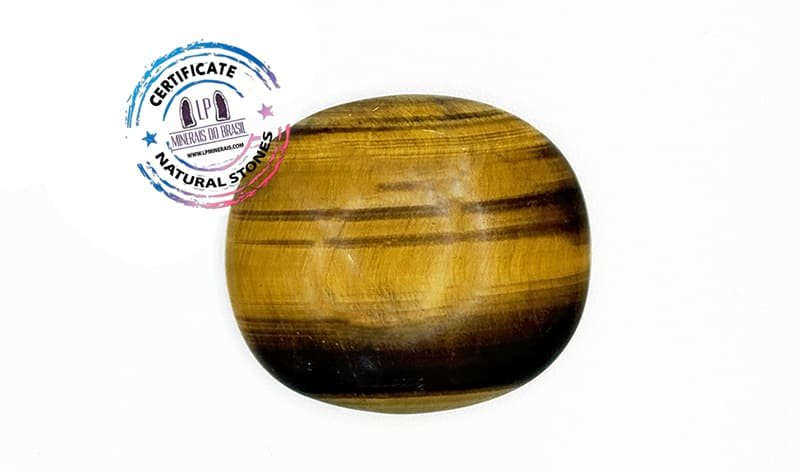
In addition, its compact structure allows for various types of cuts, particularly the cabochon cut, which maximizes the chatoyant effect.
Differentiation, Authenticity, and Variety
Identifying an authentic Tiger’s Eye is essential for both end consumers and institutional buyers. There are imitations on the market made of glass or synthetic materials that do not faithfully reproduce the natural optical effect.
Authenticity criteria:
- Movement of the light band as light strikes it
- Visible fibrous texture
- Absence of internal bubbles (indicative of glass)
- Weight consistent with quartz
Notable varieties include:
- Golden Tiger’s Eye (most common)
- Red Tiger’s Eye (heat-treated)
- Hawk’s Eye (bluish variety, pre-oxidation stage)
Proper differentiation has a direct impact on the supplier’s market value and credibility.
Market Applications: Jewelry, Home Decor, and Collectibles
Tiger’s Eye offers a wide range of applications, making it one of the most commercially versatile minerals.
In jewelry, it is widely used in:
- Bracelets
- Necklaces
- Rings
- Pendants
Its masculine and sophisticated visual appeal broadens its consumer base, making it a strategic choice for both premium and commercial lines.
In home decor:
- Orbs
- Towers
- Sculptures
- Energetic objects
In collecting:
- High-quality rough pieces
- Specimens with strong chatoyancy
- Rare varieties
This range of uses increases the average transaction value and allows for engagement in different market niches.
Market Value, Rarity, and Market Position
Although it is not considered a rare mineral, tiger’s eye has high liquidity in the global market. Its value is directly related to the intensity of its optical effect, color uniformity, and cut quality.
Factors that influence the price:
- Intensity of the chatoyant luster
- Absence of fractures
- Certified origin
- Finish
For exports, particularly through LP MINERAIS ⛏💎📦🗺, our strategic focus lies in curating premium pieces with guaranteed provenance and international standards.
Energetic Properties and Spiritual Use
Tiger’s Eye is widely recognized in the energy field as a stone that offers protection and promotes personal empowerment. Its energy is associated with courage, focus, and emotional balance.
It primarily works on the solar plexus chakra, fostering self-confidence and assertive decision-making.
Energy applications:
- Protection against negative energy
- Improved concentration
- Emotional balance
- Boosted self-confidence
Associations:
- Chakra: Solar Plexus
- Element: Fire and Earth
- Zodiac Signs: Leo, Capricorn, Gemini
- Planet: Sun
It is commonly used in workplaces, study environments, and meditation practices.
LP MINERAIS ⛏💎📦🗺 Technical and Energy Division
🗺 » ORIGIN: South Africa, Brazil 🇧🇷, Australia, India
⚛️ » CHEMICAL COMPOSITION: SiO₂ (silicon dioxide)
🔩 » MOHS SCALE: 6.5–7
🔢 » NUMEROLOGY: 4
🔅 » MEANING: Protection, focus, and personal power
🅰️ » ABSTRACT: Pseudomorphic quartz with a chatoyant effect
✅ » SPECIFICATION: Fibrous, opaque, silky sheen
🧩 » CONDITION: Natural and polished
⚒ » FORMULATION: Replacement of crocidolite with silica
⚠️ » CAUTION: Avoid strong impacts
🛁 » CLEANING: Running water and solar power
🎨 » COLOR: Gold, brown, red
☯️ » ZODIAC: Leo, Capricorn, Gemini
🪐 » SOLAR SYSTEM: Sun
➰ » CHAKRAS: Solar Plexus
♻ » ELEMENT: Fire/Earth
💎 » RARITY: Common (high demand)
🗳 » FEATURE: “Cat’s eye” optical effect
FAQ – Frequently Asked Questions About Tiger’s Eye
Is tiger’s eye a natural or synthetic stone?
It is a natural stone, although there are imitations on the market. Authentication should be based on visual inspection and a reliable source.
What is the average price of a tiger’s eye?
The price varies depending on quality, clarity, and cut; it is affordable, though there are premium versions with higher added value.
Can you get the Tiger’s Eye wet?
Yes, there are no restrictions on water, but it is recommended to avoid chemicals.
How can you tell if it’s true?
Note the chatoyancy and the fibrous structure.
Is it a rare stone?
No, but it is in high demand and has excellent liquidity in the global market.
Can it be used every day?
Yes, its hardness makes it suitable for continuous use in jewelry.
Conclusion
Tiger’s Eye has established itself as one of the most strategic stones in the global mineral portfolio, combining striking aesthetics, robust technical properties, and strong energetic appeal. Its market presence is underpinned by its versatility in applications and its symbolic connection to protection and personal power.
Within LP MINERAIS’s positioning ⛏💎📦🗺, Tiger’s Eye represents not just a product, but an opportunity to strengthen authority in the mineral sector, promoting ethical sourcing, highlighting Brazil’s value, and expanding into the international market.
By Doris S. Rosa
Rhodonite: Why Is It Known as the Stone of Forgiveness and Emotional Healing?
Howlite: what lies behind the Stone of Calm and Inner Silence?
Moonstone: the Stone of Intuition, Feminine Energy, and the Mysteries of the Moon.
Jade: The Stone of Wisdom, Prosperity, and Harmony That Spans Millennia

Angelite: The Stone of Serenity, Intuition, and Spiritual Connection
Green Aventurine: the Stone of Prosperity, Opportunity, and New Paths
Orange Calcite: The Solar Energy That Awakens Creativity and Movement
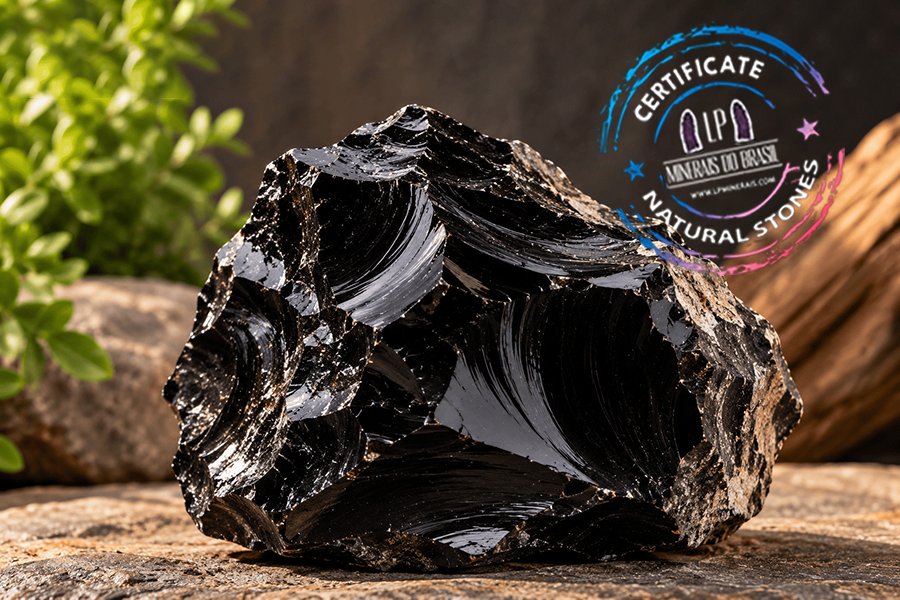
Black Obsidian: origin, formation, properties, and meaning of one of the best-known protective stones.
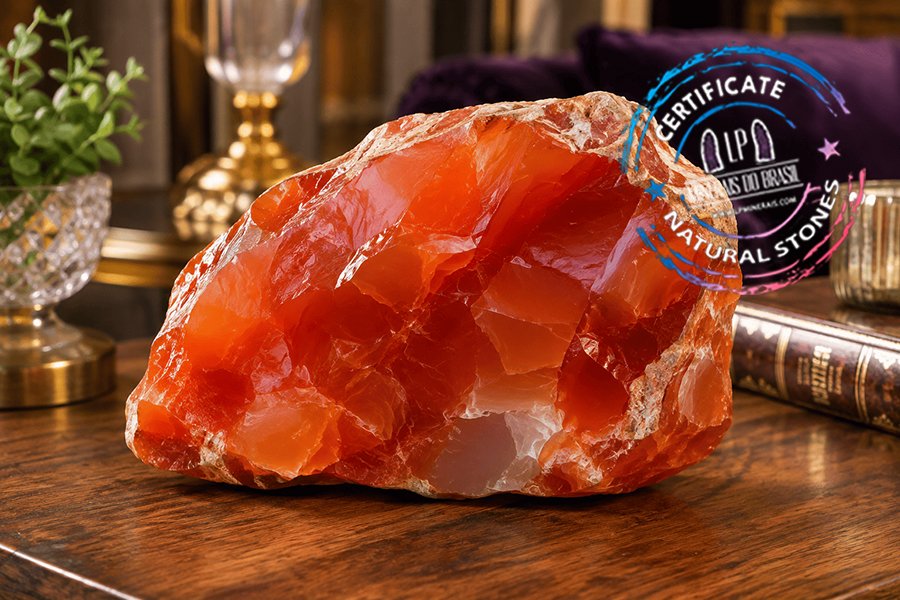
Carnelian: origin, formation, mineralogy, and the vibrant energy of a stone linked to action.
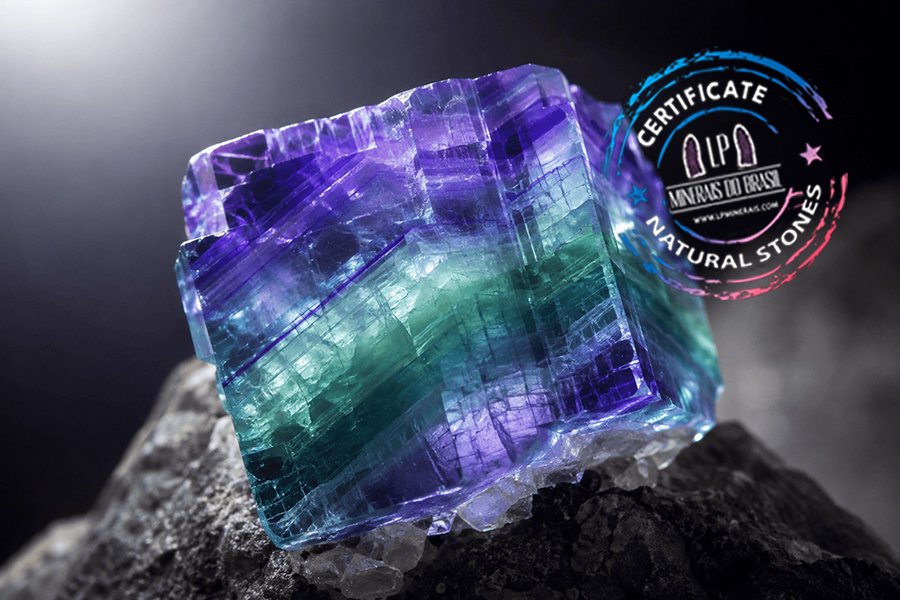
Fluorite: Mineralogy, Formation, Colors, and Meaning of a Mineral that Organizes Light and Color