




Selenite is one of the most delicate and recognizable forms of gypsum, known for its satiny luster, luminous appearance, and almost ethereal quality. In transparent or fibrous specimens, light seems to glide across its surface, creating a visual effect that has helped make this mineral one of the most sought-after for decoration, collecting, and wellness practices.
Despite its sophisticated appearance, selenite is a relatively simple mineral from a chemical standpoint. Its beauty lies precisely in the contrast between delicacy and structure: it is soft, sensitive to moisture and impact, yet it can form crystals of great length and impressive purity.
Its name is linked to the Moon. The word “selenite” derives from Selene, the lunar goddess of Greek mythology—an association inspired by the whitish sheen and soft appearance of certain crystals. This historical connection has also helped shape part of its spiritual symbolism, traditionally associated with clarity, tranquility, and purification.
Geological Origin and Formation of Selenite
Selenite forms primarily in evaporitic sedimentary environments. These deposits form when waters rich in mineral salts slowly evaporate, allowing different compounds to crystallize in sequence.
During this process, hydrated calcium sulfate precipitates and forms gypsum. When the crystals exhibit good transparency and well-developed faces, they are often called selenite.
It can also form in cavities within sedimentary rocks and in deposits associated with ancient marine basins or salt lakes. Under exceptional conditions, the crystals can grow for long periods without significant interference, forming specimens of impressive size.
One of the most famous examples is found in the Naica Crystal Cave in Mexico, where enormous gypsite crystals grew under extremely stable geological conditions, with heat and saturated mineral waters over the course of thousands of years.
Essential Mineralogy
Selenite is composed of hydrated calcium sulfate, with the chemical formula CaSO₄·2H₂O.
It belongs to the monoclinic crystal system and has a hardness of 2 on the Mohs scale, meaning it can be scratched with relative ease. This low hardness explains why selenite specimens must be handled with care.
An important characteristic is its very good cleavage, which allows the mineral to split along defined planes. For this reason, drops and impacts can cause chips or fractures.
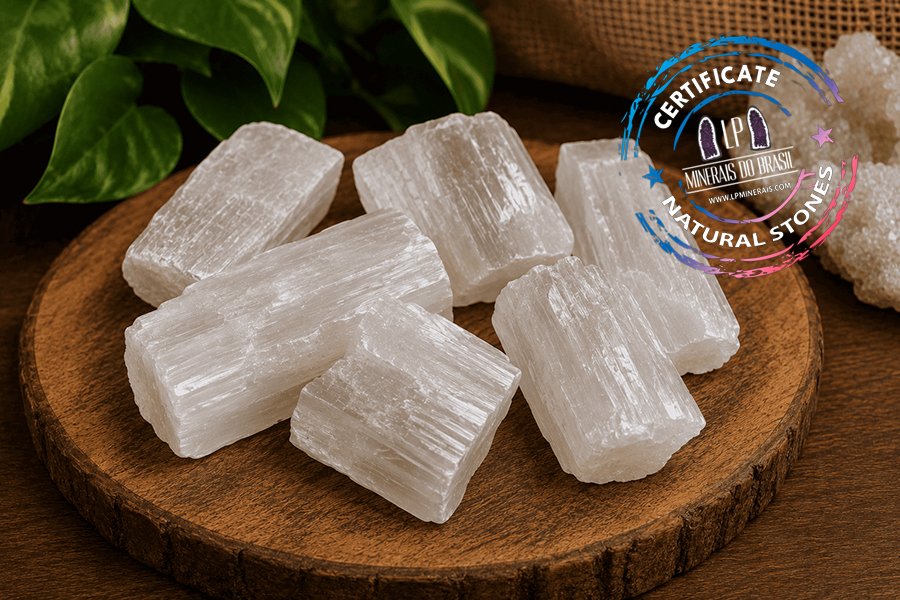
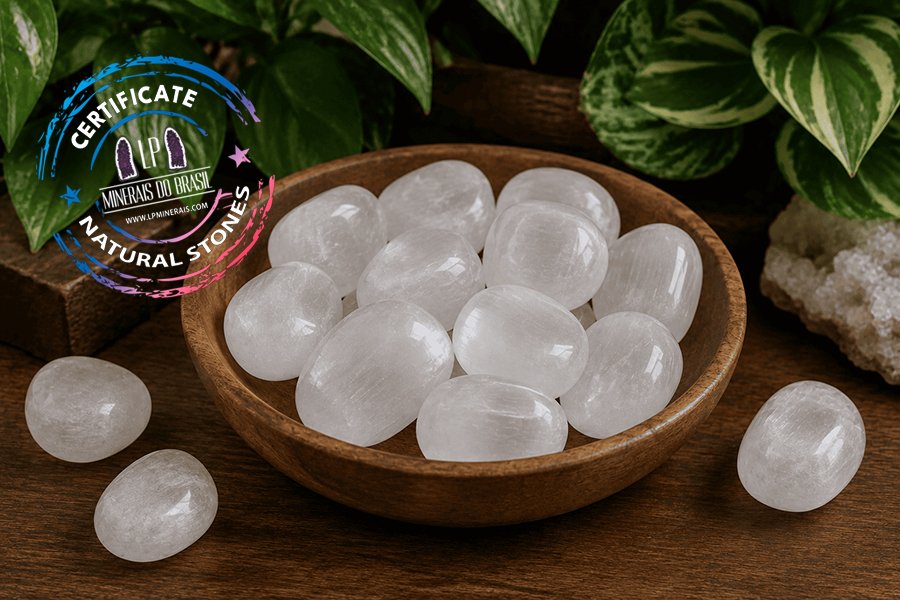
Not all gypsum is commercially referred to as selenite. The term is traditionally used for more transparent or well-crystallized crystals, while fibrous varieties may be marketed as Satin Spar, and compact, fine-grained forms are known as Alabaster.
This distinction is important because, in the crystal market, many pieces sold as Selenite are, mineralogically speaking, fibrous varieties of gypsum. This does not mean they are fake; they simply belong to a different mineral habit of the same species.
Appearance, Luster, and Varieties
Selenite is usually associated with the color white, but it can exhibit different shades depending on inclusions and impurities present during its formation.
It is found in the following shades:
- colorless;
- milky white;
- cream;
- yellowish;
- grayish;
- orange in some varieties.
Transparent crystals have a vitreous or pearly luster, while fibrous varieties exhibit a very characteristic silky luster.
In Satin Spar specimens, it is common to observe an optical effect known as chatoyance, in which a luminous band appears to shift across the surface as the stone or the light changes position. This effect results from the alignment of the mineral fibers.
Selenite, Satin Spar, and Alabaster: What’s the Difference?
This is one of the most common sources of confusion in the crystal market.
All of these varieties are composed of gypsum, but they have different structures and appearances.
Selenite itself typically forms transparent or translucent crystals, usually elongated and with well-defined faces.
Satin Spar has a fibrous structure and a silky luster, and is widely used in the manufacture of towers, rods, plaques, and decorative objects.
Alabaster, on the other hand, is a compact variety with a very fine grain, frequently used in sculptures and ornamental objects.
In the marketplace, however, the name “Selenite” has become a broad and popular term, applied to many pieces of Satin Spar. For consumers, the most important thing to understand is that they are based on the same mineral but have different crystal habits.
History, Culture, and Trivia
Gypsum has been part of human history for thousands of years. Compact forms, especially Alabaster, were used by ancient peoples to create sculptures, vases, reliefs, and religious objects.
In Ancient Egypt, alabaster was used for vessels and decorative pieces due to its ease of carving and translucent appearance. In medieval and Renaissance Europe, it became an important material for sculptures and architectural elements.
Crystalline selenite, in turn, aroused admiration mainly for its appearance, which resembles moonlight. Its name reinforced this symbolic association, which remains to this day.
One of its most notable characteristics is the presence of water in its chemical structure. Gypsum contains water molecules bound to the crystal, which explains part of its behavior when subjected to heat as well as its sensitivity to certain environmental conditions.
Today, selenite occupies a unique position: it is at once a geologically interesting mineral, a historic raw material, and one of the most recognized stones in the worlds of interior design and crystal therapy.
Selenite: Purification, Light, and Energy Elevation
Among the stones used in crystal therapy, selenite holds a place of special importance. Its energy is traditionally associated with purification, the elevation of consciousness, clarity, and the creation of an atmosphere of peace. Its white, luminous appearance seems to visually reflect what is attributed to it energetically: cleansing, expansion, and luminosity.
In leading crystal therapy literature, particularly in the traditions represented by Judy Hall and Robert Simmons & Naisha Ahsian, Selenite is associated with the higher realms of consciousness and the ability to foster clarity and spiritual connection. It is not a stone whose identity centers primarily on physical strength, material prosperity, or grounding. Its symbolic and energetic field is different: to purify, elevate, illuminate, and make space for clearer perception.
This characteristic explains its widespread presence in therapy rooms, meditation spaces, altars, and environments dedicated to spiritual practices. It also explains why so many people keep pieces of selenite in their crystal collections.
Above all, it is a stone associated with light.
Energetic Purification: One of Selenite’s Key Attributes
When it comes to Selenite, purification is one of the first attributes traditionally associated with it. In crystal therapy, it is frequently used to help cleanse environments and assist in removing energy patterns considered stagnant or dense.
This characteristic makes its use particularly beneficial in places with a constant flow of people. Home entryways, reception areas, offices, therapy rooms, and commercial spaces are places where selenite is often placed with the intention of fostering a more energetically clean atmosphere.
Inside the home, it can also be placed in areas designated for rest and introspection. Rather than an energy perceived as heavy or strongly stimulating, its effect is traditionally described as elevated, clear, and subtle.
For this reason, its most well-known uses include:
- harmonizing spaces;
- energetic purification;
- therapeutic spaces;
- entrances to homes;
- meditation spaces;
- altars;
- near other crystals.
Selenite has also become well known for its use in plates, rods, and containers on which other crystals are placed. This practice stems precisely from its strong traditional association with energetic cleansing and reorganization.
Mental Clarity and Inner Organization
Another important aspect of selenite relates to clarity.
There are times when the problem isn’t exactly a lack of ideas, but rather an excess of them. Simultaneous thoughts, worries, and stimuli can create a sense of inner confusion. It is in this context that selenite is often used in crystal therapy practices.
Its energy is often associated with the ability to promote a more organized perception, helping to separate what truly deserves attention from what merely creates noise.
This characteristic makes it a valuable presence in places of study, reading, intellectual creation, and decision-making. A Selenite tower or wand on a desk, for example, can be used with the intention of maintaining clarity and purpose during activities that require concentration.
There is an interesting difference between this characteristic and the energy traditionally attributed to stimulating stones. Selenite does not necessarily represent mental acceleration.
On the contrary.
Its symbolism lies precisely in the idea that clarity can emerge when excess subsides.
Selenite and Spiritual Elevation
The spiritual dimension is perhaps one of Selenite’s most profound characteristics.
It is often associated with the expansion of consciousness and the perception of more subtle planes, and is used by practitioners of meditation, energy therapies, and various spiritual paths as a stone for higher connection.
Its association with the Crown Chakra is particularly important. Within the chakra tradition, this energy center represents consciousness, spirituality, understanding, and connection with dimensions that transcend purely material experience.
Some traditions also associate selenite with the higher energy centers, especially when used in practices focused on intuition and spiritual perception.
This combination makes it sought after for:
- deepening meditation;
- developing inner perception;
- spiritual connection;
- contemplation;
- expanding consciousness;
- intuitive clarity.
Selenite does not need to be used in pursuit of extraordinary experiences. Often, its deepest use lies precisely in the opposite: creating enough silence for perception to become more refined.
Selenite in Meditation
Few stones are so naturally suited to meditative environments.
Before beginning your practice, a piece can be placed in front of you or near the space where you meditate.
Some people prefer rods, while others use towers or natural crystals.
The intention is to foster a state of receptivity, serenity, and clarity.
It can also be used in visualization practices in which white light represents cleansing and renewal. In this context, its physical appearance contributes significantly to the experience: the luminous fibers and satiny sheen seem to reinforce the stone’s very symbolism.
Meditation with selenite is often associated with three inner movements:
cleanse → quiet → perceive.
This sequence sums up its energetic identity very well.
First, space is symbolically created. Then, the noise is reduced. Finally, the possibility arises to observe with greater clarity.
Selenite and Environmental Protection
Although there are stones whose protective tradition is linked primarily to grounding and the absorption of dense energies, Selenite follows a different logic.
Its protective properties are traditionally associated with maintaining a high-vibration, purified energy field.
This difference is important.
Instead of functioning symbolically as a heavy barrier, its presence is linked to the idea of clarifying and reorganizing the space’s energy field.
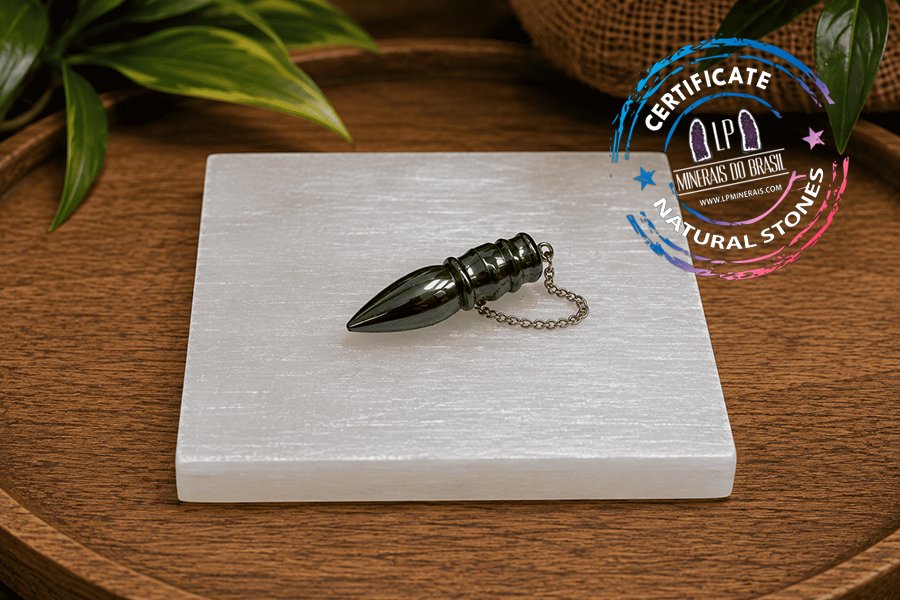
For this reason, a widely used combination is Selenite and Black Tourmaline.
Black Tourmaline is traditionally associated with protection and grounding, while Selenite adds the dimension of purification and elevation. One offers stability; the other, luminosity.
In the entrances of homes, offices, or therapeutic spaces, this combination can create a particularly harmonious energetic composition.
Selenite in the Bedroom and Rest Areas
In the bedroom, Selenite finds an environment that is especially compatible with its energetic nature.
Its association with serenity and purity means it is often chosen to create a more peaceful atmosphere at the end of the day. It can be placed on a piece of furniture, near a reading area, or anywhere its presence also enhances the room’s aesthetics.
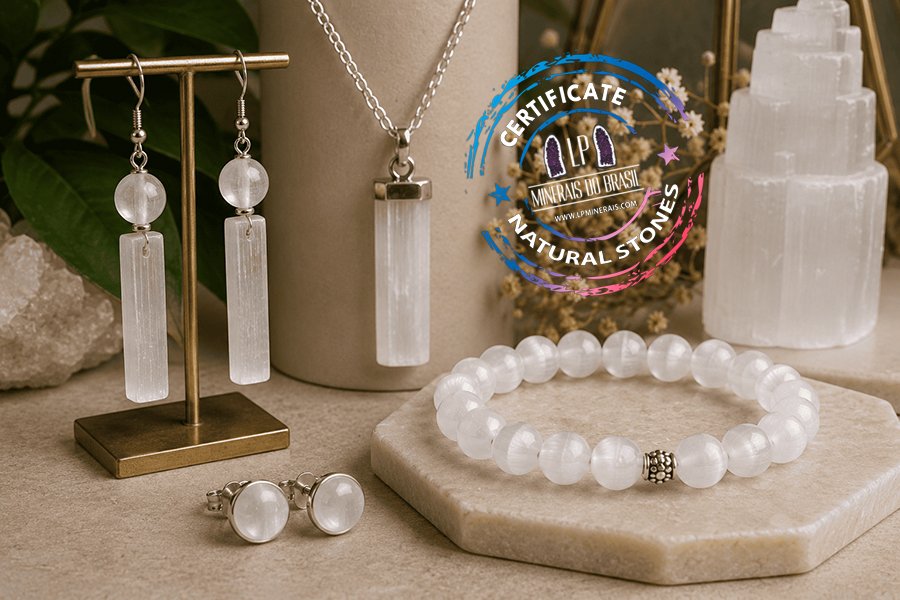
Selenite lamps are particularly interesting because they combine decoration and symbolism. When illuminated, the stone’s fibrous structure produces a soft glow that reinforces its traditional association with peace and tranquility.
In spaces designed for rest, the goal is not to stimulate.
It is to slow down.
Altars and Spiritual Spaces
Selenite has an almost natural presence on altars.
Its luminous white creates a visual balance among other stones, symbolic objects, candles, and elements used in spiritual practices.
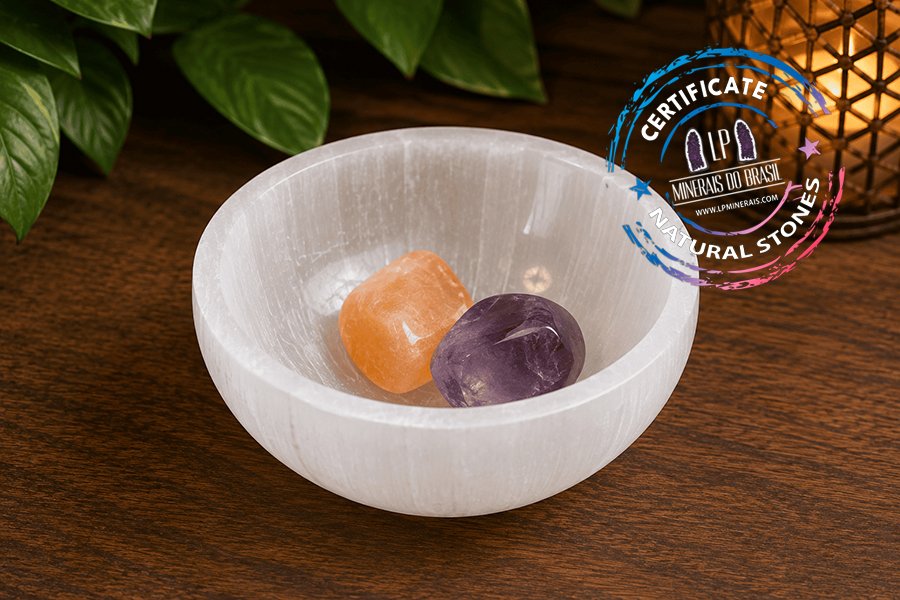
Selenite slabs are also frequently used as a base for small arrangements of crystals. This choice is directly related to its association with purification, making it a sort of organizing element for the arrangement.
On an altar dedicated to meditation, for example, a simple arrangement might combine Selenite, Amethyst, and Clear Quartz.
For protection and balance in the environment, selenite and black tourmaline form another traditionally used combination.
In spaces intended for emotional comfort, the presence of rose quartz can further soften the composition.
The important thing is not to gather dozens of stones. The energetic intention should determine the combination.
Combinations of Selenite with Other Stones
Selenite is particularly versatile because its purifying properties allow it to be integrated into different energetic applications.
Selenite Amethyst
One of the most natural combinations for spiritual practices. Amethyst adds introspection and serenity, while Selenite enhances clarity, purification, and connection with the higher chakras.
It is especially beneficial for:
- meditation;
- altars;
- spaces of silence;
- spiritual practices.
Selenite Clear Quartz
There is a strong association here with clarity and the amplification of intention. Clear Quartz holds a special place in many crystal therapy practices, while Selenite adds its purifying and uplifting qualities.
Selenite Black Tourmaline
Perhaps one of the most well-rounded combinations for spaces.
Black Tourmaline is traditionally associated with protection and grounding; Selenite, with purification and elevation.
Earth and light.
It is precisely this contrast that creates the pair’s complementary nature.
Selenite Rose Quartz
A more delicate combination, traditionally associated with warmth, serenity, and emotional balance.
It can be used in bedrooms, relaxation areas, and spaces dedicated to self-care.
Selenite Labradorite
A particularly interesting combination for practices of introspection and spiritual awareness. Labradorite is traditionally associated with protecting the energy field and intuition, while Selenite adds clarity and elevation.
Selenite and Other Crystals
One of the most well-known uses of Selenite is to place it near other stones.
Plates, bowls, and rods are often used to organize small groups of crystals, especially after meditative or therapeutic practices. Within the tradition of crystal therapy, this use is related to the purifying power attributed to Selenite.
For this reason, it is common to find a Selenite slab functioning almost as a focal point for an energy collection.
Crystals used during the day can be placed on it. Stones used in therapeutic practices can remain nearby. Small arrangements intended for a specific purpose can also be organized on a slab.
It is a simple use, yet one deeply connected to the energetic identity of this mineral.
Does Selenite Need Energetic Cleansing?
In the tradition of crystal therapy, selenite is often described as a stone that does not easily accumulate unwanted energies and possesses a strong self-cleansing energy.
For this reason, it has become known precisely as one of the crystals used to aid in the purification of other stones.
This does not mean that you should not cleanse it energetically.
Those who wish to do so can use gentle methods, especially:
- smudging;
- sound;
- intention;
- moonlight;
- contact with other compatible crystals.
The key to care lies in the physical method: Selenite should not be left submerged in water, because gypsum is a relatively soluble and very soft mineral.
In this case, respecting the mineralogy is also respecting the stone.
The Archetype of Light
There is a reason why Selenite has become so representative in the holistic world.
Its Appearance
Selenite: Care, Cleaning, and Maintenance
Selenite’s delicate appearance perfectly matches its physical structure: this is a mineral that must be handled with care. With a hardness of 2 on the Mohs Scale, it can be easily scratched, and its cleavage makes it prone to chipping and fracturing when subjected to impact. Rods and fibrous plates may also develop small loose fibers at the ends if handled improperly.
Water requires special attention. Because it is gypsum—hydrated calcium sulfate—Selenite is somewhat soluble in water. Brief, accidental contact does not necessarily mean the immediate destruction of the piece, but immersion, frequent washing, and prolonged exposure to water should be avoided, as they can progressively damage its surface and finish.
For daily care, the best approach is simple:
- remove dust with a dry, soft, clean cloth;
- avoid chemicals and abrasives;
- do not leave the piece submerged in water;
- protect it from drops and impacts;
- store it separately from harder minerals;
- Handle rods and fibrous pieces with care.
When it comes to energetic cleansing, its very nature allows for the use of dry and gentle methods. Smudging, sound, intention, and moonlight are alternatives traditionally used without exposing the stone to conditions unsuitable for its mineral structure.
Selenite in Daily Life: How to Create an Energetic Space
Selenite doesn’t have to be confined to an altar or a meditation session. One of its qualities within holistic practices is precisely how easily it can be integrated into daily life.
At the entrance to your home, it can help create a space dedicated to purification and maintaining an energetically harmonious atmosphere. In the office, its presence is traditionally associated with mental clarity and organization. In a meditation space, it reinforces the intention of silence and spiritual elevation. Placed near a collection of crystals, it becomes part of an arrangement designed to cleanse and harmonize the stones.
In professional settings related to wellness, integrative therapies, yoga, or meditation, large pieces, towers, and light fixtures also serve a particularly interesting dual purpose: they transform the space visually while simultaneously integrating its energetic intent.
Selenite does not need to be scattered in excess. A well-placed piece can become the focal point of an entire space.
LP MINERAIS Technical-Energetic Data Sheet ⛏💎📦🗺
🗺 » ORIGIN: Found in gypsum deposits in various regions of the world, including Mexico, Morocco, the United States, Australia, and other major evaporite environments.
⚛️ » CHEMICAL COMPOSITION: Hydrated calcium sulfate — CaSO₄·2H₂O.
🔩 » MOHS SCALE: 2.
🔢 » NUMEROLOGY: Numerological correspondences may vary depending on the school of thought; there is no universal mineralogical association.
🔅 » MEANING: Purification, clarity, peace, spiritual elevation, and expansion of consciousness.
🅰️ » SUMMARY: A crystalline variety of gypsum recognized for its luminosity and transparency. In the crystal trade, the name Selenite is also widely used for fibrous specimens of Satin Spar.
✅ » SPECIFICATION: A mineral of the sulfate group, with low hardness and a monoclinic crystal system.
🧩 » FORM: Natural crystals, sheets, rods, plates, towers, spheres, sculptures, and ornamental pieces. Many white, fibrous specimens sold as Selenite are actually Satin Spar.
⚒ » FORMATION: Primarily through the precipitation of calcium sulfate in evaporitic environments, though it may also occur in other geological contexts associated with the formation of gypsum.
⚠️ » CARE: Avoid impacts, scratches, excessive moisture, immersion in water, chemicals, and abrasive contact with harder minerals.
🛁 » CLEANING: Physically, use a dry, soft cloth. Energetically, it is traditionally considered one of the stones with the greatest purifying power; when desired, smudging, sound, intention, or moonlight may be used.
🎨 » COLOR: Colorless, white, milky white, cream, and other shades resulting from inclusions and impurities.
☯️ » ZODIAC: Correspondences vary among different astrological and crystal healing traditions.
🪐 » SOLAR SYSTEM: Moon, in a particularly strong symbolic association, partly due to the origin of its name, which is linked to Selene.
➰ » CHAKRAS: Primarily the Crown Chakra; also related, in certain traditions, to the higher energy centers.
♻ » ELEMENT: Often associated with the spiritual and luminous realms; elemental correspondences may vary depending on the tradition.
💎 » RARITY: Gypsum is relatively common, although crystals of exceptional transparency, size, formation, or origin may be of great mineralogical and collectible interest.
🗳 » CHARACTERISTIC: A delicate, luminous mineral with a strong identity in the holistic world, traditionally associated with energetic purification, clarity, and the elevation of consciousness.
Frequently Asked Questions About Selenite
What is the energetic purpose of Selenite?
In the tradition of crystal therapy, selenite is one of the stones most closely associated with purification, mental clarity, serenity, spiritual elevation, and energetic harmonization. It is widely used in meditation, on altars, in therapeutic spaces, and in environments where one wishes to establish an atmosphere of greater balance and luminosity.
Does Selenite cleanse other crystals?
This is one of the most widespread uses of Selenite in holistic practices. Selenite slabs, rods, and containers are frequently used to keep other crystals in a space associated with purification and energetic renewal.
A common practice is to place the stones on a selenite slab after use or to leave them near it in the area where the collection is kept.
Does selenite need to be energetically cleansed?
Traditionally, selenite is described as a crystal with strong purifying properties and is often considered capable of maintaining a very clean energetic state. Still, different practitioners adopt their own methods.
When you wish to perform a cleansing, dry methods such as sound, smudging, intention, or moonlight are particularly suitable and preserve the mineral’s physical integrity.
Can selenite get wet?
It’s best to avoid it.
Selenite is gypsum, a soft mineral that is partially soluble in water. Brief contact with water does not necessarily mean the stone will disintegrate, but repeated immersion and washing can alter its surface. Therefore, dry storage is safer.
Can I place selenite in the bedroom?
Yes. In the tradition of crystal therapy, the bedroom is one of the rooms where it is commonly used due to its association with serenity, purification, and tranquility. Towers and lamps also create a soft aesthetic that is very appropriate for spaces dedicated to rest.
Where should I place selenite inside the house?
The choice depends on your intention. Near the entrance, it’s often used to purify the environment. In living rooms and common areas, it’s part of projects aimed at creating harmony. In the bedroom, it’s associated with serenity; in a meditation space, with clarity and spiritual connection.
Can selenite be used at work?
Yes. In offices, study desks, and professional environments, it is traditionally chosen when the intention involves clarity, mental organization, and maintaining a more harmonious atmosphere.
Which chakra is associated with selenite?
Its primary traditional correspondence is with the Crown Chakra, which is related to consciousness and spirituality. Some traditions also associate Selenite with higher energy centers.
Does selenite provide protection?
Yes, within the tradition of crystal therapy, although its protective quality differs from that attributed to stones strongly associated with grounding. Selenite is primarily associated with purification and maintaining a high energy field.
For this reason, its combination with Black Tourmaline is especially valued: one traditionally promotes purification and elevation, while the other adds protection and grounding.
What is the best combination with selenite?
It depends on your intended purpose.
- Amethyst: spirituality, meditation, and serenity.
- Clear Quartz: clarity and amplification of intention.
- Black Tourmaline: protection, grounding, and purification.
- Rose Quartz: acceptance and emotional balance.
- Labradorite: intuition, perception, and energetic protection.
Selenite works particularly well as a connecting element between different practices because its energetic identity is deeply linked to cleansing and clarity.
Are Selenite and Satin Spar the same thing?
Both are forms of gypsum, but they have different crystal habits. Selenite is the name traditionally used for well-crystallized transparent or translucent crystals. Satin Spar has a fibrous structure and a silky luster.
Most of the white towers and rods sold as “Selenite” are technically Satin Spar. The stone is still natural gypsum; the difference lies in the variety and the crystalline habit.
How can you tell if a piece of Selenite is genuine?
In addition to its origin, physical characteristics aid in identification. Gypsum has very low hardness, a characteristic luster, and may be transparent or have a fibrous structure depending on the variety. Pieces that look excessively similar to glass, resin, or synthetic materials warrant closer examination.
For professional purchases, collecting, and export, clear information on origin and mineralogical identification is especially important.
Conclusion
Selenite occupies a unique place at the intersection of mineralogy and energy traditions. Geologically, it is a delicate manifestation of gypsum, formed by natural processes capable of producing everything from small transparent crystals to extraordinary formations. In the holistic realm, however, its presence has taken on an even greater significance.
Purification, clarity, serenity, and elevation lie at the heart of its energetic identity.
It can be placed on an altar, near the entrance to a home, used during meditation, incorporated into a therapeutic space, or arranged alongside other crystals. In all these uses, there is a single intention: to create space for what is clearer, more balanced, and more conscious.
Its power does not lie in its visual intensity. It lies precisely in its delicacy.
Among so many minerals associated with protection, prosperity, courage, and transformation, Selenite represents a different experience: the purification that precedes the new, the silence that precedes understanding, and the light that allows us to see with greater clarity.
Perhaps this is the reason for its profound importance in crystal therapy. Selenite does not merely symbolize what we wish to add to our lives. It also represents what we choose to clear away so that something new may find a place.
By: Doris S. Rosa.
Howlite: what lies behind the Stone of Calm and Inner Silence?
Moonstone: the Stone of Intuition, Feminine Energy, and the Mysteries of the Moon.
Jade: The Stone of Wisdom, Prosperity, and Harmony That Spans Millennia
Angelite: The Stone of Serenity, Intuition, and Spiritual Connection
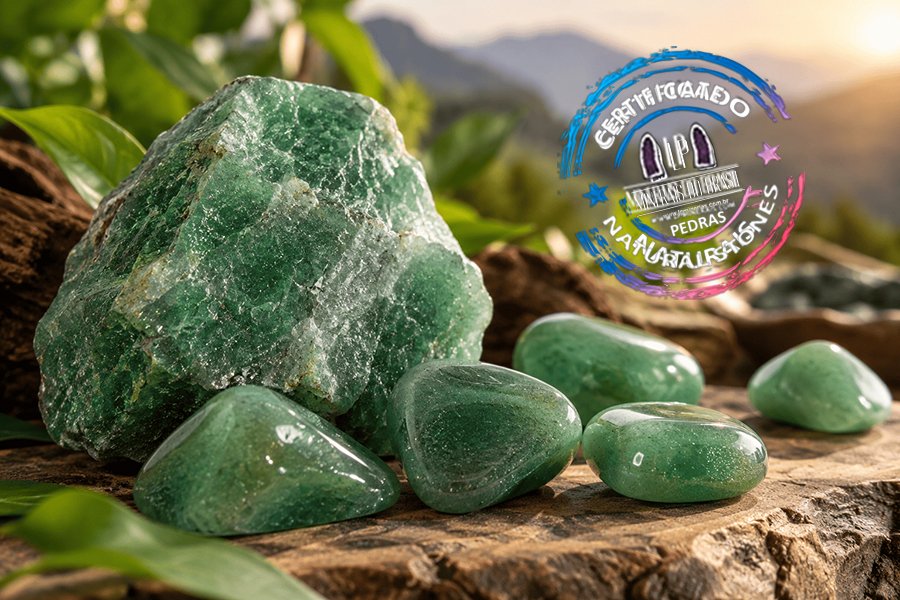
Green Aventurine: the Stone of Prosperity, Opportunity, and New Paths
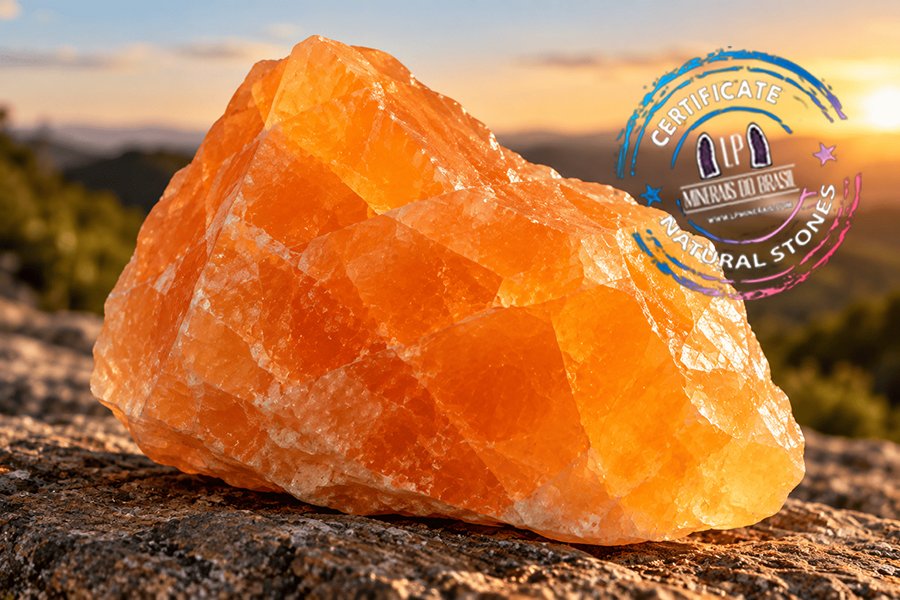
Orange Calcite: The Solar Energy That Awakens Creativity and Movement
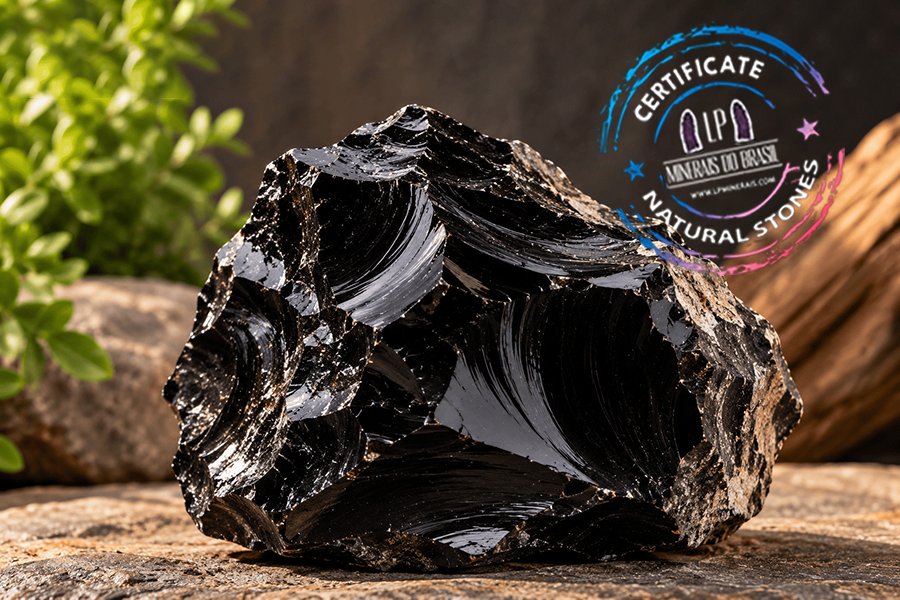
Black Obsidian: origin, formation, properties, and meaning of one of the best-known protective stones.
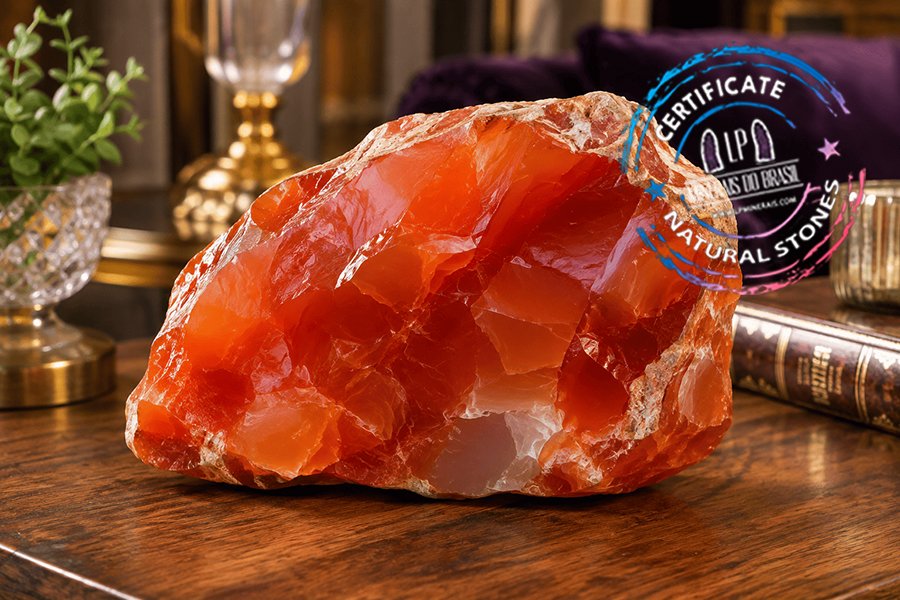
Carnelian: origin, formation, mineralogy, and the vibrant energy of a stone linked to action.
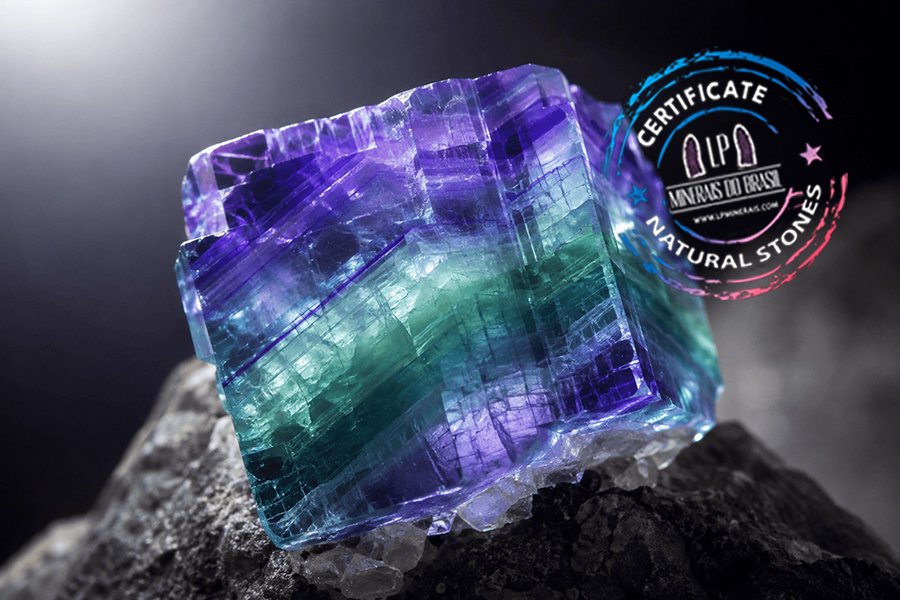
Fluorite: Mineralogy, Formation, Colors, and Meaning of a Mineral that Organizes Light and Color
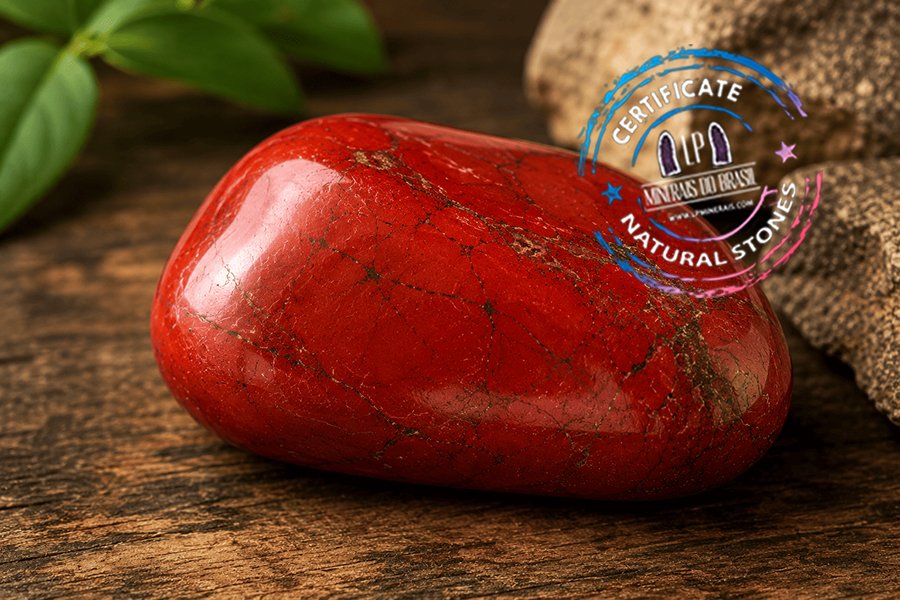
Red Jasper: Mineralogy, Vitality, and the Ancestral Strength of an Earth-Connected Stone