







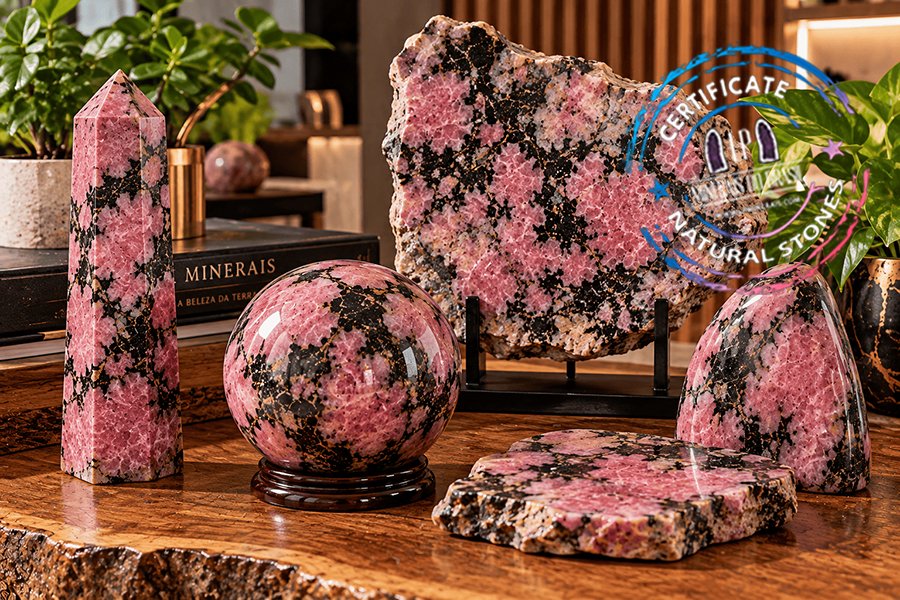
Some stones are beautiful because of their transparency, while others impress with their luster or the intensity of their colors. Rodonite belongs to a particularly fascinating category: its visual identity arises from the combination of pink and black, two shades that seem opposite but, together, produce natural patterns of extraordinary expressiveness.
In some pieces, the pink appears delicate and soft. In others, it approaches an intense red, crisscrossed by dark veins that resemble brushstrokes on a painting. These contrasts make Rhodonite a recognizable stone in jewelry, interior design, and mineral collecting. But they also help explain why it has earned such a special place in crystal therapy traditions.
Symbolically known as the Stone of Forgiveness and Emotional Healing, Rhodonite is traditionally associated with reconciliation, compassion, and the ability to transform difficult experiences into lessons. This interpretation does not represent a scientifically proven therapeutic property, but it is an important part of its cultural and spiritual history.
Behind its symbolism lies an equally fascinating mineralogical reality: a manganese silicate formed under specific geological conditions, with applications ranging from small polished beads to monumental sculptures.
What Is Rhodonite? The Mineralogy Behind the Pink Stone
Rodonite is a mineral species belonging to the inosilicate group, characterized by crystalline structures formed by chains of silicon and oxygen tetrahedra. Its idealized composition is represented by the formula MnSiO₃, although the natural mineral may contain chemical substitutions involving calcium, iron, and magnesium.
Manganese is essential to understanding its identity. In addition to being part of its chemical structure, it is directly related to the pink and reddish hues characteristic of the species. The intensity of these colors can vary depending on the composition and formation conditions.
Rodonite crystallizes in the triclinic system, generally has a vitreous luster, and has a hardness between 5.5 and 6.5 on the Mohs scale. Its density typically ranges from approximately 3.4 to 3.7 g/cm³, depending on its composition.
Although this hardness allows for various ornamental applications, rhodonite exhibits well-developed cleavage. This means that certain impacts can cause fractures along structural planes, requiring caution during cutting and use in jewelry.
Most Rodonite found in the ornamental market has a massive structure, but well-formed crystals also occur in nature. Transparent specimens suitable for faceted cutting are much less common and attract special interest among gemologists and collectors.
Why does rhodonite have black veins?
One of the most frequently asked questions about rhodonite concerns its dark patterns. After all, why does an essentially pink stone exhibit such striking black spots, lines, and veins?
These areas are often associated with the presence of manganese oxides, which can develop or concentrate along fractures and zones of alteration within the material. Depending on the occurrence, the patterns take on branched, irregular, or small-net-like forms.
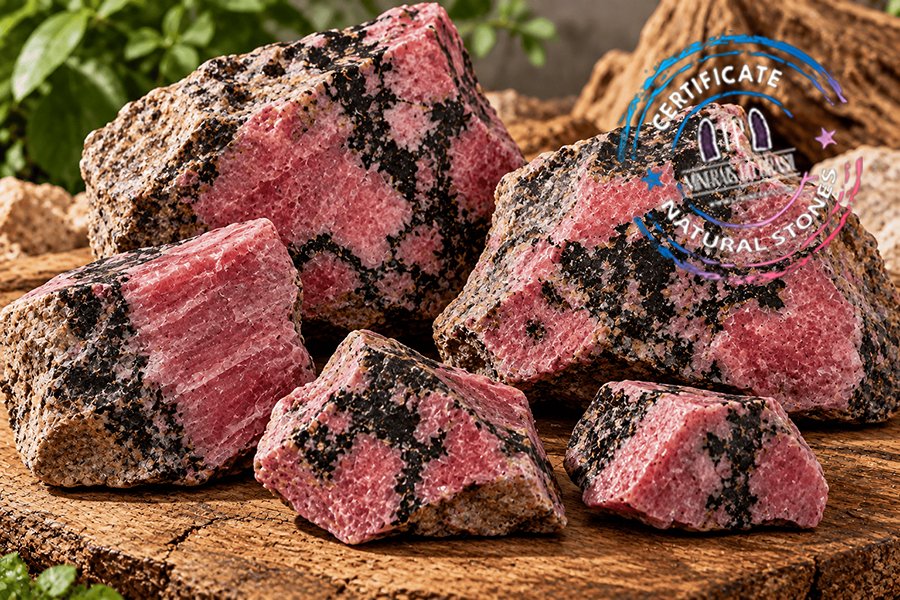
The distribution of these features varies widely. Some specimens have large pink surfaces with few veins, while others display an intense combination of pink and black. This irregularity is one of the reasons why rhodonite has become so highly prized in ornamental work: each cut can reveal a different pattern.
It is important to note that not all rhodonite features black veins. Crystals with good transparency, for example, may exhibit a relatively uniform pink or reddish coloration.
Therefore, the presence of dark patterns is a common characteristic of certain commercial varieties, but not a requirement for the mineralogical identification of the species.
How does rhodonite form in nature?
Rodonite is often associated with the metamorphism of manganese-rich deposits. During this process, preexisting rocks are subjected to new conditions of temperature and pressure, causing mineralogical transformations and a reorganization of their chemical components.
When there is an adequate supply of manganese and silica, minerals such as rhodonite can form. Its formation depends on the chemical balance of the environment, the composition of the original rocks, and the metamorphic conditions reached.
For this reason, it may occur alongside other manganese-bearing minerals, including epidote, rhodochrosite, and various manganese oxides. These associations help geologists interpret the history of the deposits and the processes that acted upon them.
Metamorphic formation also explains part of its visual diversity. Differences in composition, texture, and subsequent alteration processes produce specimens with varied colors and patterns.
Where is rhodonite found?
Rhodonite has documented occurrences on different continents, including Brazil, Russia, Australia, the United States, and European countries. Each region has unique geological characteristics that can influence the quality, appearance, and commercial value of the material.
Russia holds a special place in its history as an ornamental stone, due to the use of massive varieties in large decorative objects and stonework. Australia also has known occurrences, while North American localities stand out in mineralogical collections.
In Brazil 🇧🇷, the presence of geological environments rich in manganese provides conditions conducive to occurrences of this species. However, the Brazilian origin of a specific piece should not be assumed based solely on its appearance.
In the professional trade, provenance is information that must reliably accompany the material. This distinction adds value to both the mineral and the work of the suppliers involved in its production chain.
The History of Rhodonite: From Mineralogy to Ornamental Art
The name Rhodonite derives from the Greek word rhódon, associated with the word “rose,” a reference to the color that made the mineral famous. Its mineralogical name was established in the early 19th century, although pinkish, manganese-rich materials had already been used previously.
One of the most significant chapters in its history is linked to Russian ornamental art. Large pieces of rhodonite were crafted into vases, decorative elements, and sculptural objects, demonstrating that its importance extends beyond the realm of small gemstones and polished stones.
In these works, the natural contrast between pink and black became part of the artistic composition. The selection of the rough stone, the orientation of the cut, and the polishing were essential to highlighting the patterns present in the rock.
This tradition helps explain why rhodonite remains appealing to contemporary designers and artisans.
Unlike materials whose value depends mainly on transparency, it allows one to explore the beauty of opaque surfaces, textures, and natural patterns.
Its history is, therefore, a convergence of geology, craftsmanship, and aesthetic sensibility.
Rodonite or Rhodochrosite: How to Tell the Difference?
The similarity between the names Rhodonite and Rhodochrosite often causes confusion. Both exhibit pinkish hues and contain manganese in their composition, but they belong to distinct mineralogical classes.
Rhodonite is a manganese silicate, while rhodochrosite is a manganese carbonate, represented by the formula MnCO₃. This chemical difference influences properties such as hardness, cleavage, and behavior when exposed to certain substances.
Ornamental rhodochrosite often features pink and white bands, while commercial rhodonite is known for its contrast between pink and black. However, these patterns are not absolute and should not be used as the sole criterion for identification.
It is also necessary to consider the existence of imitations, dyed materials, and artificial products marketed under names similar to those of natural minerals.
Reliable identification depends on a combined evaluation of physical characteristics and, when necessary, appropriate gemological or mineralogical methods.
For buyers, collectors, and industry professionals, the most important information is simple: a stone should be sold as the mineral it actually is, with transparency regarding any treatments.
Rodonite in Jewelry: A Stone with Personality
Rhodonite offers excellent aesthetic potential for creating accessories and jewelry. Its natural pink hue pairs well with silver, gold, and rose gold metals, allowing for everything from delicate designs to striking contemporary pieces.
It is found in bracelets, earrings, pendants, rings, beads, and cabochons. Larger pieces can particularly highlight the black veins, while smaller beads allow for discreet and versatile designs.
In artisanal jewelry, each stone has its own unique character. The orientation of the veins, the intensity of the pink hue, and the finish directly influence the final appearance.
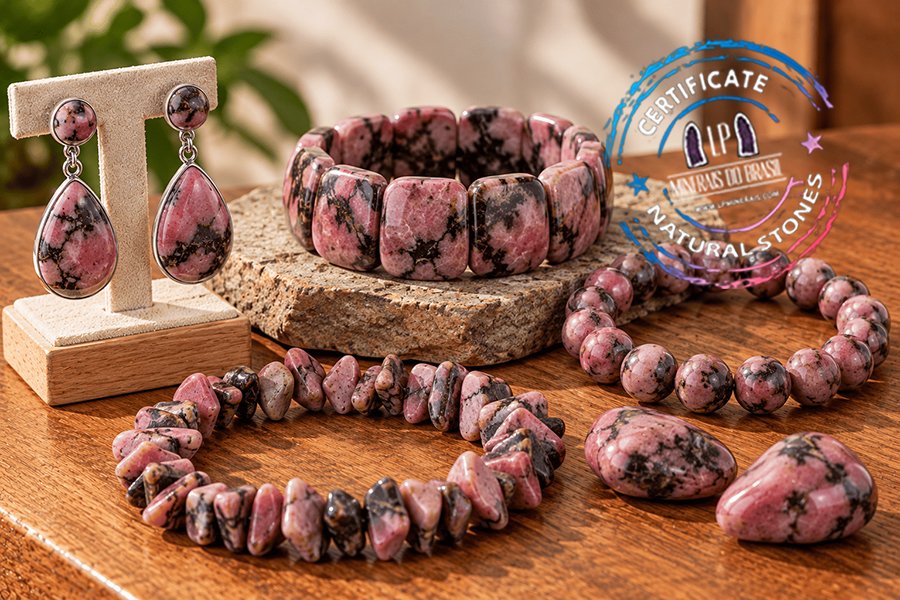
However, its medium hardness and cleavage require careful handling. Pendants and earrings are generally less prone to impact than rings worn daily, for example.
Transparent rhodonite crystals intended for faceted cutting belong to a more specialized segment of the market. Their relative rarity and gemological quality may spark interest distinct from that associated with solid ornamental pieces.
Rodonite in Decor and Collecting
In interior design, rhodonite offers a particularly interesting contrast between delicacy and intensity. The pink hue adds softness to a space, while the dark patterns create depth and visual movement.
Spheres, obelisks, sculptures, polished pieces, and decorative objects can be displayed on sideboards, bookshelves, tables, and in spaces for contemplation. Pairing it with natural wood, ceramics, metals, and neutral colors enhances its presence without competing with its patterns.
In the world of collecting, the criteria can be quite different. A specimen with well-developed crystals, good integrity, and documented provenance may be of greater mineralogical interest than a visually larger ornamental piece.
Natural associations with other minerals are also valued, especially when they help illustrate the geology of a locality.
Thus, rhodonite appeals to different types of buyers: people looking for accessories, interior designers interested in natural materials, artisans, gemstone dealers, and specialized collectors.
What differs among these groups is not the mineral’s identity, but the aspect of its history that each wishes to highlight.
The Spiritual Meaning of Rhodonite: Forgiveness, Compassion, and Transformation
In the world of crystal therapy, Rhodonite is traditionally associated with forgiveness, compassion, emotional balance, and reconciliation. Its spiritual interpretation is linked to the ability to acknowledge difficult experiences without allowing them to permanently dictate how a person relates to themselves and others.
In well-known works of crystal literature, such as *The Crystal Bible* by Judy Hall and *The Book of Stones* by Robert Simmons and Naisha Ahsian, Rhodonite is associated with themes such as emotional balance, compassion, and the transformation of emotional patterns.
These interpretations belong to the realm of spiritual traditions and do not constitute scientific proof of therapeutic effects. Nevertheless, they are part of the cultural identity built around the stone and help explain its presence in practices of meditation and self-knowledge.
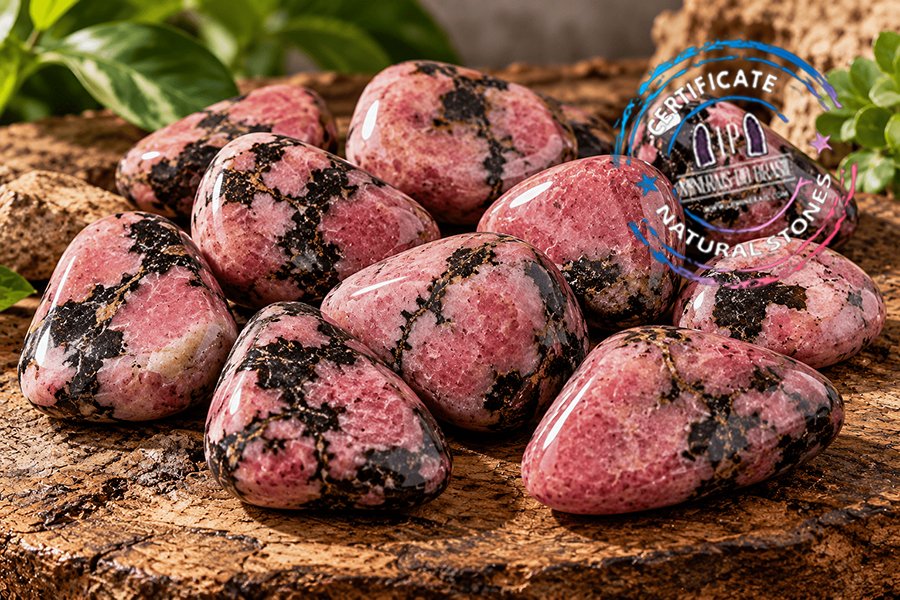
Rodonite is often described as a stone that symbolizes the possibility of transforming emotional experiences into awareness. It does not mean forgetting events or accepting harmful situations, but rather developing a more balanced relationship with one’s own history.
Its symbolism conveys an important message: forgiving does not mean giving up one’s own boundaries.
Why Is Rhodonite Called the Stone of Forgiveness?
Forgiveness is one of Rhodonite’s most enduring associations. In holistic traditions, the stone represents the ability to acknowledge difficult feelings, understand past experiences, and cultivate compassion without denying one’s own reality.
The contrast between pink and black offers a particularly expressive symbolic interpretation. Pink can represent warmth and sensitivity; black, the complex experiences that are part of life. Together, they suggest that emotional maturity does not depend on the absence of difficulties.
In contemplative practices, Rhodonite can be used as a personal reminder of inner reconciliation. This reconciliation does not need to involve another person: it can also represent a willingness to understand past decisions, acknowledge lessons learned, and move forward.
Its archetype is that of conscious compassion, which embraces without losing discernment.
For this reason, Rhodonite is often associated not only with forgiveness but also with emotional responsibility and the development of more balanced relationships.
Rhodonite and Self-Love: Learning to Embrace Without Abandoning Yourself
Self-love is another important dimension of Rhodonite’s symbolism. Unlike interpretations that associate certain stones exclusively with romance, its energetic tradition also encompasses friendship, family life, personal respect, and self-knowledge.
Rhodonite is often used symbolically by people who wish to reflect on their relationship patterns, especially the way they balance caring for others with respecting their own needs.
In this context, its association with the heart chakra is central. In energy traditions, the heart represents love, compassion, and connection. Some interpretations also link the stone’s dark components to grounding, establishing a symbolic bridge between sensitivity and stability.
Among the meanings traditionally associated with Rhodonite are:
- Forgiveness and inner reconciliation;
- Compassion and acceptance;
- Self-love and self-respect;
- Balance in relationships;
- Recognition of emotional patterns;
- Patience and maturity;
- Awareness of one’s own limits.
These associations do not mean that the stone produces emotional changes on its own. Its use can complement personal practices of reflection, in which the value lies in the meaning attributed to the object and the experience.
How to use Rhodonite in meditation and harmonization?
Rhodonite is often chosen for contemplative practices related to the heart and human relationships. It can be held during meditation, used as an object of concentration, or placed in spaces designated for quiet reflection.
A simple symbolic practice involves observing the stone for a few minutes, noticing its natural contrasts and reflecting on the coexistence of pleasant and difficult experiences. In this context, Rhodonite serves as a visual element for contemplation, not as a tool for emotional healing.
In the home, it is often associated with family harmony and respectful coexistence. On desks, it can represent the intention to cultivate patience and mindful communication.
Its use in jewelry also holds personal significance. A pendant or bracelet can serve as a symbolic reminder of compassion, balance, and respect for one’s own limits.
Energetic Combinations with Other Stones
Rodonite allows for interesting combinations within crystal therapy traditions, especially with minerals associated with the heart and introspection.
When paired with Rose Quartz, it typically represents acceptance and emotional maturity. With Amethyst, the interpretation leans toward serenity and reflection. When combined with Black Tourmaline, it symbolically blends compassion with the idea of protection and grounding.
Another possible association is with Rhodochrosite, which is often linked to emotional expression and embracing personal experiences.
These combinations vary among authors and spiritual schools. There is no scientific evidence that the proximity of these stones produces measurable emotional effects.
The value of these practices lies in the intention, the symbolism, and the subjective experience of those who use them.
Rhodonite, Zodiac Signs, Planets, and Elements
The astrological correspondences of Rhodonite are not universal. In various contemporary traditions, the stone is associated with signs such as Taurus and Aries, although other connections are also found.
Its symbolic connection to love and harmony leads some interpretations to associate it with Venus, the planet traditionally linked to emotional bonds, beauty, and harmony.
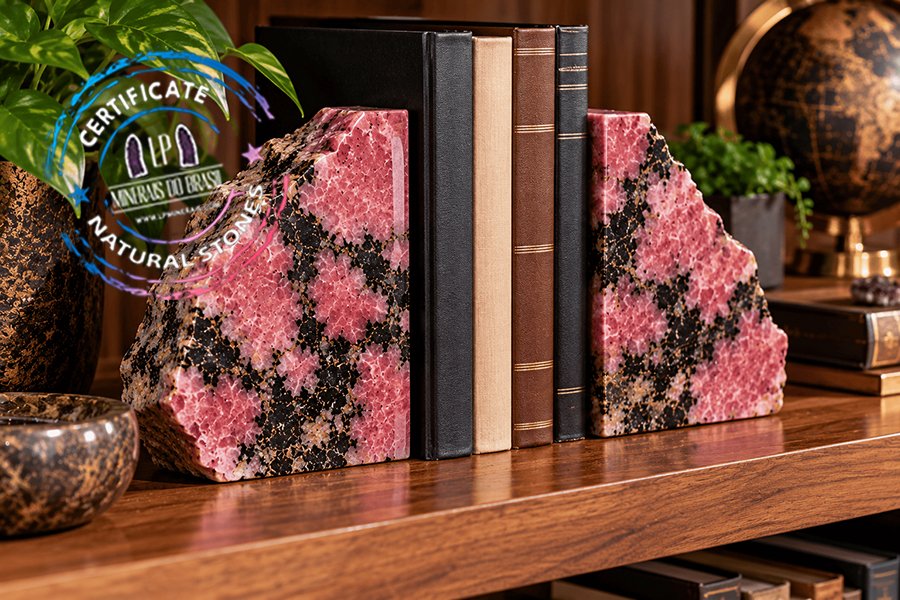
The Earth element also appears in certain energetic readings, particularly due to Rhodonite’s association with stability, presence, and the integration of emotion and action.
These correspondences belong to the esoteric realm and are not part of the mineral’s scientific classification.
Market value: Is rhodonite a rare stone?
The rarity of rhodonite depends on its form of occurrence and the quality of the material. The massive variety used in tumbled stones, beads, and decorative objects can be found relatively easily on the market.
However, pieces with attractive coloring, balanced patterns, good integrity, and a careful finish may have greater ornamental value.
Transparent, well-formed crystals—especially those suitable for faceted cutting—are much less common. In this segment, factors such as transparency, color intensity, dimensions, and origin become particularly relevant.
In the world of collecting, specimens from recognized localities may also attract additional interest, particularly when they exhibit good crystalline formation or unusual mineral associations.
For the mineral sector, it is essential to distinguish between three markets: the ornamental, the gemological, and the collectible markets. Each has its own evaluation criteria.
At LP MINERAIS ⛏💎📦🗺, the valuation of natural materials relies on technical expertise, accurate identification, and commercial transparency. Fair-trade principles, social and environmental responsibility, and respect for the supply chain are especially relevant for a market that connects Brazil’s geological wealth to domestic and international buyers.
Care and Cleaning of Rhodonite
Although Rodonite is sufficiently durable for various decorative applications, it requires protection against impacts and abrasion. Its cleavage can make it prone to breakage, especially in pieces with natural fractures.
For daily cleaning, it is recommended to use a soft cloth—lightly dampened when necessary—followed by careful drying. Harsh chemicals, acids, ultrasonic equipment, and sudden temperature changes should be avoided.
Rodonite jewelry should be stored separately from harder materials to reduce the risk of scratches and surface damage.
In energy-cleansing practices, those who follow crystal therapy traditions may opt for gentle methods, such as meditation, intention, or sound. These practices belong to the symbolic realm and do not replace physical cleansing.
Caring for a rhodonite means preserving both its mineral structure and the natural patterns that make each piece unique.
🔬 LP MINERAIS Technical and Energetic Profile
🗺 » ORIGIN: Brazil, Russia, Australia, the United States, and other regions with manganese-rich deposits.
⚛️ » CHEMICAL COMPOSITION: MnSiO₃ — idealized formula for a manganese silicate, with possible natural chemical substitutions.
🔩 » MOHS SCALE: 5.5 to 6.5.
🔢 » NUMEROLOGY: Meanings vary depending on the numerological tradition; there is no universal interpretation.
🔅 » MEANING: Forgiveness, reconciliation, compassion, self-love, and emotional balance.
🅰️ » SUMMARY: A pink manganese mineral, often marked by black veins, symbolically associated with emotional transformation and emotional awareness.
✅ » SPECIFICATION: Manganese inosilicate; triclinic crystal system; generally vitreous luster.
🧩 » STATE: Natural, often massive in the ornamental trade; also found as crystals.
⚒ » FORMATION: Primarily metamorphic, associated with manganese-bearing deposits and suitable conditions of temperature, pressure, and chemical composition.
⚠️ » CARE: Avoid impacts, abrasives, acids, sudden temperature changes, and storage next to harder minerals.
🛁 » CLEANING: Soft cloth and gentle cleaning; energetically, gentle practices such as meditation, intention, or sound.
🎨 » COLOR: Pink, reddish-pink, and related shades, often with black veins or spots of manganese oxides.
☯️ » ZODIAC: Taurus and Aries in some crystal therapy traditions.
🪐 » SOLAR SYSTEM: Venus in certain esoteric interpretations.
➰ » CHAKRAS: Primarily the heart chakra, with secondary associations with grounding in some traditions.
♻ » ELEMENT: Earth in certain symbolic correspondences.
💎 » RARITY: Relatively available as an ornamental material; transparent, gem-quality crystals are rare.
🗳 » CHARACTERISTIC: Natural contrast between pink and black, a composition rich in manganese, and strong ornamental, gemological, and collectible potential.
FAQ — Frequently Asked Questions About Rhodonite
How can you tell if Rhodonite is genuine?
Natural Rhodonite has a mineralogical composition rich in manganese, characteristic hardness, and often a pinkish color. Black veins are common but not mandatory. Provenance and, when necessary, professional analysis are the most reliable ways to confirm its authenticity.
Are Rhodonite and Rhodochrosite the same stone?
No. Rhodonite is a manganese silicate, while rhodochrosite is a manganese carbonate. Although they have similar hues, they have distinct compositions and physical properties.
What is the spiritual meaning of rhodonite?
Traditionally, rhodonite is associated with forgiveness, reconciliation, compassion, self-love, and emotional maturity. These interpretations belong to the symbolic and spiritual realms.
Why is Rhodonite known as the Stone of Forgiveness?
Because, in crystal healing traditions, it represents the ability to acknowledge difficult experiences, cultivate compassion, and develop a more mindful relationship with the past, without compromising one’s own boundaries.
Is Rhodonite a protective stone?
Some traditions associate Rhodonite with symbolic protection, especially in terms of emotional balance and awareness in relationships. This interpretation does not correspond to a scientifically proven physical effect.
Which chakra is associated with Rhodonite?
The heart chakra is the most common association. Some schools also link the stone’s dark patterns to the symbolism of stability and grounding.
Can rhodonite be used in jewelry?
Yes. It is found in earrings, pendants, bracelets, rings, and cabochons. Its hardness and cleavage require care, especially in pieces subject to frequent impact.
Is Rhodonite rare?
Solid, ornamental rhodonite is relatively widely available commercially. Transparent, well-formed crystals suitable for gemological cutting are much rarer.
How do you clean rhodonite?
Use a soft cloth, lightly dampened if necessary. Avoid harsh chemicals, abrasives, and methods that could damage the stone or its setting.
Does Brazilian rhodonite have commercial value?
Yes. Its value depends on factors such as aesthetic quality, dimensions, finish, integrity, and origin. Brazilian origin may be relevant for commercial identification, but it does not determine the price on its own.
Can Rodonite be exported?
Yes, provided that all applicable legal, tax, customs, and documentation requirements are met. Proper identification and traceability are important for international commercial transactions.
Conclusion: The Beauty of a Stone That Symbolizes New Beginnings
Rodonite brings together two complementary stories. The first was written by nature, through manganese, metamorphic processes, and the conditions that produced its pink hues and dark patterns. The second was shaped by people, who recognized in these contrasts a representation of compassion, maturity, and reconciliation.
In jewelry and interior design, its beauty lies in its uniqueness. Among collectors, it stands out for the diversity of its occurrences and the possibility of finding mineralogically special specimens. In energy traditions, it represents the symbolic ability to embrace experiences without being defined by them.
Perhaps this is precisely Rodonite’s most interesting message: balance does not require all contrasts to disappear. Sometimes, it is their coexistence that produces beauty.
For LP MINERAIS ⛏💎📦🗺, understanding a stone means respecting its mineralogical identity, recognizing its origin, valuing its applications, and presenting its information responsibly. It is from this union of technical knowledge, provenance, and cultural sensitivity that a more mindful relationship with natural minerals is born.
Doris S. Rosa
Howlite: what lies behind the Stone of Calm and Inner Silence?
Moonstone: the Stone of Intuition, Feminine Energy, and the Mysteries of the Moon.
Jade: The Stone of Wisdom, Prosperity, and Harmony That Spans Millennia
Angelite: The Stone of Serenity, Intuition, and Spiritual Connection
Green Aventurine: the Stone of Prosperity, Opportunity, and New Paths
Orange Calcite: The Solar Energy That Awakens Creativity and Movement
Black Obsidian: origin, formation, properties, and meaning of one of the best-known protective stones.
Carnelian: origin, formation, mineralogy, and the vibrant energy of a stone linked to action.
Fluorite: Mineralogy, Formation, Colors, and Meaning of a Mineral that Organizes Light and Color
Red Jasper: Mineralogy, Vitality, and the Ancestral Strength of an Earth-Connected Stone