




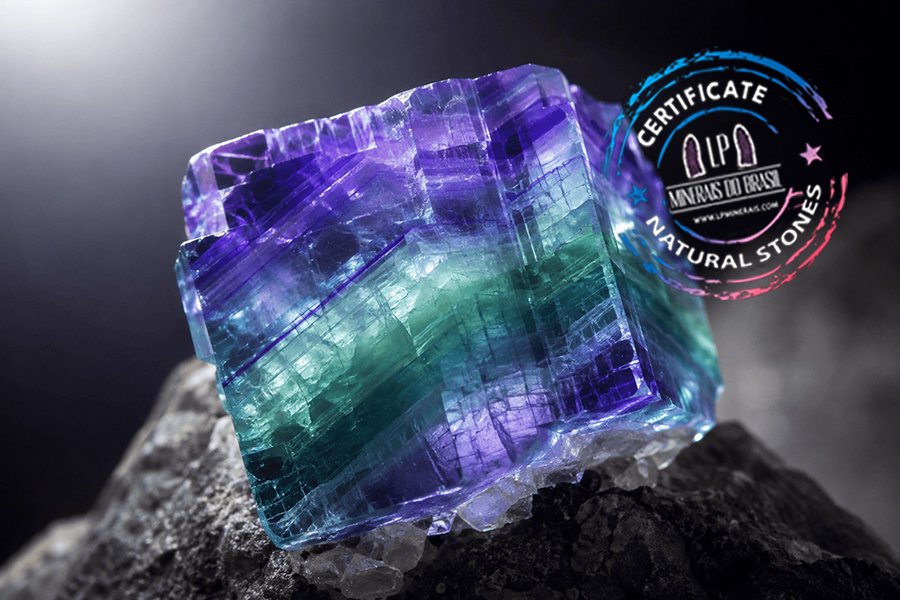
Fluorite is one of those minerals that seems to defy a single visual identity. It can appear as intense violet crystals, translucent green, delicate blue, yellow, colorless, or in multicolored specimens where different hues are layered. Few minerals express the diversity of nature as clearly as fluorite. The same mineral can appear transparent and practically colorless or reveal intense greens, deep violets, blues, yellows, pinks, and multicolored combinations that seem to be layered. This chromatic richness, combined with the geometry of its crystals, has made fluorite a staple in mineral collecting, interior design, gem cutting, and the world of energy healing.
Mineralogically, fluorite is calcium fluoride (CaF₂). It crystallizes in the cubic system and has a hardness of 4 on the Mohs scale, making it the very mineral used as the reference standard for that hardness level. It also exhibits perfect cleavage in four directions, a characteristic that can produce octahedral fragments. Therefore, despite the robust appearance of some specimens, it is a mineral that requires protection from impacts and abrasion.
Fluorite also has significance far beyond the crystal market. It is the primary mined source of fluorine and holds industrial importance. This combination of geological, economic, ornamental, and symbolic interest makes its history much broader than the image of a simple “colored stone.”
How does fluorite form in nature?
Many significant fluorite deposits are associated with the circulation of hydrothermal fluids. Heated solutions flow through fractures, cavities, and permeable zones in rocks, carrying dissolved components. When conditions such as temperature, fluid chemistry, and interaction with the rock change, calcium and fluorine may encounter conditions suitable for the precipitation of CaF₂.
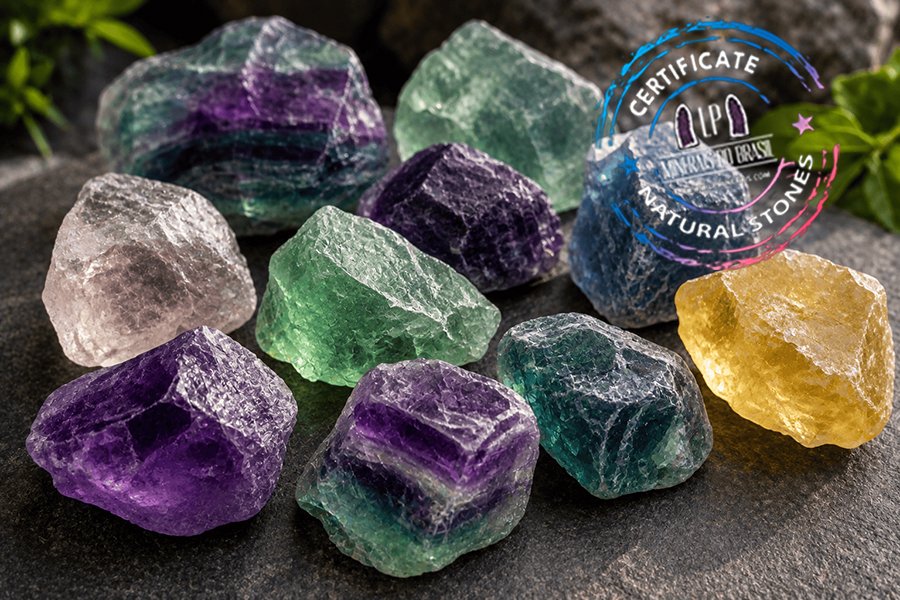
Fluorite occurs in various geological settings, including hydrothermal veins and deposits hosted in carbonate rocks, and may be associated with minerals such as calcite, quartz, barite, and various sulfides. This variety of environments helps explain why specimens from different localities exhibit such striking differences in color, habit, transparency, and mineral association.
When there is room for growth, fluorite’s cubic structure can produce extraordinarily well-defined crystals. In other environments, the mineral appears as a mass, in bands, or forming aggregates. For collectors, preserving crystals on their original matrix can add great interest; for the ornamental sector, colorful and zoned masses can provide excellent raw material for polished pieces.
The stone itself, therefore, bears traces of the environment in which it formed.
Why does fluorite come in so many colors?
Pure fluorite may be colorless, but nature produces specimens in one of the most varied color palettes in the mineral kingdom. Structural alterations, color centers, trace elements, and natural irradiation processes may all contribute to the formation of these hues. The mechanism is not necessarily identical in all deposits, which is why it is inaccurate to claim that each color is always caused by a single element.
Changes can also occur during crystal growth. One layer begins to form under certain conditions, and another grows later in a slightly different environment. This is how some of fluorite’s famous color zoning arises, including crystals in which bands of color follow their cubic geometry.
These characteristics explain both its mineralogical importance and its extraordinary visual appeal.
Purple or Violet Fluorite
Purple fluorite is one of the best-known varieties. Its hue can range from delicate lilac to dark violet, appearing either on its own or combined with green, blue, and colorless regions. Transparent, well-crystallized specimens may reveal different zones of violet within the same crystal.
In crystal healing traditions, purple fluorite is often associated with intuition, perception, inner clarity, and spirituality. For this reason, it is commonly found in spaces for meditation and reflection, especially when the symbolic intention involves organizing thoughts without losing intuitive insight.
Green Fluorite
Green fluorite ranges from very soft tones to intense greens. In transparent or translucent crystals, the interplay between light, geometry, and color produces pieces that are particularly prized for their aesthetic appeal. It is also common to find it combined with violet in multicolored specimens.
Energetically, the green variety is traditionally associated with harmonization, balance, and emotional reorganization. Its symbolic language evokes mental clarity and serenity, making it widely used in work environments, rooms, rest areas, and practices focused on achieving balance.
Blue Fluorite
Blue fluorite can exhibit soft or deeper shades and holds great appeal for collectors when it combines good color, transparency, well-preserved crystals, and an interesting provenance. As with other varieties, the shade alone does not determine rarity or value.
In the realm of energy, blue is often associated with clear communication, self-expression, and the organization of ideas. This association makes blue fluorite an interesting symbolic choice for environments related to study, writing, communication, and creative activities.
Yellow or Golden Fluorite
Less immediately recognizable to the general public than the purple and green varieties, yellow fluorite can range from soft yellow to golden and honey hues. Well-crystallized specimens have an aesthetic completely different from that of violet fluorites, demonstrating how a single mineral species can take on distinct visual personalities.
In holistic practices, it is often associated with intellectual organization, creativity, confidence, and personal direction. Its symbolism is particularly well-suited to situations where clarity must be accompanied by initiative.
Pink and Reddish Fluorite
Fluorites in pink and reddish shades also occur, although they are much less common in the general market than green and violet ones. Certain pink specimens are especially prized by collectors when they feature well-defined crystals and recognized mineralogical origins.
On a symbolic level, pinkish hues link fluorite’s organizing quality to themes related to sensitivity, emotional balance, and affection. Since these varieties are less common, provenance and correct identification become even more important before any commercial claims about rarity can be made.
Colorless, white, and very dark fluorite
Colorless fluorite reveals another facet of the mineral. Without a dominant color, transparency, inclusions, and crystalline structure take center stage. Whitish specimens may also occur, particularly when transparency and internal characteristics alter their appearance.
There are also extremely dark fluorites, including violet specimens so intense that they may appear almost black under certain lighting conditions. This reinforces an important rule: commercial names based solely on appearance are no substitute for mineralogical identification.
Multicolored or “Rainbow” Fluorite
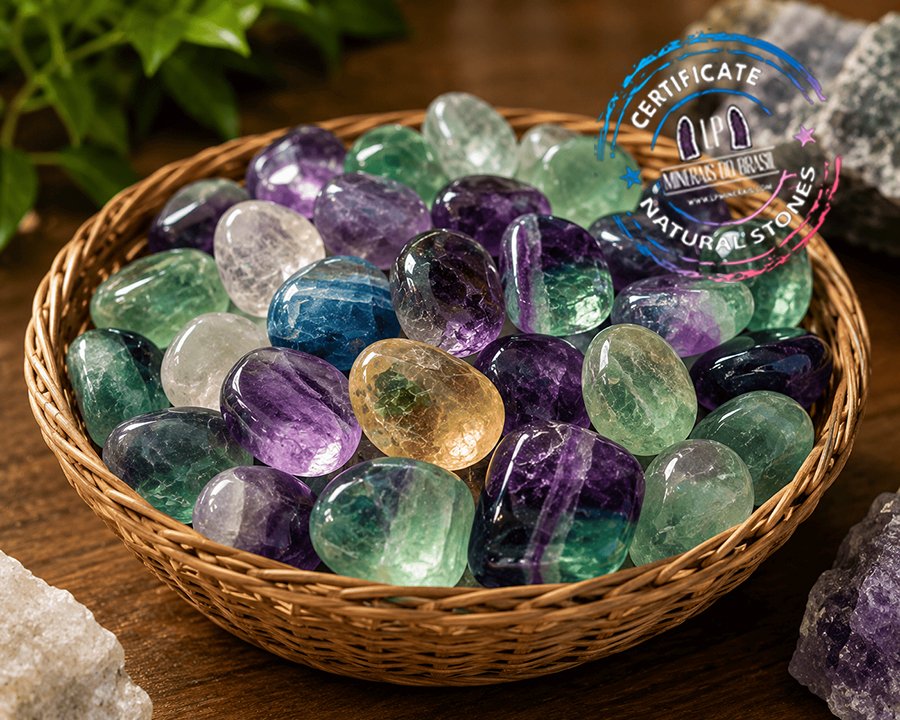
Perhaps no variety represents fluorite’s character as well as the multicolored variety, often marketed as “Rainbow Fluorite.” Green, violet, blue, yellow, and nearly colorless zones can coexist within the same specimen, forming bands and transitions of great beauty.
“Rainbow fluorite” is not a distinct mineral species. It is a commercial designation applied to certain multicolored fluorites. When the material is cut into spheres, towers, or free-form shapes, each orientation of the cut can reveal completely different patterns.
Energetically, this variety is traditionally associated with integration. Its various colors coexisting within a single structure offer a particularly powerful metaphor: organizing different aspects of experience without eliminating their diversity.
Fluorescence: The Property Linked to Fluorite’s Very Name
Fluorite has a special historical relationship with fluorescence. Some specimens emit visible light when exposed to certain wavelengths of ultraviolet radiation, and the name of the phenomenon has historically been associated with the mineral.
This, however, does not mean that all fluorite must exhibit intense fluorescence. The response can vary greatly among specimens. Therefore, a piece of fluorite that does not “glow” strongly under UV light should not be considered fake for that reason alone.
The reverse is also true: fluorescence alone does not prove that a stone is fluorite, as other minerals also exhibit this phenomenon. Authenticity requires examining a set of characteristics, especially when it comes to collectible pieces or those of greater value.
Fluorite in Jewelry, Decor, and Collectibles
Fluorite can produce very beautiful cut gemstones, but its Mohs hardness of 4 and perfect cleavage require caution. It lacks the durability of quartz and can suffer scratches, chips, and fractures when subjected to impact. Earrings, pendants, and protected pieces tend to be more suitable applications than jewelry intended for heavy daily wear.
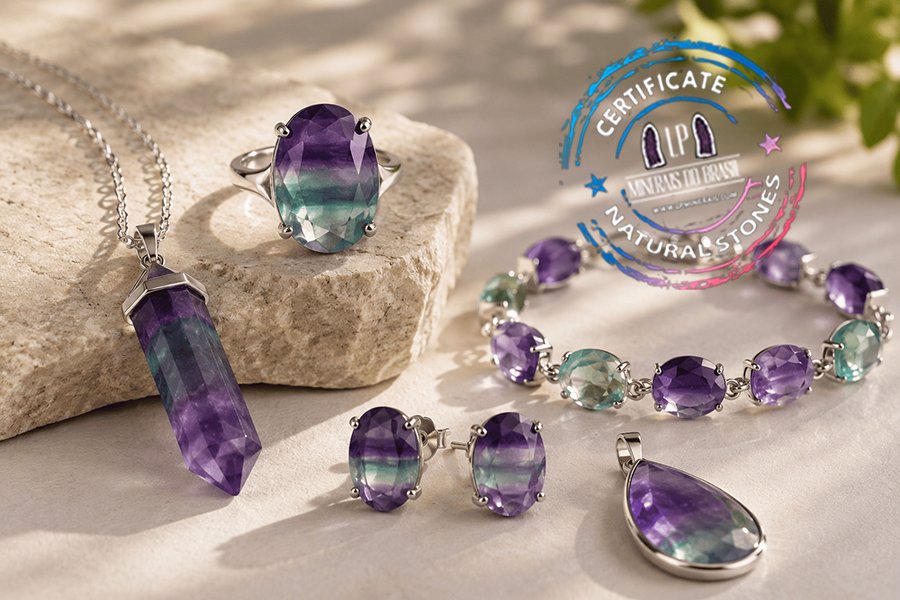
In interior design, its versatility is extraordinary. Natural crystals, free-form pieces, spheres, towers, and multicolored pieces can serve completely different functions in interiors. In the world of collecting, however, clarity, integrity, color, transparency, matrix, mineral associations, and provenance take on decisive importance.
This creates distinct audiences for the same mineral:
- collectors and mineralogists;
- designers and interior decorators;
- gem cutters and artisans;
- fine jewelry and select costume jewelry;
- consumers of natural stones;
- the holistic market;
- retailers, showrooms, and international buyers.
For LP MINERAIS ⛏💎📦🗺, understanding these differences means working with minerals based on information, professional selection, provenance, and Fair Trade responsibility, while promoting the Brazilian mineral supply chain 🇧🇷 without turning beauty into commercial hype.
The energetic significance of fluorite: organizing to see more clearly
Within crystal therapy traditions, fluorite is often described as a stone associated with clarity, focus, discernment, and organization. Its symbolism becomes particularly interesting when viewed alongside its appearance: multiple colors and zones can coexist within an extremely organized crystalline structure.
For this reason, its archetype can be understood as that of the organizer. It does not simply represent “thinking more,” but rather symbolically separating the essential from the excess, recognizing patterns, establishing priorities, and integrating information that seemed scattered.
In study and work, it is often used as an object of focus to aid concentration. In meditation, its symbolism encourages questions related to choices and priorities. In interior design, it can represent clarity and organization while also serving as a mineral piece with a strong aesthetic presence.
Traditionally, its colors add different nuances:
- purple: perception, intuition, and contemplation;
- green: balance and harmony;
- blue: expression and communication;
- yellow: creativity and direction;
- pink: sensitivity and emotional balance;
- multicolored: integration and reorganization.
These interpretations belong to the realm of symbolism and crystal therapy and do not constitute scientific properties of CaF₂. Preserving this distinction allows us to explore the energetic dimension in depth without confusing it with mineralogy.
Fluorite thus reveals an identity that is difficult to reduce to a single color or use. It is a mineral of geological and economic importance, an ornamental material, a delicate gemstone, a collector’s item, and a stone deeply rooted in energetic traditions. Its diversity is not an exception to its identity: it is precisely what best defines it.
The following sections explore the aspects that round out this analysis: authenticity and distinctions, value and rarity, care and preservation, cleansing, chakras, the zodiac, element, planet, combinations, uses at home and at work, the mineral market, and the LP MINERAIS technical-energetic framework.
Fluorite: Authenticity, Value, Care, and Deepening Energy Understanding
How to Recognize Natural Fluorite and Avoid Confusion
The vast variety of fluorite colors can make identification difficult for those new to the world of minerals. A natural specimen may be uniform or multicolored, transparent, translucent, or more opaque, crystallized, or completely polished. Therefore, color alone is never a reliable criterion for authenticity. Identification takes into account properties such as composition, a Mohs hardness of 4, cleavage, crystal system, and optical characteristics.
It is also important to distinguish between counterfeits and processed specimens. A piece of fluorite that has been cut, tumbled, polished, or shaped into a sphere remains natural as long as the raw material is genuine. Similarly, octahedrons can be produced by taking advantage of the mineral’s natural cleavage planes. In this case, the fluorite is natural, but that specific shape does not necessarily correspond to its original growth habit.
For higher-value pieces, a reliable source and expert appraisal are preferable to home tests. Scratching, breaking, or exposing the mineral to chemicals can cause permanent damage.
Is fluorite rare? What determines its value?
Fluorite, considered a mineral species, is not generally rare. What may be unusual is a specific specimen: a particular combination of color, crystal habit, transparency, size, provenance, or association with other minerals.
In the world of collecting, intact and aesthetically well-formed crystals can command a value vastly different from that of mass-produced ornamental material. Recognized mineralogical localities also attract interest because the provenance becomes part of the specimen’s history.
Among the main factors influencing value are:
- the quality and integrity of the crystals;
- color and zoning;
- transparency;
- size and aesthetics;
- mineral association and matrix;
- documented provenance;
- availability of that deposit;
- quality of cut and polish, for ornamental material.
In the showroom, wholesale, and export operations, additional factors include grading, lot consistency, finish, and supply consistency. For LP MINERAIS ⛏💎📦🗺, provenance, professional selection, and Fair Trade relationships strengthen a supply chain in which value depends on more than just appearance.
Care and Preservation of Fluorite
The beauty of fluorite comes with a certain delicacy. With a hardness of 4 and perfect cleavage, it can be scratched by harder minerals and may chip when subjected to impact. Crystallized pieces require even greater care, as preserved edges and faces contribute to their mineralogical value.
For daily care, it is best to avoid abrasives, harsh chemicals, drops, thermal shocks, and friction with other stones. Prolonged exposure to sunlight is also not recommended for colored fluorites, as certain specimens may experience changes in color intensity.
When cleaning physically, use a soft cloth and gentle techniques. Energetic cleansing, on the other hand, belongs to the holistic realm and can be performed using non-aggressive methods, such as sound, intention, meditation, or indirect moonlight. There is no need to subject a delicate fluorite to salt or aggressive procedures to fulfill a symbolic purpose.
Chakras, Environments, and the Energetic Use of Fluorite
In crystal therapy traditions, fluorite’s correspondences typically align with its color. This is especially true for a multicolored mineral, whose energetic identity need not be limited to a single energy center.
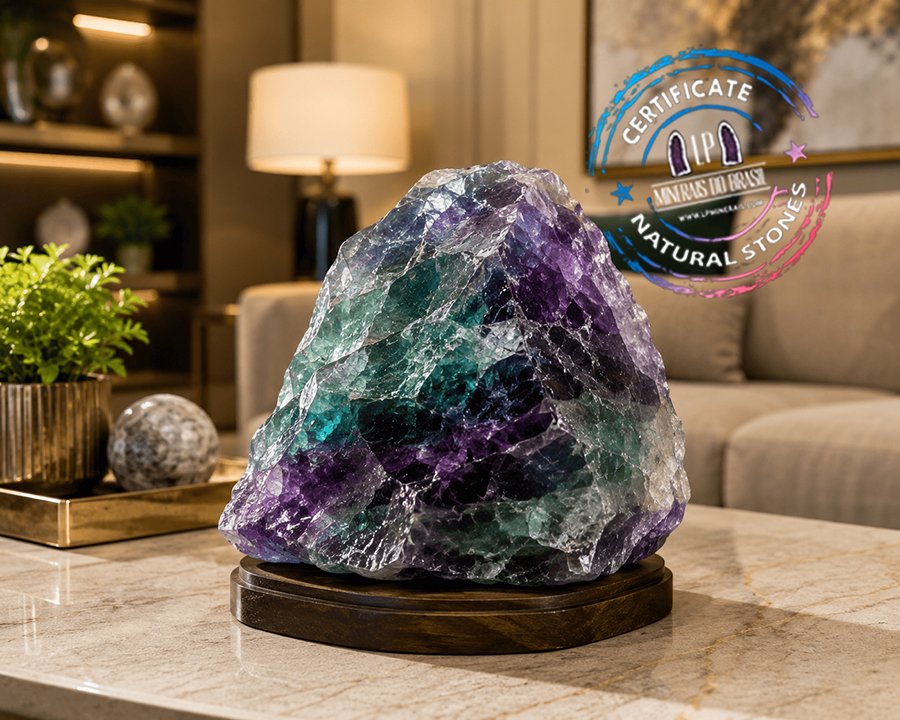
Purple fluorite is often associated with the third eye and crown chakras, relating to intuition, perception, and contemplation. Green fluorite is traditionally associated with the heart chakra and emotional harmony.
Blue hues are associated with the throat chakra and self-expression, while yellow hues are linked to the solar plexus chakra and themes related to leadership and confidence.
Multicolored fluorite is interpreted as promoting integration, precisely because different shades coexist within the same stone.
In daily life, this lends itself to applications such as:
- a study desk to aid concentration;
- an office to promote organization and discernment;
- a creative space to structure ideas;
- a living room for harmony and a sense of grounding;
- a meditation space for reflection and clarity;
- personal altar for intention practices.
The energetic approach is not to expect the mineral to do what depends on the person. Its traditional use works best as a symbolic tool for guidance, associated with a conscious intention.
Zodiac, element, planet, and combinations
Astrological correspondences of crystals vary among authors and schools; therefore, it is not appropriate to present a single sign as a mineralogical truth. Fluorite is often associated with Pisces in certain systems, while other traditions establish different associations depending on color and interpretation.
Air appears as a symbolic correspondence consistent with clarity, thought, and mental organization. Mercury is also associated with fluorite in some approaches because it represents communication, reasoning, and learning. These relationships belong to the esoteric tradition, not to the physical properties of CaF₂.
When creating combinations, intention should guide the choice. Fluorite paired with amethyst is traditionally used for contemplation and insight; with clear quartz, for clarity; with black tourmaline, to combine focus and grounding; and green fluorite paired with rose quartz can be used in practices aimed at emotional harmonization.
LP MINERAIS Technical-Energetic Section ⛏💎📦🗺
🗺 » ORIGIN — Various regions of the world; found in different geological environments.
⚛️ » CHEMICAL COMPOSITION — CaF₂, calcium fluoride.
🔩 » MOHS SCALE — 4.
🔢 » NUMEROLOGY — Correspondences vary by tradition; there is no technically established universal number.
🔅 » MEANING — Clarity, organization, discernment, and integration.
🅰️ » SUMMARY — A cubic, multicolored mineral that is collectible, ornamental, and of industrial importance.
✅ » SPECIFICATION — Fluorite, fluorite group.
🧩 » STATE — Crystallized, massive, rough, tumbled, cut, or polished.
⚒ » FORMATION — Often associated with hydrothermal processes, among other geological contexts.
⚠️ » CARE — Avoid impacts, abrasives, heat, and prolonged exposure to intense sunlight.
🛁 » CLEANING — Gentle physical cleaning; energetically, prefer non-aggressive methods.
🎨 » COLOR — Colorless, purple, green, blue, yellow, pink, and multicolored, among other variations.
☯️ » ZODIAC — Often associated with Pisces; varies by tradition.
🪐 » SOLAR SYSTEM — Mercury in some esoteric correspondences.
➰ » CHAKRAS — Vary depending on the color; notably the forehead, crown, heart, and throat chakras.
♻ » ELEMENT — Air in certain traditions.
💎 » RARITY — A relatively widespread species; exceptional specimens may be uncommon.
🗳 » CHARACTERISTICS — Cubic system, perfect cleavage, chromatic diversity, and frequent zoning.
FAQ — Fluorite
How can you tell if fluorite is genuine?
Appearance alone is not enough. Mineralogical properties, origin, and, when necessary, professional evaluation provide a more reliable identification.
Can fluorite get wet?
Brief contact with clean water does not necessarily cause damage, but prolonged immersion is unnecessary. For pieces with a matrix or other associated minerals, even greater caution is advised.
Can fluorite be left in the sun?
For preservation, it’s best to avoid prolonged exposure to intense sunlight, especially for colored specimens.
Which fluorite is rarer?
There is no single color that universally determines rarity. Location, availability, crystal habit, quality, size, and specific characteristics must all be taken into account.
What is the energetic purpose of fluorite?
Traditionally, it is associated with clarity, concentration, organization, discernment, and integration. These are crystal healing interpretations, not proven medical effects.
Can fluorite be used at work?
Within holistic practices, it is one of the stones most commonly used symbolically on study and work desks due to its association with focus and organization.
Can fluorite be used in jewelry?
Yes, but with caution. Its hardness of 4 and perfect cleavage make the stone vulnerable to scratches and impacts.
Is rainbow fluorite a different stone?
No. “Rainbow fluorite” is a commercial term used for multicolored or intensely banded fluorites.
Conclusion
Fluorite demonstrates how a single mineral species can occupy completely different worlds. It is a mineral resource of industrial importance, a classic collector’s specimen, a striking ornamental material, a delicate gemstone, and a stone deeply rooted in crystal therapy traditions.
Its value stems precisely from this multiplicity. Knowing its hardness and cleavage helps preserve it; understanding its formation and origin enhances the collector’s knowledge; recognizing true criteria of value prevents commercial exaggerations; and separating mineralogy from energetic interpretation allows one to approach its spiritual dimension responsibly.
At LP MINERAIS ⛏💎📦🗺, this vision brings together mineralogical knowledge, selected natural stones, provenance, Fair Trade, sustainability, and professional expertise for showrooms, collecting, interior design, and export—strengthening Brazil’s 🇧🇷 presence in the international mineral supply chain.
By: Doris S. Rosa
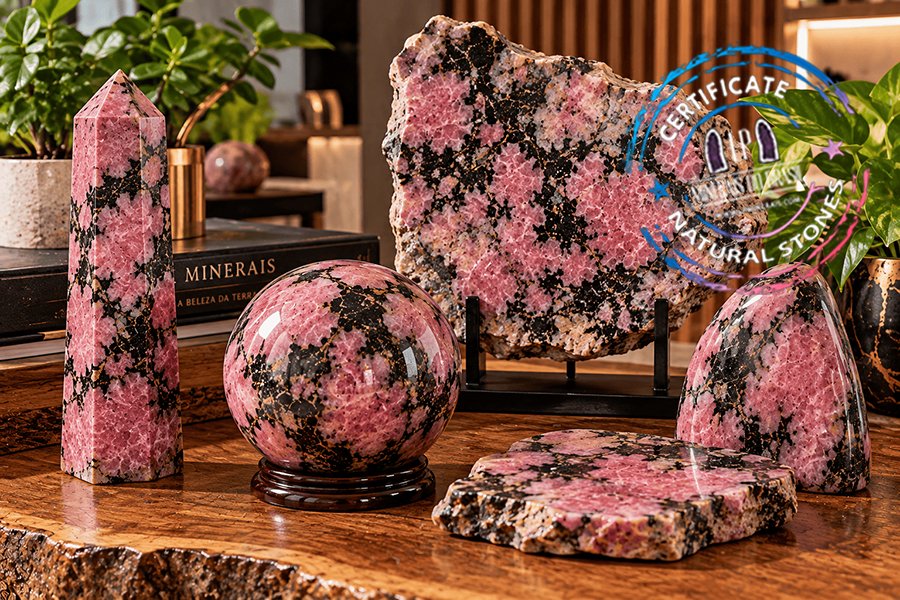
Rhodonite: Why Is It Known as the Stone of Forgiveness and Emotional Healing?
Howlite: what lies behind the Stone of Calm and Inner Silence?
Moonstone: the Stone of Intuition, Feminine Energy, and the Mysteries of the Moon.
Jade: The Stone of Wisdom, Prosperity, and Harmony That Spans Millennia
Angelite: The Stone of Serenity, Intuition, and Spiritual Connection
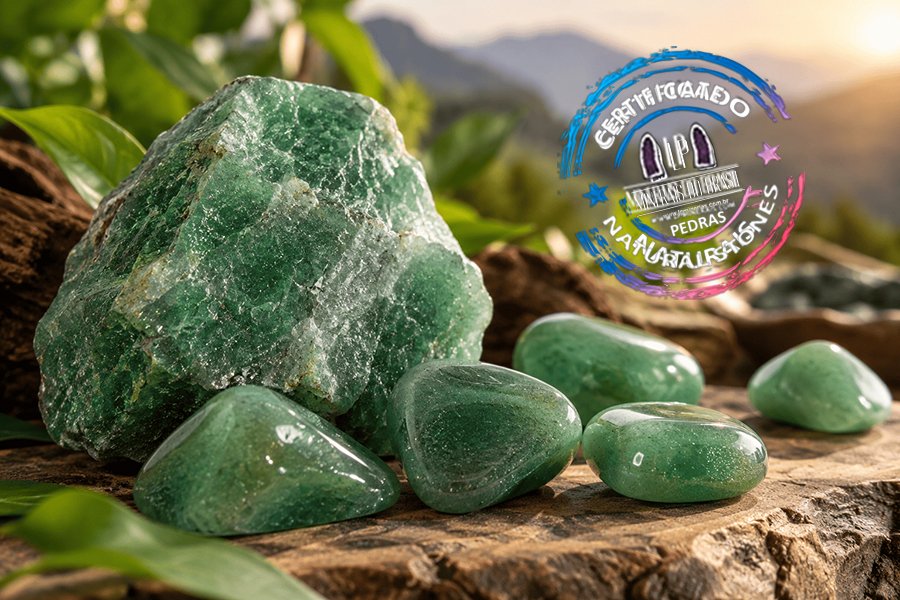
Green Aventurine: the Stone of Prosperity, Opportunity, and New Paths
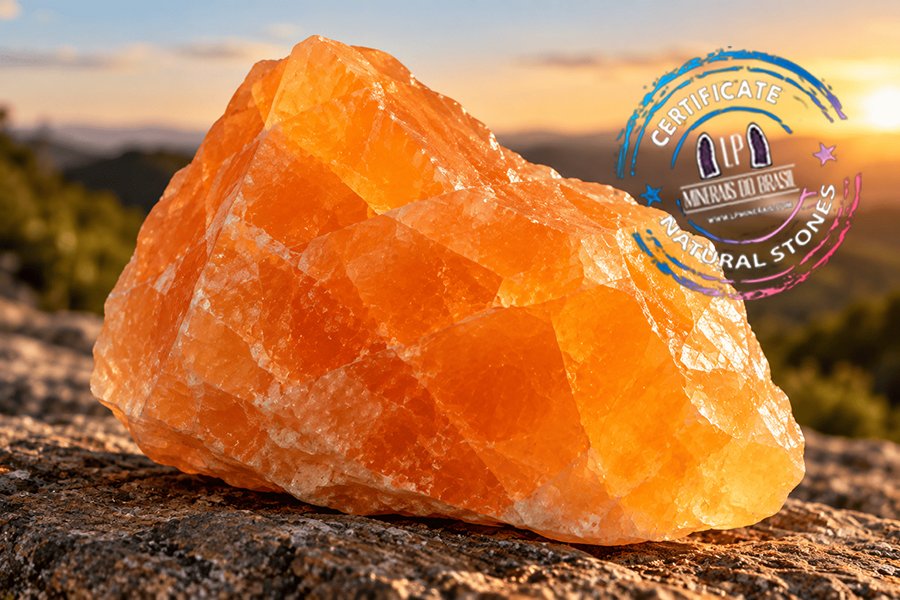
Orange Calcite: The Solar Energy That Awakens Creativity and Movement
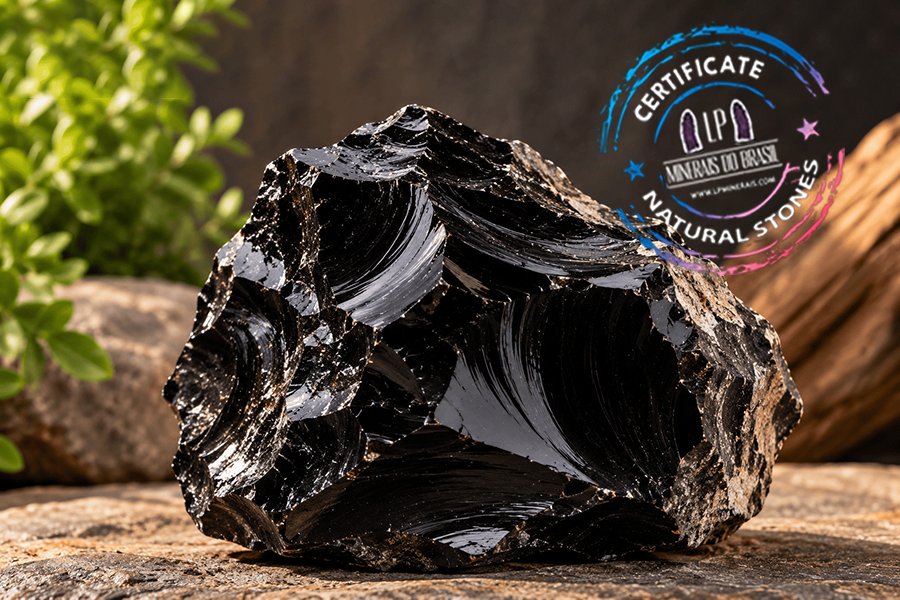
Black Obsidian: origin, formation, properties, and meaning of one of the best-known protective stones.
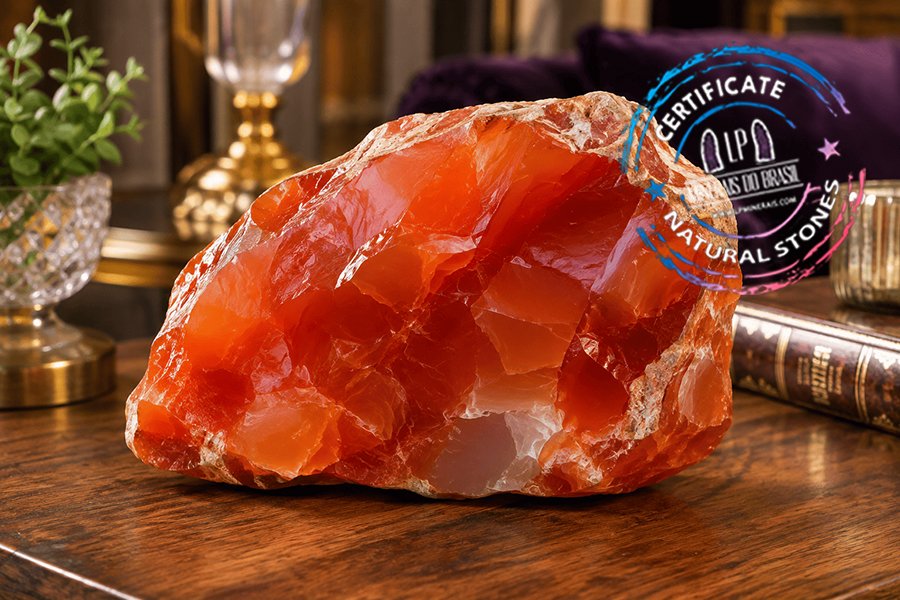
Carnelian: origin, formation, mineralogy, and the vibrant energy of a stone linked to action.
Red Jasper: Mineralogy, Vitality, and the Ancestral Strength of an Earth-Connected Stone