



Some stones stand out for their rarity, others for the intensity of their color. Green Aventurine has earned its place by combining something unique: natural beauty, subtle reflections that seem to emerge from within the stone, and symbolism strongly linked to prosperity, opportunities, and the ability to move forward.
Perhaps that is why it is so commonly found in workspaces, decorative objects, jewelry, tumbled stones, and collections. In the world of energy practices, it has become known as a companion for times when we seek growth without losing our balance—whether we’re starting a project, reorganizing our professional life, or simply making room for new possibilities.
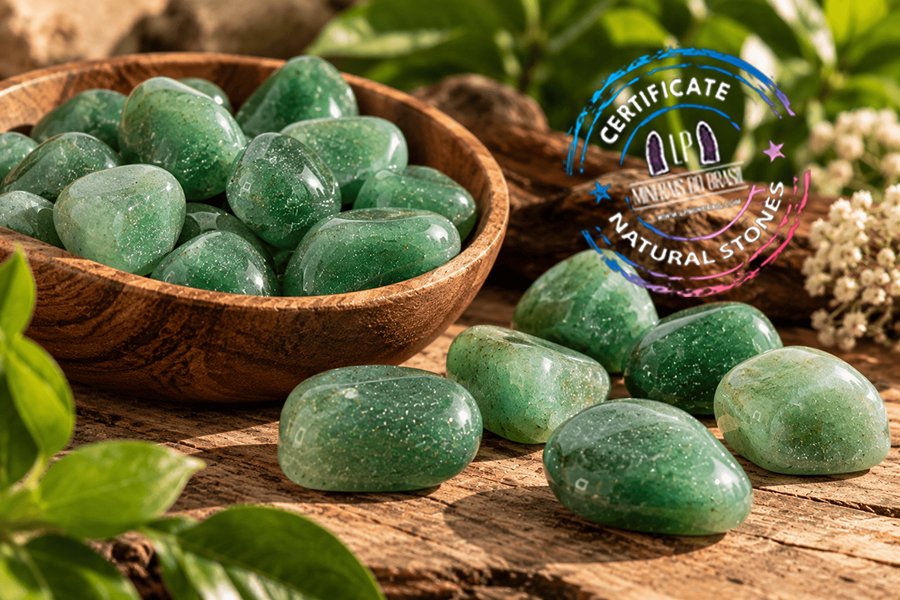
But there’s an extremely common question: Is Green Aventurine the same thing as Green Quartz?
Not exactly—and understanding this difference is a great way to get to know a stone better that, despite being quite popular, isn’t always described accurately.
What makes Green Aventurine so special?
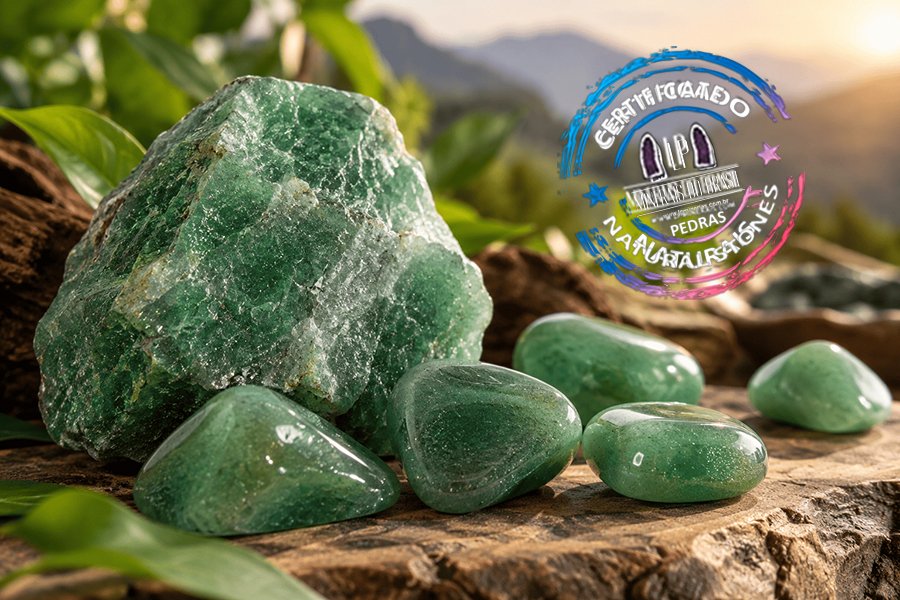
Green Aventurine belongs to the quartz family. Its primary composition consists of silicon dioxide (SiO₂), but it is precisely its mineral inclusions that help create the appearance for which it has become known.
In classic green aventurine, small inclusions of chromium-rich mica—often identified as fuchsite—can contribute to both the green hue and the reflections observed in the stone.
When these small particles reflect light, an optical phenomenon called aventurescence occurs.
This is the effect of tiny sparkles that can appear when we move the stone in front of a light source. In some specimens, the effect is quite evident; in others, it is subtle and only appears at certain angles. Therefore, one should not expect all green aventurine to look exactly the same.
Its hardness is around 7 on the Mohs scale, reflecting the predominance of quartz in the material. This gives it good durability for various decorative applications, although it remains a natural stone that requires protection from impacts and harsh chemicals.
And there’s an interesting fact about the name itself: the term associated with aventurescence has a historical connection to the Italian concept of *a ventura*, meaning “by chance.” Today, in gemology, aventurescence describes precisely this effect of reflections produced by inclusions within certain materials.
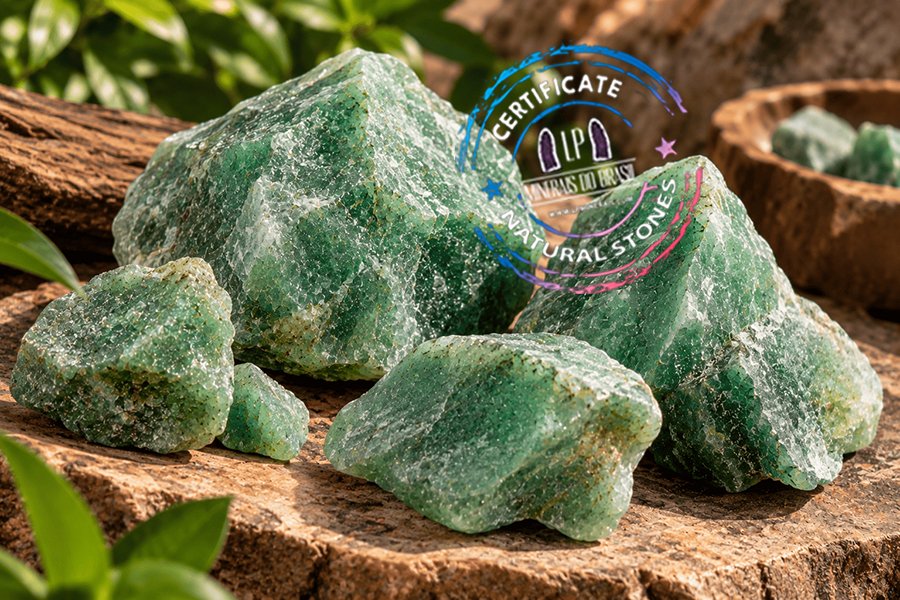
So, are Green Aventurine and Green Quartz the same thing?
This is probably one of the most common sources of confusion when discussing these stones.
The short answer is: we shouldn’t treat the two names as automatic synonyms.
Green Aventurine is a quartz-based material characterized by the presence of mineral inclusions and traditionally recognized for its aventurescent effect. The GIA describes green quartz aventurine as containing green mica inclusions and notes that these particles can produce both the shimmering appearance and contribute to the material’s perceived color.
The term “Green Quartz,” on the other hand, can be used for green quartz-based materials whose appearance, source of color, and structure do not necessarily correspond to aventurine.
This is precisely where the confusion arises: the two stones can exhibit similar hues, especially after polishing. To someone observing only the color, a Green Aventurine with a subtle luster may simply appear to be green quartz.
In aventurine, it is worth noting:
- the presence of small inclusions;
- a granular or quartz-like appearance;
- possible internal reflections under light;
- natural variations in color distribution;
- more pronounced aventurescence in certain specimens.
It is also important to remember that color alone does not authenticate a stone. Dyed or treated materials, as well as other green stones, may appear on the market under inaccurate names. For conclusive identification—especially for higher-value pieces—gemological analysis is more reliable than home tests.
This distinction highlights why provenance and accurate information are so important in the mineral market. Knowing exactly what you are purchasing is part of a transparent relationship between supplier, retailer, collector, and end consumer.
The stone of prosperity—but not just financial prosperity
In the tradition of crystal therapy, Green Aventurine has become particularly well-known for its association with prosperity, good luck, and new opportunities. This idea, however, can be understood in a broader sense than simply “attracting money.”
To prosper also means recognizing opportunities, being willing to start over, letting go of patterns that hinder growth, and making decisions with greater serenity. Therefore, symbolically, Green Aventurine combines two interesting concepts: expansion and balance.
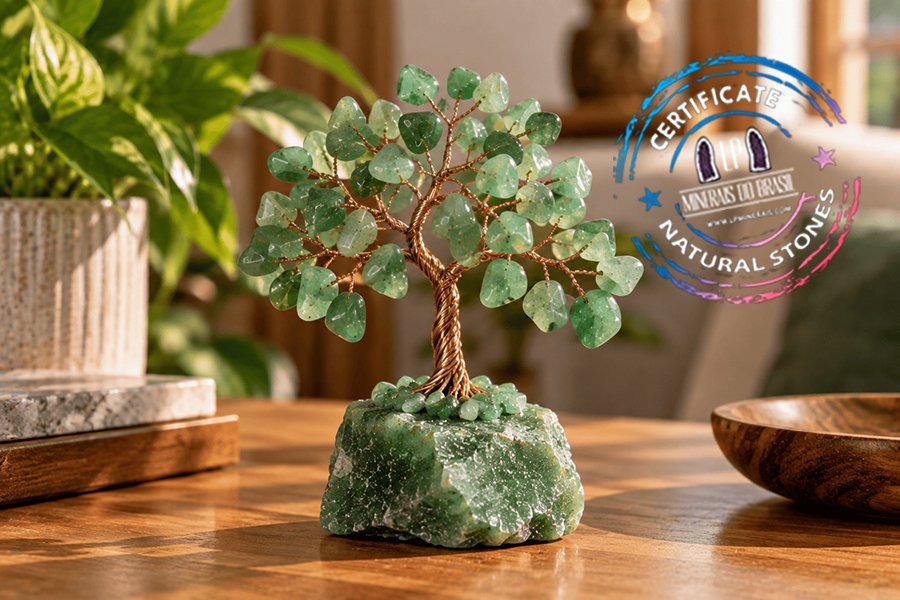
Its green color also establishes a traditional connection with renewal, nature, and growth. It is a stone often associated with the heart chakra, and within holistic practices, it is linked to emotional harmony, confidence, and openness to positive experiences.
This helps explain why it is often chosen for times of transition: a career change, a new venture, a project that is just beginning, or a phase in which one needs to regain enthusiasm.
These associations stem from spiritual traditions and crystal therapy. They may be part of personal meditation and wellness practices, but they do not represent scientifically proven medical effects nor do they replace professional healthcare.
Green Aventurine at Work and in New Projects
Few stones have such a natural symbolic association with professional environments as Green Aventurine.
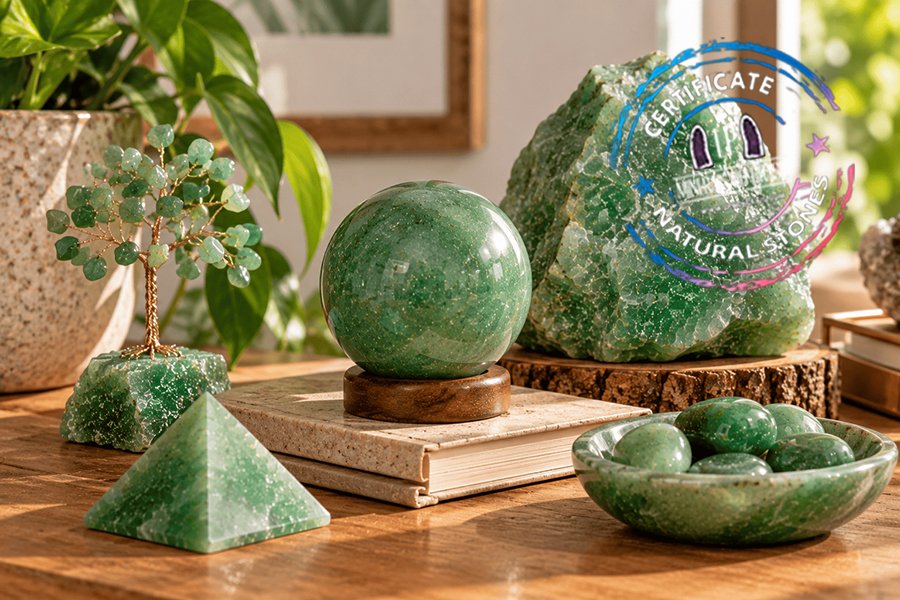
Because of its traditional association with opportunities and growth, it is commonly placed on desks, in offices, at reception areas, in commercial spaces, and in places dedicated to creating new projects. In this context, its function is essentially symbolic: to serve as a visual reminder of the intention to grow with balance and to recognize possibilities.
A rough or polished stone can be incorporated into the decor without turning the space into an explicitly spiritual setting. For those who prefer meditative practices, holding a Green Aventurine for a few minutes can accompany breathing exercises, visualizing goals, or mental organization before making an important decision.
In crystal therapy traditions, it is also often combined with Pyrite when the intention relates to material prosperity and fulfillment; with Rose Quartz when the focus is on the emotional dimension; and with Clear Quartz in combinations aimed at clarity and intention.
From Rough Stone to Jewelry: How to Use Green Aventurine
One of the advantages of Green Aventurine is its versatility. In its raw state, it best reveals its mineral texture and is appealing for collecting and decoration. When tumbled or polished, the color becomes softer and the inclusions can become even more attractive.
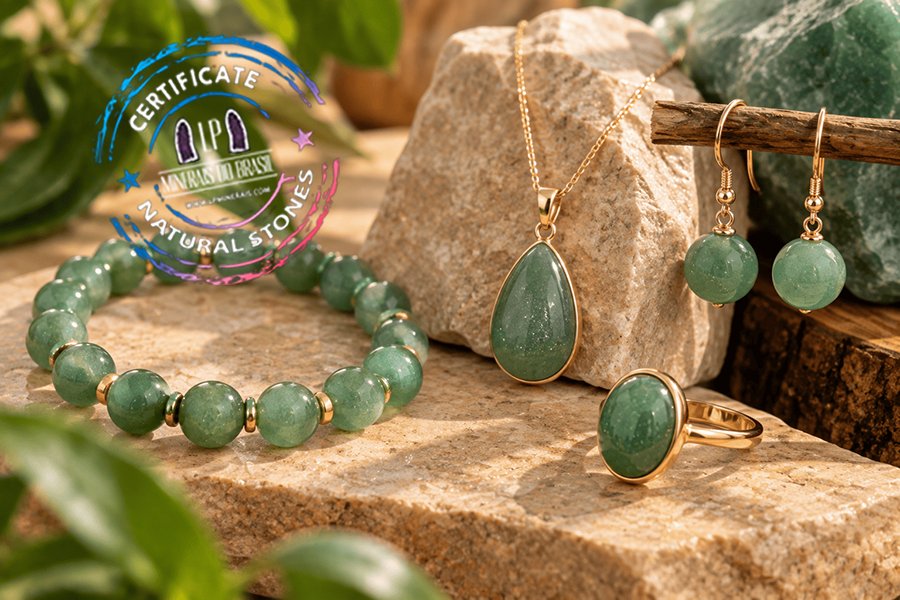
In jewelry and costume jewelry, it appears in beads, pendants, bracelets, cabochons, and other forms. Its hardness of nearly 7 on the Mohs scale makes it suitable for ornamental use, although strong impacts should be avoided.
Larger pieces can be used in interiors, offices, living rooms, and commercial spaces. Smaller specimens, on the other hand, are highly sought after for personal use, meditation, or creating stone arrangements.
For LP MINERAIS ⛏💎📦🗺, this variety of applications also represents something important within the industry: a single material can serve different markets, ranging from collecting and decoration to designers, jewelers, retailers, and international buyers.
How can you recognize a good piece of Green Aventurine?
There is no single shade that determines quality. Depending on its origin and inclusions, Green Aventurine can exhibit varying intensities of color and aventurescence.
An interesting piece should be evaluated as a whole: the beauty of its hue, the distribution of its inclusions, its finish when polished, and its suitability for the intended use.
Be especially wary of excessively artificial or uniform colors when accompanied by other characteristics incompatible with natural material. And remember: photographs help, but they are not always sufficient for a reliable mineralogical identification.
In the professional trade, information about the material’s origin, treatment, and identification is essential. This transparency is directly linked to the philosophy of a Fair Trade supply chain, in which the value of the mineral and commercial responsibility go hand in hand.
Cleaning and Care
Green Aventurine is relatively durable for everyday use, but that doesn’t mean it’s indestructible. Avoid drops, impacts against hard surfaces, sudden temperature changes, and prolonged contact with chemicals.
For physical cleaning, a soft, slightly damp cloth is usually sufficient for decorative pieces. When cleaning jewelry, care must also be taken with metals, adhesives, and other components of the piece.
For those who perform energetic cleansing, gentle methods are a practical choice: resting in a quiet place, traditional smudging when appropriate for your personal practice, sound, or indirect contact with other crystals used symbolically for this purpose.
LP MINERALS Chart ⛏💎📦🗺
🗺 » ORIGIN: found in various deposits around the world, including in deposits mined in Brazil
⚛️ » CHEMICAL COMPOSITION: predominantly SiO₂, with mineral inclusions; in the classic green variety, chromium-bearing mica/fuchsite may be present
🔩 » MOHS HARDNESS: approximately 7
🔢 » NUMEROLOGY: traditionally associated with the number 3
🔅 » MEANING: prosperity, opportunity, renewal, and growth
🅰️ » SUMMARY: a stone traditionally linked to opening new paths and maintaining balance in the face of new possibilities
✅ » SPECIFICATION: quartz-based material with mineral inclusions and possible aventurescence
🧩 » CONDITION: natural; found in rough, tumbled, polished, and cut forms
⚒ » FORMATION: quartz aggregates containing mineral inclusions incorporated during their geological history
⚠️ » CARE: Avoid impacts, harsh chemicals, and sudden temperature changes
🛁 » CLEANING: soft cloth and gentle physical cleaning; mild energetic methods according to personal practice
🎨 » COLOR: light green to deeper green, with natural variations
☯️ » ZODIAC: traditionally associated especially with Taurus
🪐 » SOLAR SYSTEM: Venus
➰ » CHAKRAS: Heart
♻ » ELEMENT: Earth
💎 » RARITY: generally accessible, with variations in quality, color, and optical effect
🗳 » CHARACTERISTIC: inclusions that can produce the shimmer known as aventurescence
Frequently Asked Questions About Green Aventurine
Are Green Aventurine and Green Quartz the same?
They should not automatically be considered the same stone. Green Aventurine is a quartz-based material recognized for inclusions that can produce aventurescence, while “green quartz” can refer to green materials with different characteristics and causes of coloration.
How can you tell if a Green Aventurine is genuine?
Color, inclusions, and aventurescence provide clues, but no single visual characteristic guarantees authenticity. For important or high-value pieces, gemological identification is the most reliable method.
What is it used for energetically?
In the tradition of crystal therapy, it is associated with prosperity, new opportunities, emotional balance, and renewal. It is also related to the heart chakra.
Can Green Aventurine be used at work?
Yes. In addition to decoration, it is traditionally chosen for offices and professional spaces because of its symbolism related to growth, opportunities, and prosperity.
Is Green Aventurine rare?
Generally speaking, it is not considered an exceptionally rare stone. However, specimens with attractive coloring, a good distribution of inclusions, and striking aventurescence may be of greater commercial interest.
Can I use Green Aventurine in jewelry?
Yes. Its hardness of nearly 7 on the Mohs scale allows for various applications in jewelry and accessories, although the piece should be protected from strong impacts.
A stone that reminds us that growth also requires balance
Perhaps the charm of Green Aventurine lies precisely in the union of two worlds. Mineralogically, small inclusions transform a quartz-based material into a stone with its own identity and, at times, surprising reflections. Symbolically, these same tiny glimmers seem to align perfectly with what it has come to represent: possibilities that begin to emerge when we are willing to see them.
It is a stone associated with prosperity, but also with the action required to achieve it. With opportunity, but also with the willingness to recognize it. With new paths, without forgetting the balance needed to traverse them.
In the world of LP MINERAIS ⛏💎📦🗺, understanding these differences also means valuing what lies behind each stone: mineralogy, origin, selection, a responsible supply chain, and quality information. From Brazil 🇧🇷 to the showroom, jewelry stores, interior design, collecting, and the export market, understanding the mineral is an essential part of learning to value it.
Doris S. Rosa
Howlite: what lies behind the Stone of Calm and Inner Silence?
Moonstone: the Stone of Intuition, Feminine Energy, and the Mysteries of the Moon.
Jade: The Stone of Wisdom, Prosperity, and Harmony That Spans Millennia
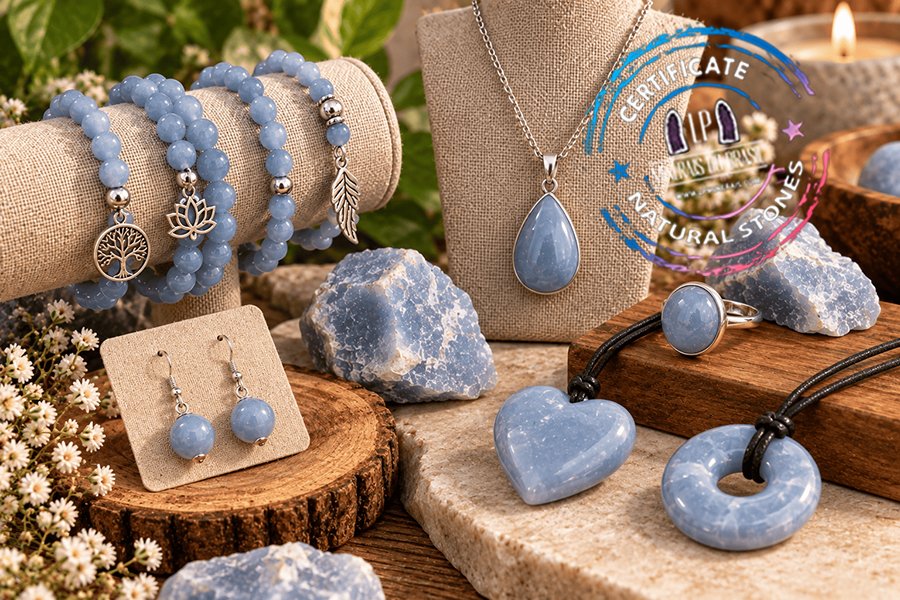
Angelite: The Stone of Serenity, Intuition, and Spiritual Connection
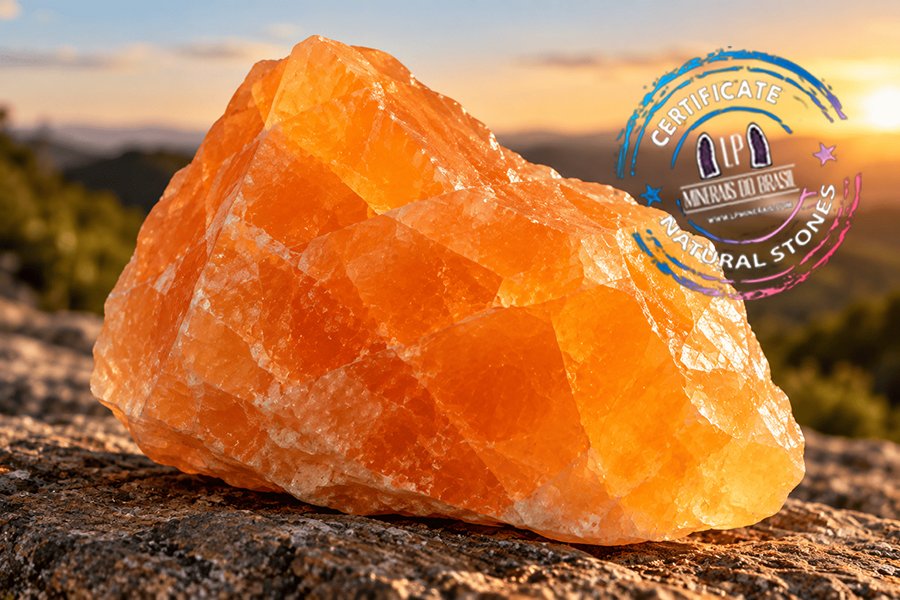
Orange Calcite: The Solar Energy That Awakens Creativity and Movement
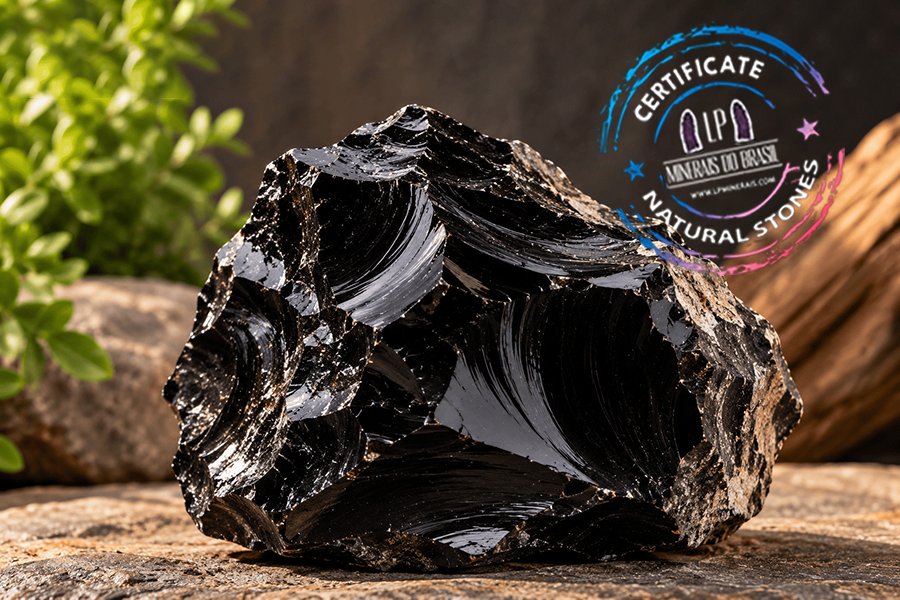
Black Obsidian: origin, formation, properties, and meaning of one of the best-known protective stones.
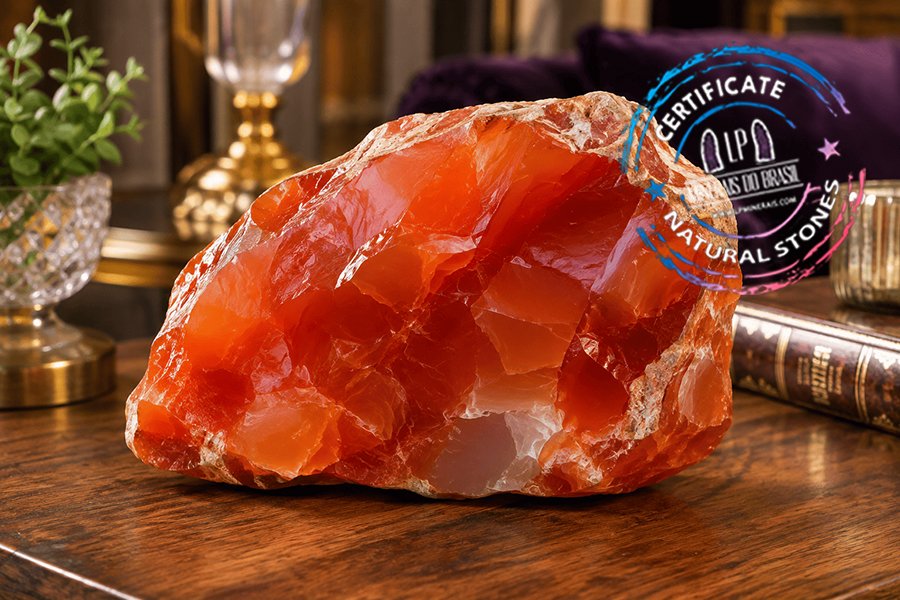
Carnelian: origin, formation, mineralogy, and the vibrant energy of a stone linked to action.
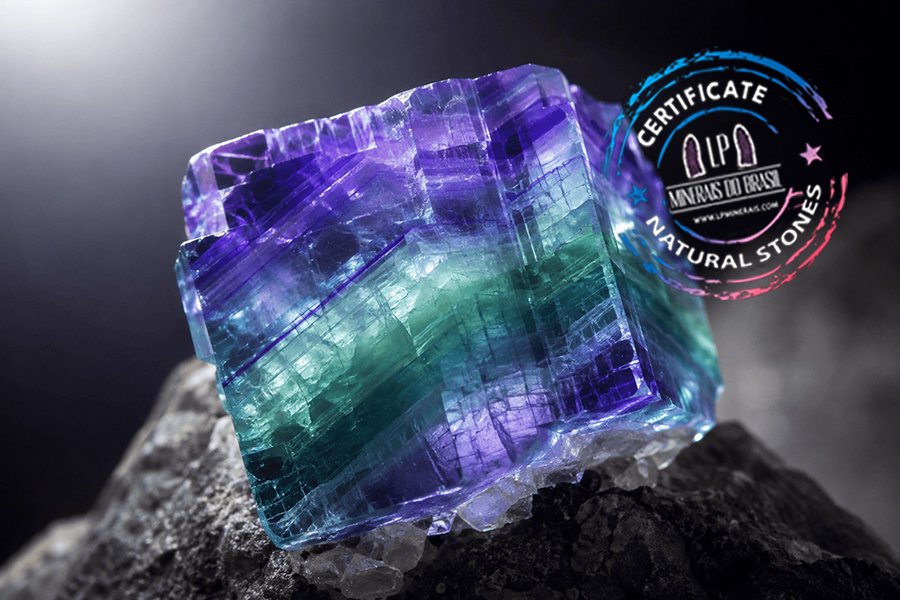
Fluorite: Mineralogy, Formation, Colors, and Meaning of a Mineral that Organizes Light and Color
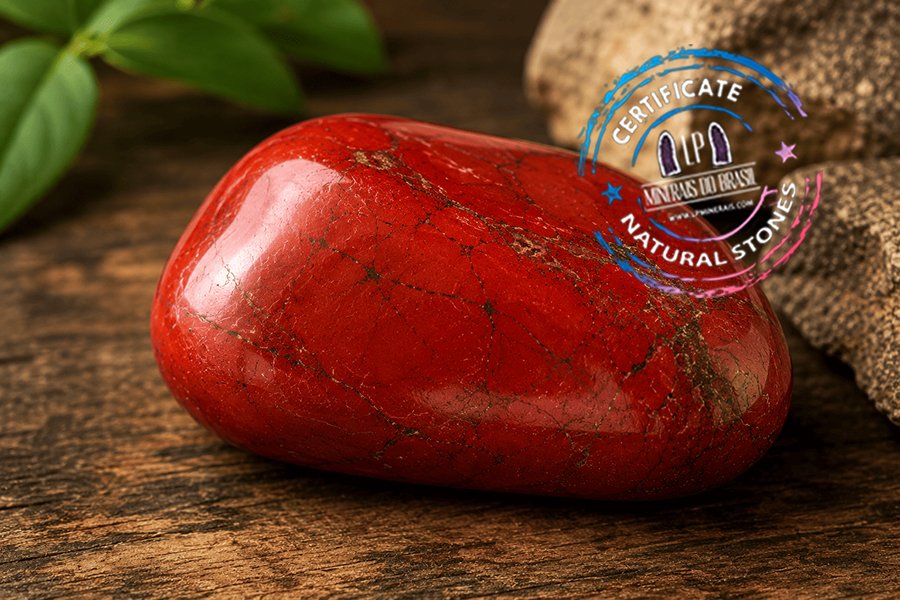
Red Jasper: Mineralogy, Vitality, and the Ancestral Strength of an Earth-Connected Stone
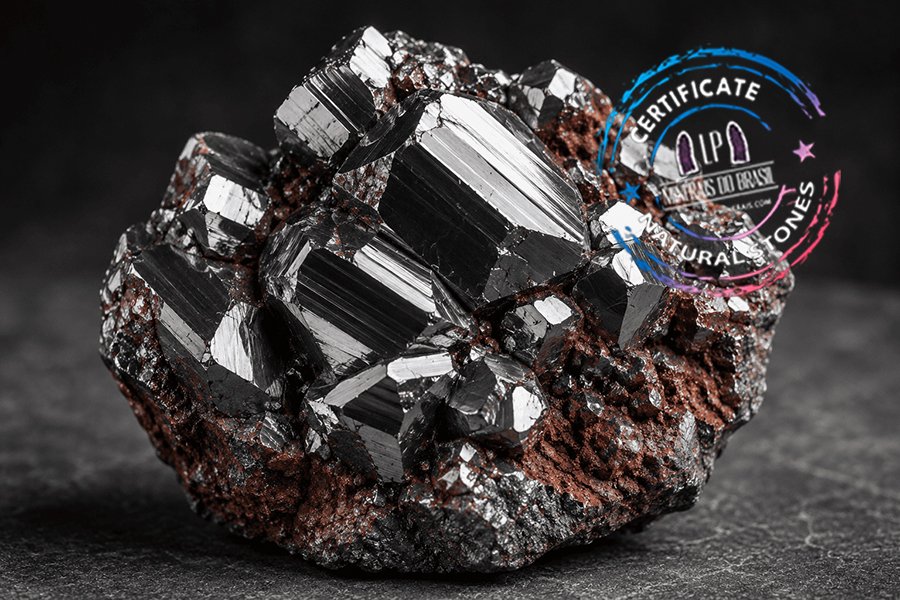
Hematite: The Strength of Iron, Grounding, and the Presence That Comes from the Earth