



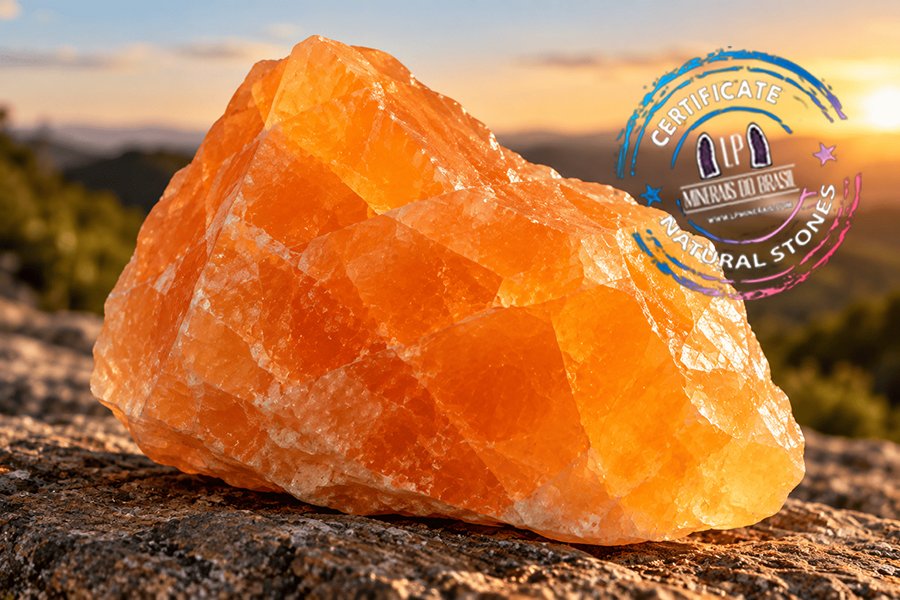
Some minerals stand out for their rarity, others for their crystalline geometry, and still others for the intensity of their color. Orange calcite belongs to a particularly interesting category: it combines a relatively simple mineralogy with a warm, luminous, and instantly recognizable visual presence. Its hues range from peach to honey, amber, and deep orange, often accompanied by milky areas, translucencies, and internal patterns that make each specimen unique.
Mineralogically, it belongs to the large calcite family, one of the most important minerals for understanding sedimentary, hydrothermal, and metamorphic processes. Its composition is calcium carbonate (CaCO₃), but small impurities and inclusions present during growth can profoundly alter its appearance. It is precisely this interaction between mineral structure, chromophore elements, and geological conditions that gives rise to the variety commercially known as Orange Calcite.
In the symbolic realm, its color has established an equally striking connection with ideas of creativity, vitality, pleasure, enthusiasm, and movement. In the tradition of crystal therapy, it is often associated with the ability to restore creative energy and break through states of stagnation. This energetic dimension, however, gains much greater depth when understood in light of the mineral’s true nature.
What Is Orange Calcite?
Calcite is a carbonate mineral with the chemical formula CaCO₃, consisting primarily of calcium, carbon, and oxygen. It belongs to the carbonate group and has a trigonal crystal system, capable of forming rhombohedral, scalenohedral, and various other crystal shapes. This morphological diversity makes calcite a classic mineral both in collections and in the study of crystallography.
One of its most important properties is perfect rhombohedral cleavage in three directions. This means that its structure has preferred planes of separation. When subjected to impact, therefore, calcite does not behave like quartz: it can fracture along characteristic surfaces directly related to the organization of its crystalline structure.
Its hardness is also a key factor. Calcite ranks at level 3 on the Mohs scale, serving as the reference mineral for that level. This makes it considerably softer than quartz, agate, carnelian, and many gemstones commonly used in jewelry.
Among its most important mineralogical characteristics are:
- Chemical formula: CaCO₃;
- Class: carbonates;
- Crystal system: trigonal;
- Hardness: 3 on the Mohs scale;
- Cleavage: perfect, rhombohedral;
- Luster: predominantly vitreous, varying depending on the surface;
- Transparency: transparent to translucent or opaque;
- Color: variable, with orange being one of the most sought-after colors in the ornamental market.
This combination explains both its beauty and its relative delicacy. Understanding these characteristics is not merely an academic matter: they determine cutting, conservation, transportation, and commercial applications.
The Geological Origin of Orange Calcite
Few minerals occur in geological contexts as diverse as those of calcite. It can form through the precipitation of aqueous solutions, hydrothermal activity, sedimentary processes, and the recrystallization of carbonate rocks subjected to metamorphism. As a result, its presence helps geologists interpret different environments and geological histories.
In carbonate sedimentary rocks, calcite is an essential component of many limestones. When these rocks are subjected to suitable metamorphic conditions, their crystals can recrystallize and contribute to the formation of marble. In caves, waters rich in dissolved calcium carbonate can progressively precipitate the mineral, forming speleothems such as stalactites and stalagmites.
There are also occurrences in hydrothermal veins and cavities, where mineralizing fluids circulate through fractures and deposit calcite along with other mineral species. Depending on the chemical composition of these fluids and the rocks with which they interact, different impurities may be incorporated into the material.
It is within this context that Orange Calcite should be understood: not as a separate mineral species, but as a chromatic variety of Calcite, whose appearance reflects the chemical and geological characteristics of the environment in which it formed.
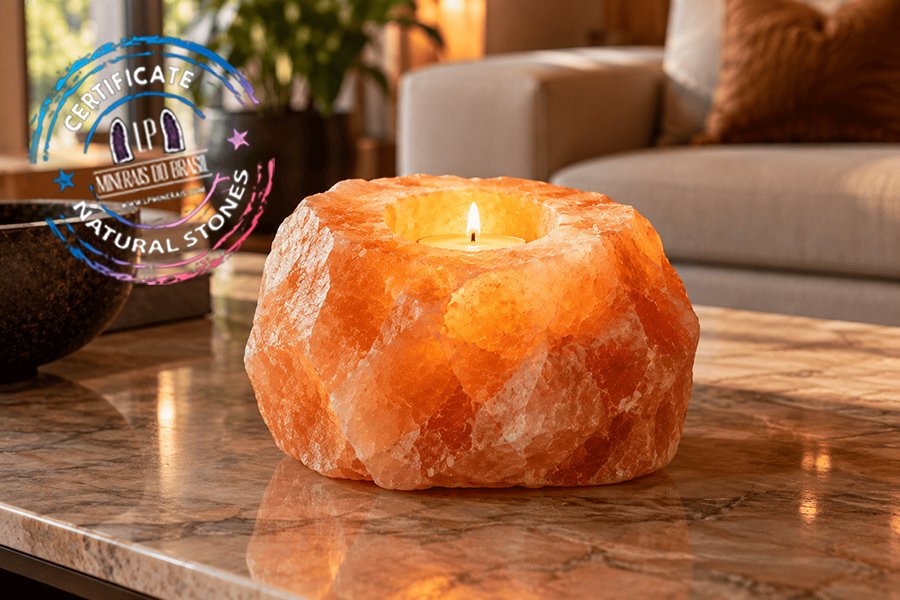
Where does the orange color come from?
Pure calcite tends to be colorless or white. When it exhibits shades of yellow, orange, red, green, or other hues, one must consider the presence of impurities, inclusions, and chemical substitutions that alter the way the material absorbs and transmits light.
In orange varieties, iron-bearing compounds and phases are among the factors frequently associated with the coloration. However, the exact origin of the color can vary depending on the deposit, and it would be incorrect to automatically attribute every orange specimen to a single color-forming mechanism.
This variability explains why the market features such diverse specimens under the same name. Some are almost yellow, while others have shades of apricot, honey, peach, or deep orange. White areas and translucent zones may also be present within the same specimen.
Light plays an important role in the perception of these specimens. A seemingly opaque calcite on a dark surface can reveal surprising luminosity when illuminated from the side or from behind.
This ability to absorb, diffuse, and reflect light through its translucent areas is one of the characteristics that most enhances its decorative use.
Orange Calcite, Honey Calcite, and Other Varieties: Are They the Same?
The vast commercial diversity of calcite can lead to confusion. Names such as Orange Calcite, Honey Calcite, Yellow Calcite, and Peach Calcite often describe primarily appearance and color range, rather than distinct mineralogical species.
This means that two pieces identified by different commercial names may have very similar mineralogical compositions. The reverse is also worth noting: visually similar materials do not always belong to the same mineral species.
Professional identification takes into account physical and mineralogical properties, origin, and, when necessary, instrumental analyses. Color alone is never sufficient to determine a species.
For buyers and collectors, a few points deserve attention:
- natural variations in hue are to be expected;
- transparency alone does not determine quality;
- white zones may be part of the natural growth pattern;
- trade names should be interpreted with caution;
- a reliable source strengthens the certainty of identification.
This approach is particularly important in the trade of natural minerals, where accurate information is part of the product’s quality.
Orange Calcite or Carnelian?
The comparison is inevitable because the two stones can fall within a similar color range. However, from a mineralogical standpoint, Orange Calcite and Carnelian are completely different.
Carnelian belongs to the chalcedony family and consists predominantly of silicon dioxide (SiO₂). Its hardness ranges from approximately 6.5 to 7 on the Mohs scale. Orange Calcite, on the other hand, is calcium carbonate (CaCO₃) and has a hardness of 3.
The structural difference is also profound. Calcite has a trigonal crystal system and perfect cleavage. Chalcedony is formed by microcrystalline aggregates of silica and does not exhibit the same characteristic cleavage as calcite.
In practice, this means that:
- Calcite is much more susceptible to scratches;
- Carnelian withstands everyday use in jewelry better;
- calcite may exhibit distinctive internal planes and milky areas;
- Carnelian typically exhibits the appearance typical of chalcedony varieties;
- similarity in color does not imply mineralogical identity.
This distinction reinforces a basic principle of commercial mineralogy: stones should not be identified solely by their appearance.
Authenticity: How to Recognize Natural Orange Calcite?
Identification begins with the material’s set of characteristics. Low hardness, cleavage, luster, texture, translucency, and structural features can provide important clues. In a geological context, calcite is also known for its reaction with dilute acid, producing effervescence.
This last method, however, should not be turned into a “home test” for finished pieces.
Acidic substances can corrode the surface of calcite, alter its polish, and permanently damage decorative or collectible items.
The same caution applies to scratch tests. Since the stone is soft, deliberately scratching a piece to confirm its identity can cause unnecessary damage. For commercially available materials, provenance and responsible identification are far more appropriate approaches.
Some signs that warrant closer examination include excessively artificial coloring, finishes incompatible with the nature of the material, or commercial names presented as if they were official mineralogical species. None of these elements, taken in isolation, proves counterfeiting; they merely indicate the need for a more thorough evaluation of the piece.
In a responsible mineral supply chain, transparency regarding identification, origin, and treatment builds trust in the product and strengthens Fair-Trade relationships, especially in operations connecting Brazilian suppliers, collectors, professionals, showrooms, and international markets.
A delicate stone that requires careful cutting
A hardness rating of 3 makes calcite a relatively easy material to work with, but also a sensitive one. During cutting, finishing, and polishing, it is necessary to consider both its low scratch resistance and its perfect cleavage.
Improperly applied pressure or an impact can cause fractures along the crystal’s structural planes. For this reason, large pieces, sculptures, spheres, and free-form shapes require care not only during production but also during packaging, storage, and export.
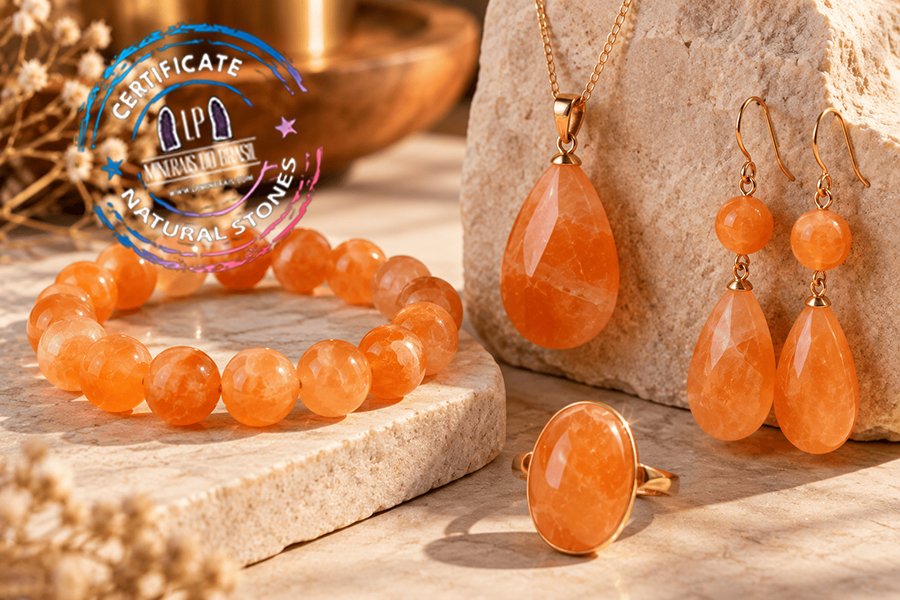
When the material is carefully selected and worked, the result can be extraordinary. Polishing reveals translucent areas, internal patterns, and varying concentrations of color, transforming seemingly unremarkable blocks into mineral objects with a strong aesthetic presence.
It is precisely this ability to reveal light through the material that has made Orange Calcite a particularly attractive stone for decoration, therapeutic objects, collecting, and ornamental pieces.
Orange Calcite in Decor and Interiors
In interiors, its color offers a clear aesthetic advantage: it pairs naturally with warm, organic materials. Wood, linen, natural fibers, marble, travertine, gold-toned metals, and greenery create compositions in which the mineral’s orange hue serves as a focal point of light.
Larger pieces can be placed on coffee tables, sideboards, bookshelves, end tables, or spaces set aside for contemplation. Free-form shapes best preserve the material’s geological identity, while spheres, eggs, obelisks, and sculptures bring the stone closer to decorative design.
The choice depends on the purpose. For a collector, natural structures, mineral associations, and provenance may take center stage. For decoration, proportion, finish, translucency, and the piece’s relationship with lighting come into play.
Among the most commonly used presentations are:
- selected rough stones;
- tumbled and polished pieces;
- free-form pieces;
- spheres;
- mineral eggs;
- towers and obelisks;
- sculptures and ornamental objects.
However, because it is delicate, it should not be placed in areas where it is constantly subject to falls, friction, or contact with cleaning agents.
Jewelry: Beauty That Requires Care
Orange Calcite can be crafted into beads, cabochons, pendants, and other adornments, but its use must respect the mineral’s physical limitations. A gemstone with a hardness of 3 should not be treated the same way as Quartz, Topaz, or Corundum.
Pendants and earrings typically offer more protection. Rings and bracelets, on the other hand, are subject to frequent impacts and friction, increasing the risk of scratches, loss of luster, or fractures.
It is also recommended to store calcite jewelry separately from harder gemstones. Even simple friction inside a jewelry box can leave marks on its surface.
This delicacy is part of the stone’s identity. Working properly with natural minerals means adapting the design to the material, rather than demanding that the material behave in a way that is incompatible with its structure.
The Solar Energy of Orange Calcite
In the field of crystal therapy traditions, Orange Calcite is often associated with vitality, creativity, enthusiasm, pleasure, and renewal of personal momentum. Its symbolism speaks directly to its color: luminous and warm, yet distinct from the more impulsive intensity typically associated with red tones.
Its energetic interpretation can be understood as a transition from inertia to movement. Rather than simply representing “more energy,” it is often associated with the recovery of spontaneity, the desire to experiment, and the willingness to transform an idea into an experience.
This interpretation makes the stone particularly interesting for creative moments. Artists, designers, artisans, professionals working in communications, or anyone involved in creative processes can use it symbolically as a reminder that creativity also depends on curiosity, movement, and the freedom to explore possibilities.
Traditionally, its associations include:
- creativity and expression;
- enthusiasm and vitality;
- breaking through periods of stagnation;
- the joy of creating;
- confidence to experiment;
- emotional release;
- energy and motivation;
- renewal of energy in spaces.
These associations belong to the holistic and symbolic traditions of crystals and should be understood as complementary to mineralogy, not as substitutes for medical or psychological care.
The Archetype of Creative Movement
There is a particularly interesting aspect to the symbolism of Orange Calcite: creation requires movement. An idea that remains unspoken stays merely a possibility; when it receives attention, experimentation, and action, it begins to take shape.
It is in this realm that the stone’s archetype finds its most compelling expression. Orange Calcite can symbolically represent that first impulse that breaks through stagnation without demanding that everything be perfect. Its energy, traditionally described as stimulating, aligns with processes in which enthusiasm and spontaneity need to reclaim their place.
In an office or studio, it can be placed in areas designated for creativity. At home, its presence can simultaneously contribute to a welcoming visual composition and to an atmosphere associated with joy and movement. In meditative practices, it can accompany reflections on desires, projects, creativity, and the ability to embrace change.
The stone itself offers a powerful visual metaphor: a substance formed by the Earth that, when illuminated, reveals depths and shades that are not always apparent at first glance.
The Sacral Chakra and the Symbolism of Orange
Orange Calcite is traditionally associated primarily with the sacral chakra, an energy center linked—in traditions that work with chakras—to creativity, pleasure, emotional expression, relationships, and the ability to flow with experiences.
Orange plays a central role in this correspondence. Symbolically, it lies between the physical strength represented by red and the expansive luminosity of yellow. This position helps explain why the color has been culturally linked to interpretations related to enthusiasm, sociability, expression, and movement.
In meditative practice, the stone can be used as an object of concentration while one directs attention toward creative projects, changes, or goals that have stalled. It is not necessary to attribute to the stone the literal ability to produce results; its use can serve as a symbolic element of intention and presence.
It is precisely in this convergence of color, symbolism, and matter that Orange Calcite builds its energetic identity. On the one hand, there is a calcium carbonate with a trigonal structure and a concrete geological history.
On the other, a stone that has come to represent, in holistic traditions, the human capacity to regain enthusiasm, spark creativity, and allow new possibilities to emerge.
Orange Calcite in Meditation and Intentional Practices
The use of Orange Calcite in meditative practices is primarily linked to its symbolism of movement, creativity, and renewal. In crystal therapy traditions, it is often used when the intention involves emerging from periods of creative apathy, regaining enthusiasm, or establishing a more spontaneous relationship with projects, ideas, and experiences. Its warm hue visually reinforces this interpretation, creating an immediate association with light, warmth, and expansion.
Rather than being understood merely as a “stimulating” stone, its symbolism can be explored more deeply. Creativity does not mean only producing art: it involves finding alternatives, imagining solutions, accepting change, and allowing something new to emerge. In this context, Orange Calcite can serve as a symbolic object of focus during contemplative practices centered on new cycles and decisions.
During meditation, it can be placed close to the body or simply kept within your field of vision. The important thing is to set a clear intention, without turning the practice into a promise of automatic results.
Traditionally, its use may accompany intentions related to:
- creativity and inspiration;
- enthusiasm for new projects;
- openness to change;
- emotional expression;
- confidence to experiment;
- renewed motivation;
- enjoyment of the creative process.
The energetic interpretation remains complementary. It does not replace medical, psychological, or other forms of professional care.
Orange Calcite in Interiors
Orange Calcite has a characteristic that makes it particularly well-suited for indoor use: its aesthetic qualities and its energetic symbolism align perfectly. Its warm color creates points of light in neutral environments, while its traditional association with vitality and creativity makes it a popular choice for spaces where movement and inspiration are desired.
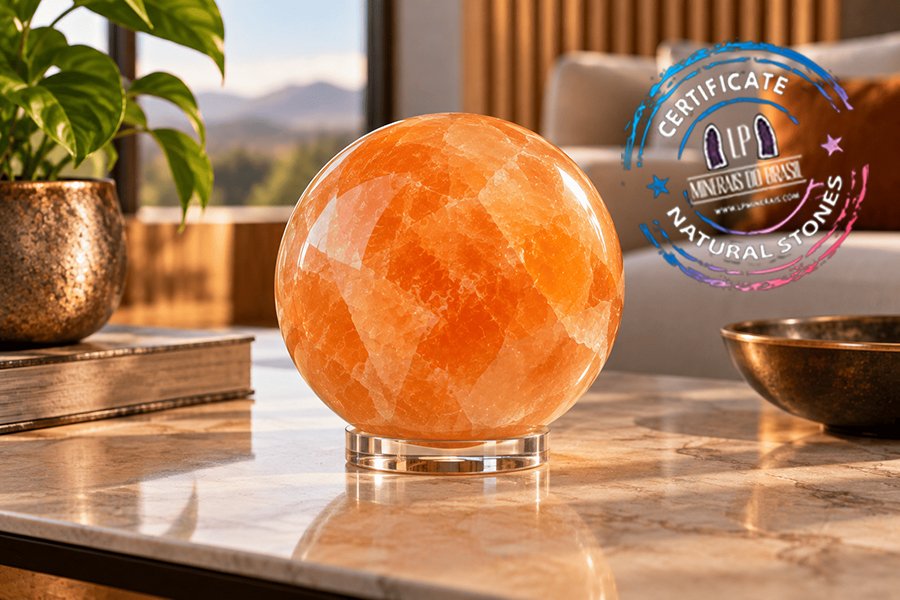
In offices, studios, and workshops, it can represent creative intent. In living rooms, it contributes to a visually welcoming atmosphere. In spaces for reading or reflection, a single piece can serve as a striking mineral accent without requiring elaborate arrangements around it.
Larger, translucent pieces become particularly striking when illuminated by indirect light. The light passes through the mineral’s varying thicknesses and highlights internal areas, producing an almost luminous appearance. This quality makes Orange Calcite particularly appealing for mineral design and contemporary decor.
Within the realm of symbolic language, certain environments share a special affinity:
- studios: creativity and experimentation;
- offices: motivation and project development;
- livingrooms: warmth and vitality;
- meditation spaces: renewal and intention;
- creative environments: inspiration and spontaneity.
Since calcite has a low hardness rating, its placement should also take physical safety into account. Stable sideboards, protected side tables, and niches are preferable to surfaces subject to frequent impacts.
Protection, Prosperity, and Movement
Orange Calcite does not occupy exactly the same symbolic realm as stones traditionally recognized as powerful symbols of protection, such as Black Obsidian. Its energetic domain is much more closely related to circulation, expansion, creative confidence, and the renewal of enthusiasm.
When associated with prosperity, the most coherent interpretation is not that of a stone that automatically “attracts money.” Its symbolic connection lies in the movement necessary to transform ideas into initiatives: creativity, enthusiasm, confidence, and openness to new opportunities.
There is also a dimension of energetic cleansing attributed to calcite in various crystal therapy traditions. In the orange variety, this characteristic is often interpreted in conjunction with the idea of removing stagnation and fostering a lighter, more dynamic atmosphere.
Thus, its symbolism of prosperity can be understood as creative fertility: creating possibilities, perceiving paths, and restoring movement to what has remained stagnant.
Combinations with Other Stones
Combining crystals is a practice traditionally used to build a more specific symbolic intention. In the case of Orange Calcite, the most interesting combinations are those in which its energy—linked to creativity and movement—meets minerals associated with grounding, clarity, fulfillment, or expansion.
The choice should be based on the purpose of the practice. Many stones together do not necessarily result in a more energetically coherent composition. In fact, in settings, two or three well-selected pieces often produce a much more elegant visual and symbolic language.
Some traditionally used combinations include:
- Carnelian: creativity, action, and courage;
- Citrine: expansion, confidence, and prosperity;
- Clear Quartz: clarity and focus of intention;
- Amethyst: creativity accompanied by introspection;
- Black Obsidian: movement combined with grounding and protection;
- Rose Quartz: creativity associated with sensitivity and warmth.
Orange Calcite and Carnelian form a particularly interesting combination. Although they both are associated with the sacral chakra, Calcite can represent fluidity and creative openness, while Carnelian traditionally adds drive, determination, and action.
How to Clean and Care for Orange Calcite
Caring for Orange Calcite must begin with its mineralogy, not its energetic traditions. With a hardness of 3 and perfect cleavage, it is a stone that is sensitive to scratches, impacts, and certain chemicals. Methods suitable for quartz should not be automatically applied to calcite.
Acids require special caution because they react with calcium carbonate. Acidic household products, including some cleaning solutions, can attack the surface and damage the polish. Ultrasonic cleaners and steam cleaning are also not suitable options for a delicate stone with pronounced cleavage.
For daily care, it is safest to use a soft, dry cloth or one that is only slightly damp, gently removing dust and debris and drying the piece immediately afterward.
It is also recommended to:
- avoid drops and impacts;
- do not use acidic products;
- avoid abrasives;
- do not allow contact with harder stones;
- store jewelry separately;
- avoid sudden temperature changes;
- protect polished surfaces from constant friction.
These precautions preserve the jewelry’s luster, finish, and structural integrity for much longer.
Energetic cleansing: less interference, more care
In energy cleansing, the physical delicacy of the mineral remains a priority. A symbolic practice should never put the piece at risk. For this reason, dry and minimally invasive methods are particularly suitable for Orange Calcite.
It can be placed near a Selenite, for example, when this combination is part of one’s personal practice. Smudging, sound, visualization, or simply a period of rest in a protected space are also among the methods used in contemporary traditions.
The key is to avoid turning energetic cleansing into a rigid sequence of procedures. The symbolic intention can be simple, while mineralogical preservation must remain objective.
Alternatives include:
- indirect contact with or proximity to selenite;
- sound;
- smudging;
- visualization and intention;
- resting in a clean, protected environment.
Methods involving chemicals, salt, or unnecessary exposure to water offer no benefit to delicate calcite.
Symbolism of the Sun, Fire, and Creation
Orange Calcite possesses a chromatic language inextricably linked to the Sun and fire, even though different esoteric systems present distinct correspondences. Orange evokes warmth, luminosity, expansion, and the capacity to transform. It is the color of the transition between the physical intensity of red and the intellectual luminosity of yellow.
In symbolic interpretations, the fire associated with the stone need not be understood as destruction. It represents the creative fire: the one that warms, sets things in motion, and transforms matter into possibility. This archetype resonates in a particularly interesting way with artists, entrepreneurs, artisans, and people going through phases of rebuilding their projects.
Planetary and zodiacal correspondences may vary depending on the tradition consulted. Therefore, it is more appropriate to present them as symbolic associations rather than as universal mineralogical characteristics. The Sun frequently appears due to the stone’s chromatic correspondence and the vitalizing nature attributed to it, while fire signs may exhibit symbolic affinity within certain systems.
This distinction preserves something essential: mineralogy belongs to the Earth sciences; energetic correspondences belong to traditional and interpretive systems.
🧡 Technical and Energetic Profile of Orange Calcite
🗺 » ORIGIN – Found in different regions of the world and formed in various geological contexts. Brazil has significant deposits of calcite, although the name “Orange Calcite” does not, in and of itself, indicate a specific origin.
⚛️ » CHEMICAL COMPOSITION – Calcium carbonate — CaCO₃.
🔩 » MOHS SCALE – 3, a relatively soft mineral that is susceptible to scratching.
🔢 » NUMEROLOGY – Correspondences vary among different schools of numerology and crystal therapy; they should be understood as symbolic interpretations, not as mineralogical properties.
🔅 » MEANING – Traditionally associated with creativity, vitality, enthusiasm, movement, and renewal.
🅰️ » SUMMARY – A chromatic variety of calcite characterized by warm tones and symbolism related to the restoration of creative drive.
✅ » SPECIFICATION – A natural mineral in the carbonate group, an orange variety of calcite.
🧩 » STATE – It can occur crystallized or in mineral masses and is sold rough, tumbled, polished, cut, or carved.
⚒ » FORMATION – May result from chemical precipitation, sedimentary processes, hydrothermal processes, or metamorphic recrystallization, depending on the deposit.
⚠️ » CARE – Avoid impacts, abrasives, acids, harsh chemicals, ultrasonic cleaning, and friction with harder minerals.
🛁 » CLEANING– For physical care, use a soft, dry or slightly damp cloth, followed by drying. For energy practices, opt for non-aggressive methods.
🎨 » COLOR – Ranges from orange-yellow to peach, honey, and deep orange, often with white or translucent areas.
☯️ » ZODIAC — Correspondences vary across traditions; signs associated with the fire element frequently appear in contemporary interpretations.
🪐 » SOLAR SYSTEM – The Sun, as a symbolic correspondence linked to luminosity, vitality, and expression.
➰ » CHAKRAS – Primarily the sacral chakra, though it may also be associated with the solar plexus in some traditions.
♻ » ELEMENT – Fire, in energetic interpretations linked to transformation, creativity, and movement.
💎 » RARITY – Calcite is abundant. Common orange specimens are not considered rare, although distinctive crystals, specific origins, transparency, aesthetics, and mineralogical quality can increase their collectible value.
🗳 » CHARACTERISTICS – A stone with a strong chromatic presence, low hardness, excellent ornamental potential, and traditional symbolism linked to creative energy.
The Significance of Orange Calcite in the Mineral Industry
Calcite occupies a much broader role in the mineral industry than its presence in crystal shops might suggest. As a mineral species, it holds enormous geological, scientific, and industrial importance. The orange variety, however, stands out primarily in the ornamental, decorative, collectible, and holistic segments.
In this market, proper processing is crucial. Block selection, cutting, polishing, carving, and finishing can transform the raw material into objects with strong visual appeal. At the same time, its low hardness requires extra care in packaging and logistics, especially when pieces are transported over long distances.
For Brazilian suppliers operating within Fair Trade supply chains, ethical sourcing and transparent business relationships add a dimension that goes beyond aesthetics. Knowing the origin, respecting those involved in the production chain, and working with the mineral responsibly strengthens an industry capable of connecting Brazilian production, showrooms, collectors, and export markets.
In this context, Orange Calcite demonstrates that geological abundance does not mean a lack of interest. What sets it apart may lie in the quality of the specimen, selection, finish, provenance, and the responsible manner in which the stone travels from its origin to its final destination.
FAQ — Frequently Asked Questions About Orange Calcite
Is Orange Calcite a natural stone?
Yes. Calcite is a natural mineral composed of calcium carbonate. “Orange Calcite” is a term used for varieties that exhibit orange hues resulting from chemical characteristics and inclusions present during their formation. As with other commercial minerals, a reliable source is important for verifying the stone’s identification and any treatments it may have undergone.
Are Orange Calcite and Carnelian the same stone?
No. Orange Calcite is CaCO₃, has a hardness of 3, and a trigonal crystal system. Carnelian is a variety of chalcedony composed mainly of SiO₂, with a hardness of approximately 6.5 to 7. The similarity in color does not indicate a mineralogical relationship.
Are Orange Calcite and Orange Aragonite the same?
No. Calcite and Aragonite have the same general chemical formula, CaCO₃, but they are polymorphs: they have different crystal structures. Calcite belongs to the trigonal system, while Aragonite crystallizes in the orthorhombic system. Doubtful commercial specimens may require proper mineralogical evaluation.
Is Orange Calcite rare?
Generally speaking, no. Calcite is a very abundant mineral. However, aesthetically distinctive crystals, specimens from specific localities, large pieces, or materials with unusual characteristics may be of greater interest to collectors.
Can Orange Calcite be used in jewelry?
Yes, as long as its low hardness is taken into account. Protected pendants and earrings are more suitable applications than jewelry subject to frequent impacts. The piece should also be kept separate from harder gemstones during storage.
What is the main energetic significance of Orange Calcite?
Traditionally, it is associated with creativity, vitality, enthusiasm, renewal, and emotional movement. It is one of the stones frequently linked to the sacral chakra and the symbolism of creative energy.
Where should you place Orange Calcite in your home?
It can be used in living rooms, offices, studios, creative spaces, and meditation areas. From a decorative standpoint, its hue pairs especially well with wood, light-colored stones, natural fibers, and warm lighting.
How do you clean Orange Calcite?
For physical cleaning, use a soft, dry or slightly damp cloth, followed by drying. Avoid acids, abrasives, harsh chemicals, ultrasonic devices, and procedures that could damage or scratch the surface.
Can Orange Calcite be exported?
Yes. Mineral specimens may be traded internationally provided that the applicable commercial, tax, customs, and documentation requirements for the transaction are met. Because it is relatively soft and exhibits perfect cleavage, special attention should be given to packaging and handling.
Orange Calcite: When Matter Meets Movement
Orange Calcite brings together two worlds that need not compete. In mineralogy, it is a trigonal-system calcium carbonate with a hardness of 3 and perfect cleavage, formed in various geological environments and capable of reflecting the chemical characteristics of its origin in its color. On a symbolic level, it has become a stone associated with creativity, vitality, enthusiasm, and the ability to set in motion what has remained stagnant.
Its beauty also stems from this duality. It is physically delicate yet visually intense. It may appear compact under certain lighting and reveal unexpected translucency when light passes through it. It may reach the market as a rough stone, a polished piece, a sculpture, a decorative object, or part of a mineralogical collection.
Perhaps it is precisely this ability to reveal light and movement within the material that explains the power of its symbolism. Orange Calcite does not need to represent haste or constant productivity. Its traditional message is closer to the impulse to create anew, to experiment, to imagine, and to allow an idea to find the space to take shape.
By: Doris S. Rosa
Howlite: what lies behind the Stone of Calm and Inner Silence?
Moonstone: the Stone of Intuition, Feminine Energy, and the Mysteries of the Moon.
Jade: The Stone of Wisdom, Prosperity, and Harmony That Spans Millennia
Angelite: The Stone of Serenity, Intuition, and Spiritual Connection
Green Aventurine: the Stone of Prosperity, Opportunity, and New Paths
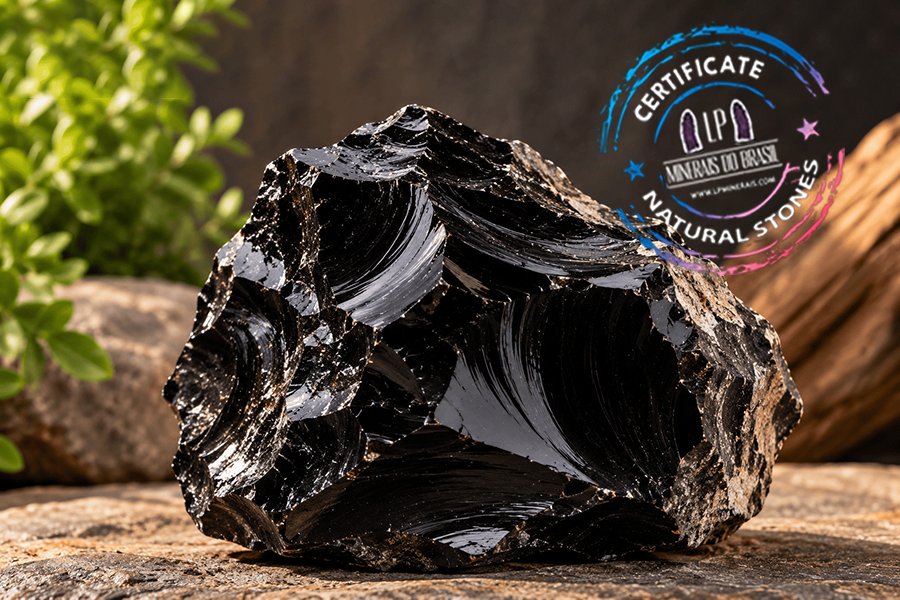
Black Obsidian: origin, formation, properties, and meaning of one of the best-known protective stones.
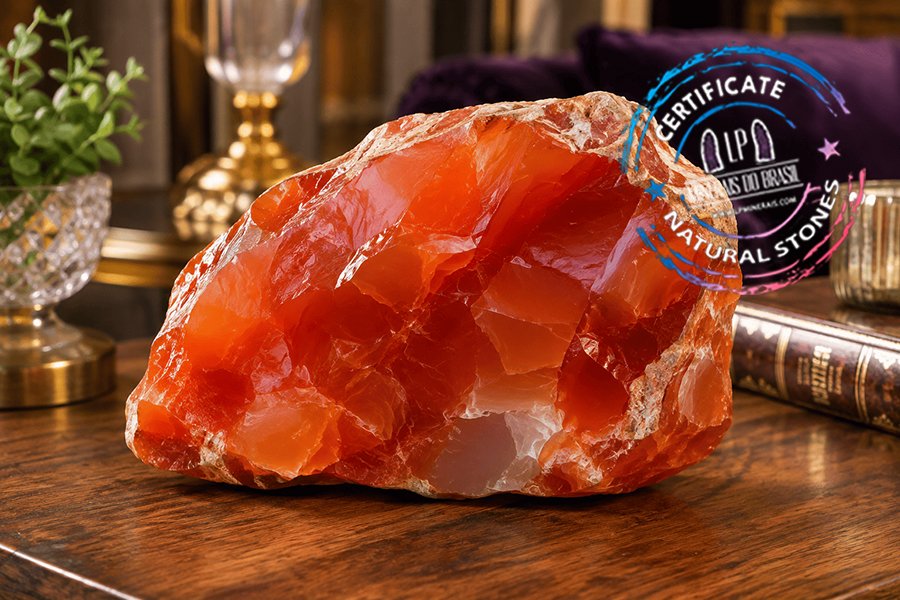
Carnelian: origin, formation, mineralogy, and the vibrant energy of a stone linked to action.
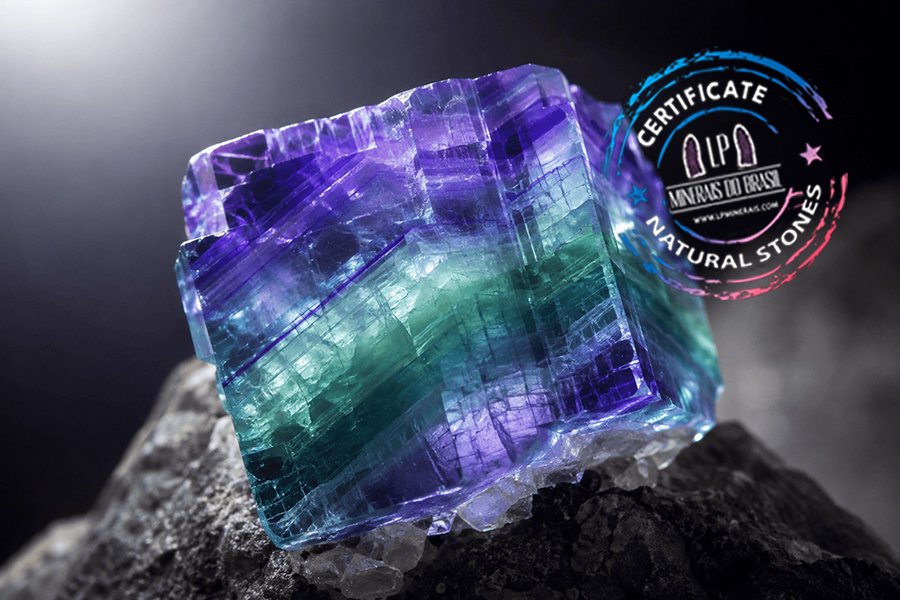
Fluorite: Mineralogy, Formation, Colors, and Meaning of a Mineral that Organizes Light and Color
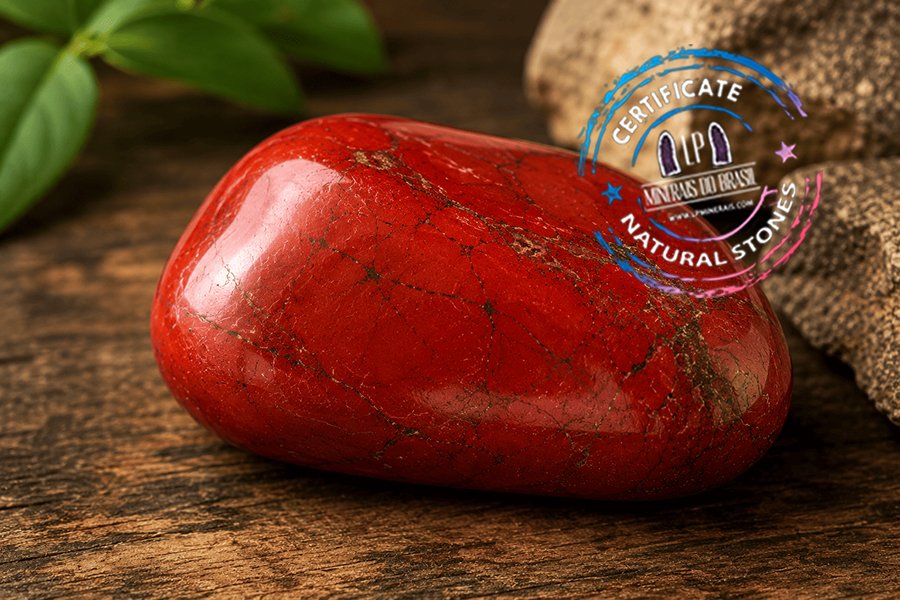
Red Jasper: Mineralogy, Vitality, and the Ancestral Strength of an Earth-Connected Stone
Hematite: The Strength of Iron, Grounding, and the Presence That Comes from the Earth