







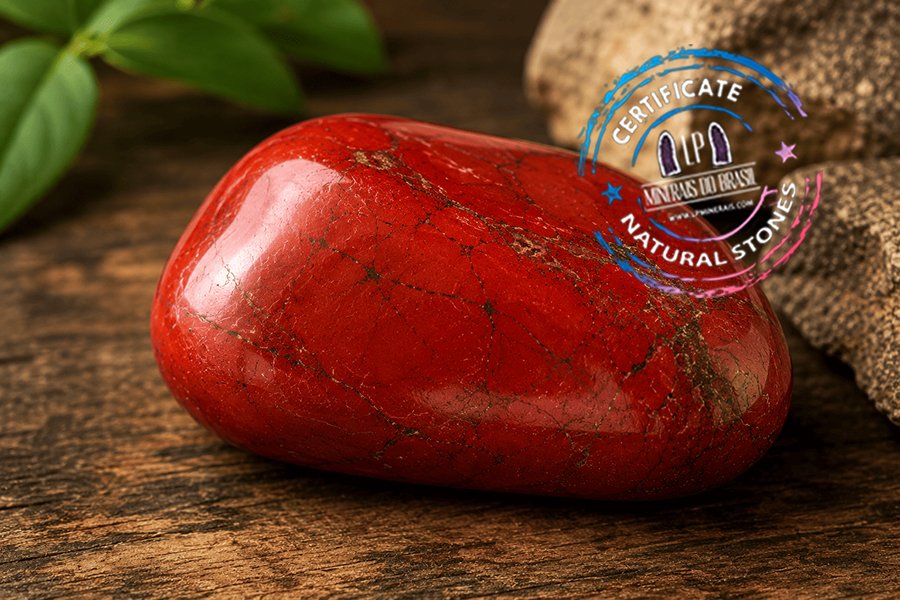
Red Jasper belongs to that group of stones that don’t need transparency, metallic sheen, or optical phenomena to make an impression. Its beauty lies in its material: a compact, predominantly opaque surface marked by shades of red ranging from brick and terracotta to deep red, often accompanied by brown, ochre, or grayish areas, or by veins that reveal the irregularities inherent in its natural formation. In its raw state, it seems to carry the landscape within itself; when polished, it takes on a surprising elegance without losing the earthy quality that defines it.
This visual connection to the Earth finds a parallel in its history. Materials identified as jasper were used by various peoples in the production of adornments, ornamental objects, seals, carvings, and amulets. Caution is needed when directly linking ancient names to current mineralogical classifications, because gemstone nomenclature has changed significantly over the centuries. Even so, it is evident that red, durable siliceous materials have been part of human culture for a long time, both for their practical use and their symbolism.
In mineralogy, Red Jasper belongs to the broad category of microcrystalline siliceous materials, traditionally associated with Chalcedony. Its composition is dominated by silicon dioxide (SiO₂), while mineral inclusions and impurities play a decisive role in its appearance. In the case of red jasper, iron compounds—especially very fine particles of hematite—play an important role.
This mineralogy also helps us understand its energetic identity. In the tradition of crystal therapy, Red Jasper is widely associated with vitality, courage, grounding, stability, resilience, and the strength to achieve one’s goals. It is not a stone symbolically linked to haste or fleeting enthusiasm, but rather to the energy needed to stand by a decision, get through a challenging period, and keep building even when results are not yet visible.
What Is Red Jasper?
Although it is common to find the simplified definition that jasper is “a variety of quartz,” the mineralogical reality warrants a bit more attention. We are dealing with a material predominantly composed of extremely fine silica, organized on a microcrystalline to cryptocrystalline scale. This means that its individual crystals are too small to be recognized with the naked eye, unlike the large crystalline spikes found in macrocrystalline quartz.
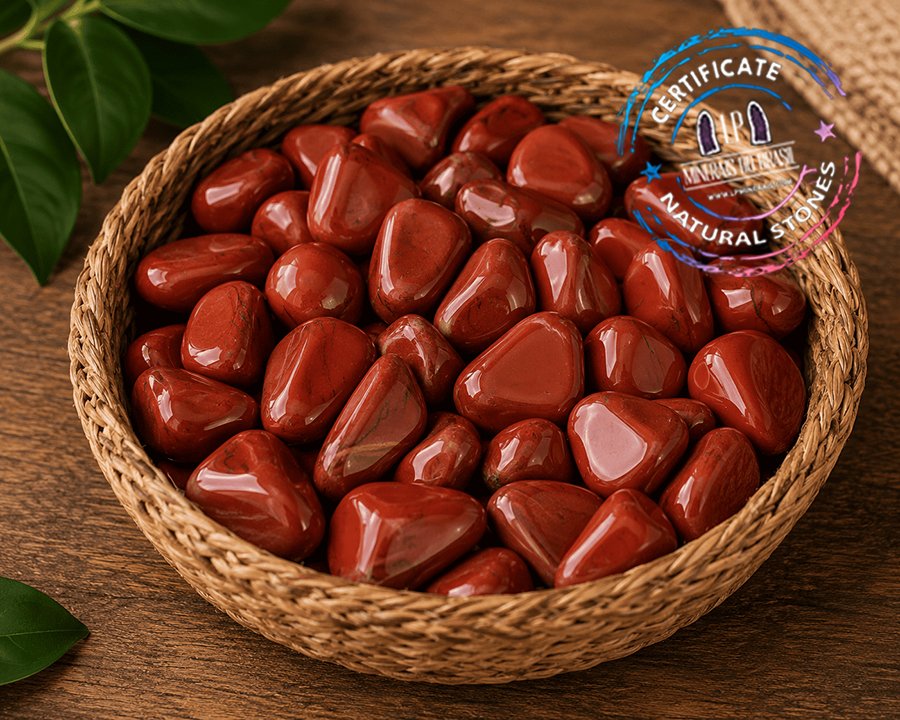
Jasper is traditionally related to chalcedony, but it differs visually from it mainly due to its opacity and the significant number of inclusions. While many chalcedonies allow some light to pass through, typical jaspers are opaque and may contain a sufficient proportion of other mineral components to profoundly alter their appearance.
This characteristic explains the enormous diversity within the commercial family of jases. Even when referring specifically to Red Jasper, we find materials that are nearly uniform and others that are full of spots, specks, veins, or color transitions. Not every irregularity represents a loss of quality; depending on the intended use, it may be precisely the element that makes a piece unique.
Among the properties that help characterize Red Jasper are:
- a predominantly siliceous composition, rich in SiO₂;
- a microcrystalline to cryptocrystalline structure;
- hardness generally ranging from 6.5 to 7 on the Mohs scale;
- a predominantly opaque appearance;
- good polishability;
- red coloration often associated with iron oxides;
- widely used for ornamental, decorative, and accessory purposes.
Its relatively high durability makes it suitable for use in tumbled stones, cabochons, beads, pendants, spheres, obelisks, free-form pieces, and carved objects. The finish significantly alters its appearance: a rough piece may look rustic and essentially geological, while the same raw material, when polished, reveals deeper colors and much more evident internal patterns.
How is Red Jasper formed in nature?
There is no single geological sequence responsible for all the jases found around the world. Materials classified in this way may be associated with processes such as silicification, silica precipitation, the filling of fractures and cavities, or the replacement of preexisting materials, depending on the deposit and its geological history.
Generally speaking, the circulation or deposition of silica allows for the formation of very compact masses. During this process, other minerals and compounds may be incorporated. In Red Jasper, iron becomes particularly important because its oxides are capable of producing the reddish tones that define the variety.
Hematite, Fe₂O₃, plays a role in many of these processes in the form of extremely small particles dispersed throughout the matrix. This is an interesting mineralogical connection to the stone we just studied: Hematite may have a metallic-gray or nearly black exterior, but its streak is red to reddish-brown. When it appears finely distributed in siliceous materials, it helps produce precisely the coloration we associate with Red Jasper.
Why can one stone be redder than another?
The quantity, size, and distribution of iron-rich components do not have to be uniform throughout the entire mass. For this reason, a single piece may have areas that are redder, others that are brownish, and small dark or ochre veins. The formation environment and subsequent alterations also influence the final appearance.
This is particularly important in aesthetic evaluation. Consumers accustomed to industrial products may seek a perfectly uniform color, but natural stones do not follow a color chart. In jasper, this irregularity is often part of the geological story itself.
Jasper, Chalcedony, and Trade Names: Why Is There So Much Confusion?
The stone market uses the word “jasper” quite loosely. There are well-established traditional names as well as commercial designations created to highlight patterns, colors, or locations. Not every material that includes “Jasper” in its commercial name necessarily corresponds to the same classification that would be adopted in a detailed mineralogical study.
Therefore, distinguishing between mineralogical names and commercial names is especially important for collectors, retailers, and professional buyers. The name used in sales can be helpful for recognizing a pattern familiar to the market, but it should not replace an accurate description when composition and origin are relevant.
In the case of classic Red Jasper, identifying it as a microcrystalline, opaque siliceous material colored primarily by iron compounds is quite accurate. However, when faced with more exotic commercial names, it’s worth investigating the composition and origin before assuming that they all belong to exactly the same category.
This transparency has commercial value. In showrooms, wholesale, and export settings, being able to explain what the stone is and how it is classified strengthens the relationship between supplier and buyer and reduces confusion that is still common in the mineral sector.
How to Identify Natural Red Jasper?
Red Jasper is not among the rarest gemstones, but that does not mean the market is free of dyed or composite materials, or those marketed under inappropriate names. The first recommendation is to avoid simplistic rules such as “if it looks a certain way, it’s real.” Mineral identification requires observing a set of characteristics.
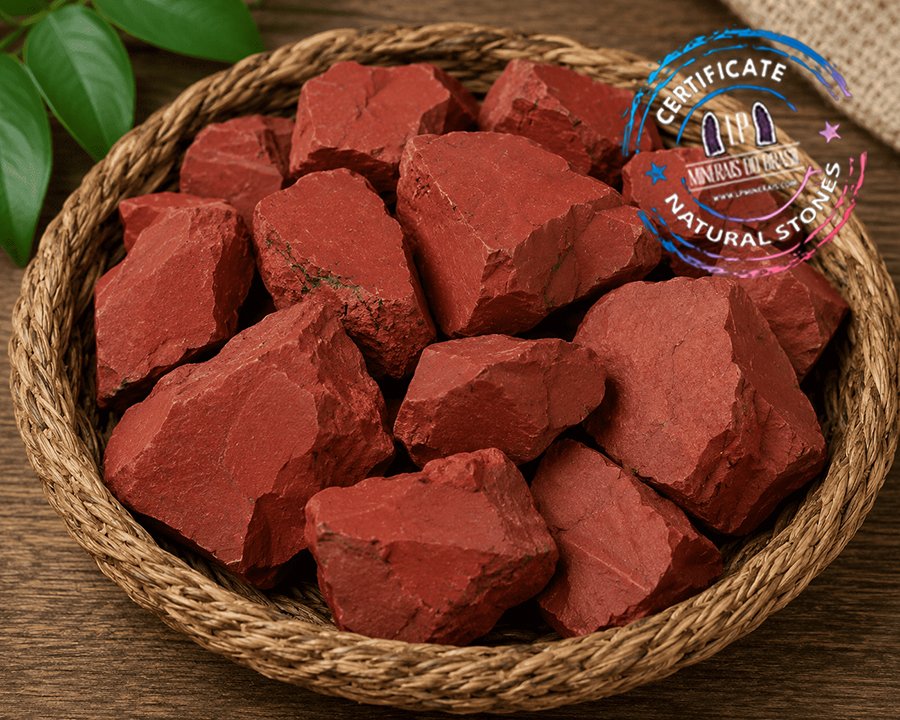
The typical material has a compact and predominantly opaque appearance. Natural variations in red, brown areas, veins, and small inclusions are characteristic of the stone. An extremely uniform color does not necessarily indicate treatment, but it should be evaluated in conjunction with other characteristics. In dyed materials, pigments may concentrate in fractures and pores, producing artificially intense lines of color.
For an initial assessment, it is worth considering:
- the naturalness of color variations;
- characteristic opacity;
- texture and pattern of the stone;
- the quality and appearance of the polish;
- the presence of color accumulation in fractures;
- provenance and information provided by the seller.
Destructive home tests are not a good solution, especially for finished pieces. Scratching, breaking, heating, or applying chemicals can damage an object without providing conclusive identification. When authenticity and value warrant it, a professional appraisal is the appropriate choice.
Red Jasper in Brazil and on the Mineral Market
Brazil 🇧🇷 has a long tradition of supplying quartz, agate, chalcedony, and other ornamental siliceous materials, as well as a diverse range of minerals that support the gem-cutting, handicraft, decorative, collecting, and export industries. Various materials marketed as jasper are part of this landscape.
Red Jasper can reach the market virtually unfinished or undergo various stages of processing. Small fragments are tumbled and polished; selected blocks can be shaped into free-form pieces and objects; material suitable for cutting is transformed into cabochons and beads; larger pieces can be fashioned into spheres, obelisks, and sculptures.
Its value does not depend on a narrative of rarity. The material is relatively abundant, and this is in fact one of the reasons for its widespread presence in the market. The price of a specific piece will be influenced by size, color, natural pattern, integrity, quality of finish, and the amount of work involved.
In wholesale and export markets, other criteria take precedence: size standardization, consistency of supply, grading, finish, volume, and origin. For LP MINERAIS ⛏💎📦🗺, operating under a Fair-Trade framework means incorporating into this supply chain a commitment to responsible trade relations, economic and environmental sustainability, and valuing the material’s origin.
Jewelry, costume jewelry, and home decor featuring Red Jasper
The opacity of Red Jasper is an aesthetic advantage when properly utilized. Since it does not rely on light to reveal its beauty, it works very well in cabochons, where a curved, highly polished surface enhances its color and natural patterns. Rounded beads are used in bracelets and necklaces, while larger pieces can be transformed into pendants with a strong visual presence.
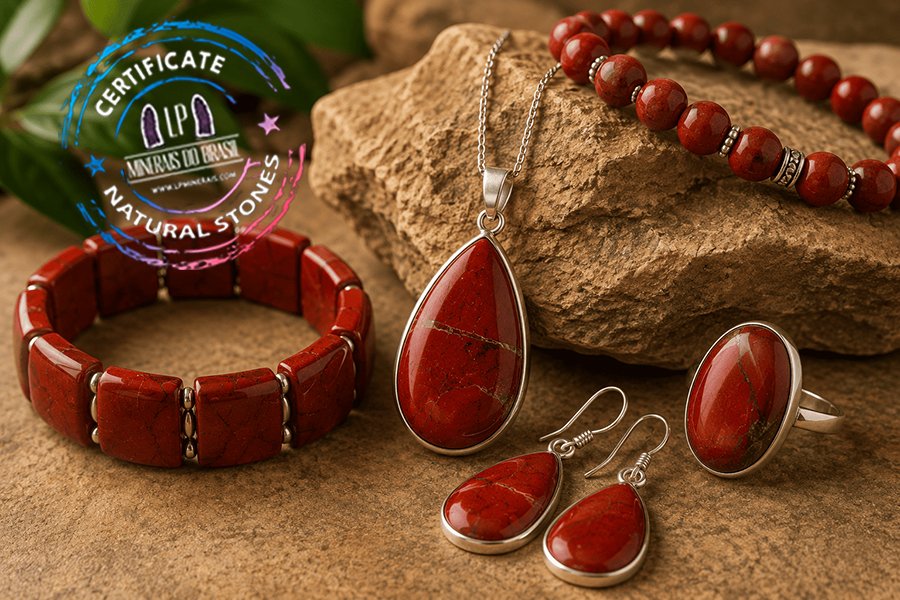
Light-colored metals create contrast with the warm red; golden tones produce a warmer, more classic look. In handcrafted pieces, wood, leather, and natural fibers also pair very well with the stone’s earthy appearance.
In interior design, its versatility is even greater. Spheres and obelisks offer a more polished aesthetic, while rough-hewn pieces retain a mineral-like quality. Free-form pieces can be displayed on sideboards, coffee tables, and bookshelves, especially in spaces featuring wood, ceramics, and neutral color palettes.
Among the most common uses are:
- tumbled stones for collections and personal use;
- beads and cabochons for jewelry and costume jewelry;
- decorative spheres and obelisks;
- free-form and polished pieces;
- rough specimens;
- objects used in holistic settings and meditation spaces.
This ability to move seamlessly between decoration, accessories, and energy practices helps explain why Red Jasper remains one of the stones most widely recognized by the public.
Red Jasper and the Energy of Vitality
In the tradition of crystal therapy, Red Jasper is consistently associated with vitality, grounding, courage, stability, and resilience. These associations gain depth when we stop treating them as isolated words and recognize the relationship between them. LP’s editorial guidelines ensure that these interpretations remain consistent with recognized references in the crystal therapy field, without transforming energetic tradition into statements incompatible with its symbolic nature.
The vitality attributed to Red Jasper is not merely enthusiasm. It is closer to the idea of energy available to sustain practical life: working, creating, facing responsibilities, reorganizing plans, and moving forward after a difficult period. For this reason, the stone is often used when there is an intention to regain consistency or strengthen the willingness to take action.
Its energetic character is predominantly earthy. Rather than directing attention toward highly expansive states, it symbolically fosters presence in the body and in the present moment. This quality makes Red Jasper especially valuable for those who have many ideas but struggle to turn them into consistent actions.
The Difference Between Impulse and Sustained Strength
One of the most interesting aspects of this stone lies precisely in the difference between starting and continuing. Enthusiasm can set a project in motion, but long-term goals depend on repetition, patience, and the ability to persevere through periods when the reward has not yet materialized.
Red Jasper is traditionally associated with this sustained strength. Its energy does not symbolize acting recklessly or rushing everything around you; it symbolizes gathering inner resources and directing them with determination. This interpretation also deepens its connection to courage: courage not as the absence of fear, but as the ability to continue acting consciously in spite of it.
Root Chakra: Grounding That Enables Movement
The best-known energetic correspondence of Red Jasper is with the Root Chakra, which is related to security, structure, survival, belonging, the physical body, and connection to the Earth. The stone’s very color reinforces this traditional association.
In grounding practices, it can be held in the hands or placed near the base of the body while attention is directed toward the breath, the feet, and contact with the ground. The goal does not need to involve complex meditation. Often, the exercise consists of regaining body awareness and reducing mental distraction.
There is an interesting difference compared to Hematite. Both are stones traditionally associated with the Root Chakra and grounding, but Hematite has a quality more closely related to centering, focus, and steadiness. Red Jasper adds a quality of vitality, resilience, and movement.
A good metaphor is the tree: deep roots do not exist to prevent it from growing, but to provide support. Energetically, Red Jasper works in a similar way. Grounding yourself does not mean standing still; it means creating a base that is firm enough to move forward.
Protection, Boundaries, and Emotional Stability
Jasper has a long tradition as a protective stone, and the red variety maintains this association. Its protection can be understood primarily through grounding: the greater the sense of presence and stability, the easier it becomes to recognize one’s own boundaries and prevent every external stimulus from dictating one’s internal state.
This explains its traditional use during periods of overload, change, or in environments where demands are high. Rather than symbolizing isolation, Red Jasper represents inner structure. One continues to participate in the world but seeks to do so without becoming completely lost in it.
This characteristic also manifests on an emotional level. The stone is often associated with resilience in the face of demanding situations, symbolically fostering a more steadfast and patient attitude. It is not about blocking emotions, but about creating a foundation for experiencing them without completely losing the ability to act.
In environments, it can be used when the intention involves stability and security. For personal use, bracelets, pendants, or a small stone carried daily allow you to keep this symbolism close without turning the crystal into something separate from practical life.
Red Jasper at Work, in Projects, and in Everyday Life
The professional environment is one of the places where the energetic identity of Red Jasper makes a lot of sense. Not every job needs more ideas; often what’s missing is continuity. Long-term projects, studies, administrative tasks, business development, and manual labor all depend on sustained energy.
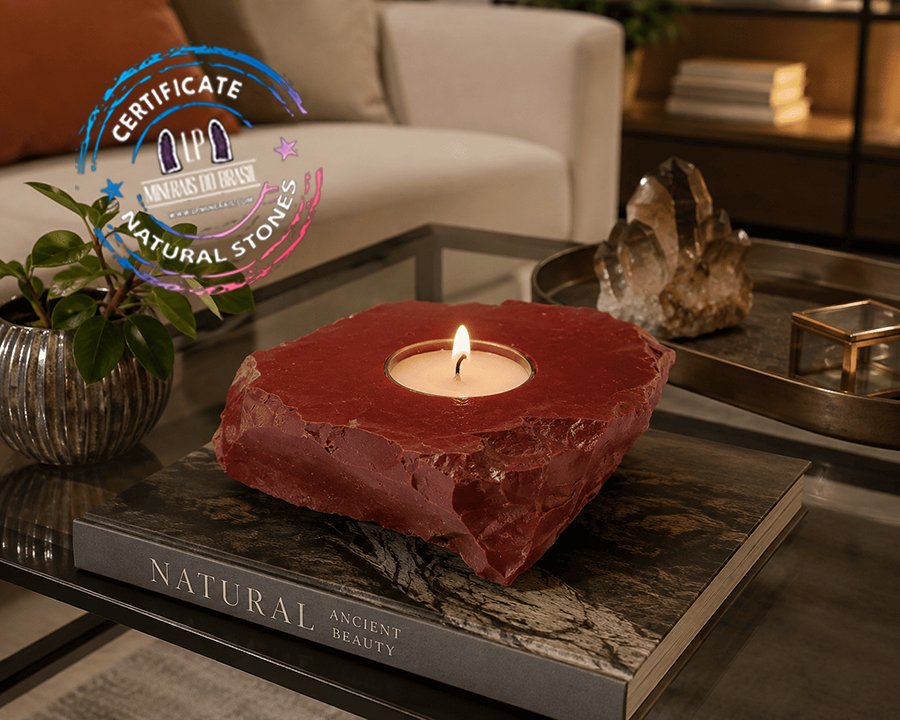
A stone on the desk can represent a commitment to a specific task or project. Rather than being treated as an object that will produce results on its own, it can serve as a focal point for intention: by looking at or touching the stone, a person is reminded of what they’ve decided to build and returns to the next concrete step.
This logic also applies to the home. During periods of reorganization, change, or the formation of new habits, Red Jasper can symbolize stability and perseverance. On altars, it typically works well at the base of the arrangement, representing Earth, structure, and support for other intentions.
The stone’s energetic tradition thus finds a very practical application: not merely desiring transformation, but creating the internal conditions to sustain it.
Meditation and the Spiritual Use of Red Jasper
A meditation with Red Jasper can begin with the very materiality of the stone. Holding it, noticing its weight, temperature, and texture, and directing your attention to your breath already creates a practice consistent with its energetic identity.
After a few minutes, the intention can be directed toward a situation that requires courage or persistence. Instead of merely visualizing the desired outcome, one can reflect on what concrete action can be taken in that moment. This approach aligns particularly well with the symbolism of jasper because it bridges spirituality and action.
In more structured practices, the stone can be placed near the Root Chakra or used on altars associated with stability, strength, and protection. It can also accompany moments of planning, especially when the intention is to transform an abstract decision into a real commitment.
Historically, red stones and materials known as jasper have been imbued with various cultural and protective meanings. It is important not to indiscriminately mix traditions from different eras and peoples, but this recurring theme helps illustrate how the combination of the color red, resilience, and mineral origin has fostered human associations with life, strength, and protection.
Energetic Combinations with Red Jasper
Red Jasper works very well as a foundation stone in energy combinations because its essence is linked to support. When paired with Hematite, it reinforces grounding and stability while adding a more vital and persistent quality. When paired with Black Tourmaline, the focus shifts toward protection and energetic boundaries.
Citrine creates a particularly interesting combination for work and projects: while Citrine is traditionally associated with creativity, prosperity, and expansion, Red Jasper represents constancy and materialization. Carnelian, on the other hand, brings creativity and motivation into the combination, forming a more dynamic whole.
The following can also be considered:
- Rose Quartz: emotional comfort with a greater sense of stability;
- Black Obsidian: grounding during introspective practices;
- Clear Quartz: clarity of intention accompanied by a more grounded foundation;
- Hematite: focus, presence, resilience, and grounding;
- Black Tourmaline: protection and strengthening of personal boundaries.
There’s no need to gather all these stones at once. Simple, intentional combinations usually make more sense than accumulating crystals just because different lists suggest they “work together.”
Care, Physical Cleaning, and Energetic Harmonization
Red Jasper is relatively durable, but strong impacts can still cause chips or fractures. Harsh chemicals and abrasives should be avoided, especially on highly polished pieces. For natural, solid specimens, a quick cleaning with room-temperature water and mild soap is usually sufficient, followed by thorough rinsing and drying.
Jewelry requires additional care because metals, wires, and adhesives may have different care requirements than the stone itself. There is also no need to leave the jasper submerged for long periods to achieve a better clean.
Energetically, methods such as sound, smudging, conscious intention, or pairing with selenite can be used. Contact with dry earth also holds symbolic significance for the stone, provided it is done safely.
Harmonization can be used as an opportunity to review the intention associated with the crystal. If jasper represents constancy, it is worth asking whether what we are trying to sustain still makes sense and what concrete action can bring that intention closer to reality.
LP MINERAIS Technical-Energetic Section ⛏💎📦🗺
🗺 » ORIGIN: Found in various regions around the world. Brazil 🇧🇷 has a strong tradition of supplying ornamental siliceous materials, including various commercial varieties of Jasper.
⚛️ » CHEMICAL COMPOSITION: Predominantly silicon dioxide—SiO₂—with mineral inclusions and impurities. Iron compounds contribute to the typical red coloration.
🔩 » MOHS HARDNESS: Approximately 6.5 to 7.
🔢 » NUMEROLOGY: Correspondences vary depending on the numerological tradition used.
🔅 » MEANING: Vitality, courage, grounding, resilience, stability, protection, and the power to achieve.
🅰️ » SUMMARY: A predominantly opaque, microcrystalline siliceous material whose red color is often related to iron oxides. Energetically, it is traditionally associated with life force and connection to the Earth.
✅ » SPECIFICATION: Natural, compact, and opaque Red Jasper, which may feature veins, spots, inclusions, and color variations.
🧩 » FORM: Rough, tumbled, polished, cabochon, beads, jewelry, spheres, obelisks, free-form pieces, and ornamental objects.
⚒ » FORMATION: Associated with various processes of deposition and silicification, incorporating mineral components that can alter its color and pattern.
⚠️ » CARE: Avoid strong impacts, abrasives, harsh chemicals, and extreme temperatures.
🛁 » CLEANING: Water and mild soap for suitable solid pieces. Energetically, sound, intention, smudging, or selenite are common alternatives.
🎨 » COLOR: Earthy red, brick red, deep red, and reddish brown, and may feature ochre, brown, or dark areas.
☯️ » ZODIAC: Correspondences vary by tradition; it is often associated with energies of strength, action, and stability.
🪐 » SOLAR SYSTEM: Mars is a common traditional association.
➰ » CHAKRAS: Primarily the Root Chakra; some practices also establish a complementary correspondence with the Sacral Chakra.
♻ » ELEMENT: Earth, with a complementary quality of Fire in some interpretations.
💎 » RARITY: It is not generally considered rare. Size, pattern, ornamental quality, and finish can significantly increase the value of specific pieces.
🗳 » CHARACTERISTIC: A compact and durable stone, characterized by its earthy red color and its energetic associations with vitality, grounding, and perseverance.
Frequently Asked Questions About Red Jasper
What is the energetic purpose of Red Jasper?
It is traditionally used for grounding, vitality, courage, stability, and perseverance. Its energy is associated with the ability to gather strength and channel it into concrete actions, especially during times that require continuity.
What is the spiritual significance of Red Jasper?
Its symbolism is linked to the connection with the Earth, the body, and the strength needed to live with greater presence. Spiritually, it represents a foundation capable of sustaining growth, action, and transformation without losing stability.
Which chakra is associated with Red Jasper?
It corresponds primarily to the Root Chakra, traditionally associated with security, stability, the physical body, and connection to the Earth. Some practices also associate it with the Sacral Chakra when the intention involves vitality and creativity.
Is Red Jasper a protective stone?
Yes. It is traditionally associated with protection through grounding and the strengthening of one’s presence and personal boundaries. It can be used on its own or combined with Black Tourmaline and Hematite.
Is Red Jasper Quartz?
It belongs to the family of microcrystalline siliceous materials and is traditionally related to Chalcedony. The term “variety of Quartz” is common in the trade, although a more complete mineralogical explanation requires consideration of its structure and inclusion content.
Are Red Jasper and Hematite the same stone?
No. Hematite is an iron oxide, Fe₂O₃, while Red Jasper is predominantly siliceous. However, finely distributed hematite can contribute to the red coloration of the jasper.
How can you tell if Red Jasper is genuine?
Opacity, a compact texture, and natural variations are common characteristics, but there is no single visual rule capable of authenticating every specimen. A reliable source and, when necessary, a professional appraisal are the safest options.
Can Red Jasper get wet?
Solid natural pieces can be quickly cleaned with water and mild soap. There is no need for prolonged soaking. In jewelry, the other materials used in the setting must also be taken into account.
Where should you place Red Jasper at home or at work?
Offices, study areas, living rooms, and meditation spaces are choices consistent with its energetic tradition. In professional settings, it can symbolize consistency, focus on execution, and the strength to sustain projects.
Is Red Jasper rare?
It is not generally considered rare. The value of a piece depends on its size, appearance, quality, natural pattern, finish, and intended use. Large ornamental specimens or specially cut pieces may be valued much higher than ordinary tumbled stones.
Red Jasper: Having Roots Is Also a Way to Grow
Red Jasper brings together mineralogy, history, aesthetics, and symbolism in a particularly coherent way. Its silica-rich matrix gains character from the presence of iron; its opacity and durability have allowed for various ornamental uses; and its earthy coloration has helped build an energetic tradition deeply connected to the body, vitality, and the connection to the Earth.
This tradition also offers a more interesting interpretation of the concept of grounding. Being grounded does not mean remaining motionless or avoiding change. It means having internal anchors firm enough to navigate transformations without completely losing one’s center. Similarly, courage does not have to be impulsiveness, and strength does not have to be aggression. In the symbolism of Red Jasper, these qualities are associated with steadfastness, resilience, and the ability to persevere.
This identity explains why the stone remains so prevalent in holistic practices, jewelry, decor, and collections. A piece may be chosen for its color and finish while simultaneously carrying an intention related to stability. In a professional setting, it can represent perseverance; in meditation, presence; in a personal accessory, courage; and in a decorative arrangement, the very beauty of the natural material.
For LP MINERAIS ⛏💎📦🗺, presenting Red Jasper from this perspective means recognizing that value does not depend solely on rarity. Sourced from Brazil 🇧🇷, careful selection, mineralogical expertise, Fair Trade relationships, economic and environmental sustainability, a showroom, and export operations are all part of a chain in which information and responsibility add meaning to the mineral without needing to exaggerate what it is.
Red Jasper carries a message strong enough in its very nature: roots do not exist to hinder movement. Rather, they provide the support that makes it possible to move forward.
By: Doris S. Rosa.
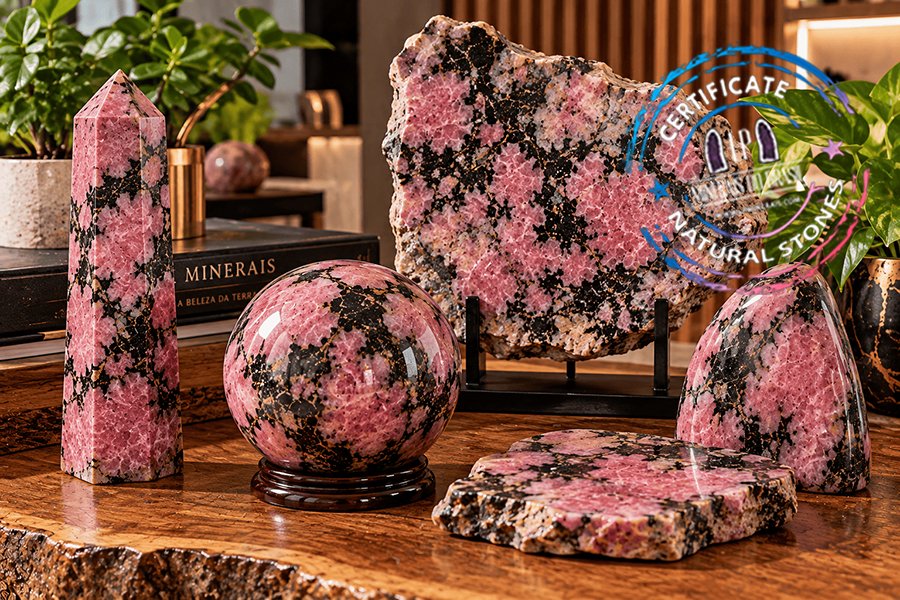
Rhodonite: Why Is It Known as the Stone of Forgiveness and Emotional Healing?
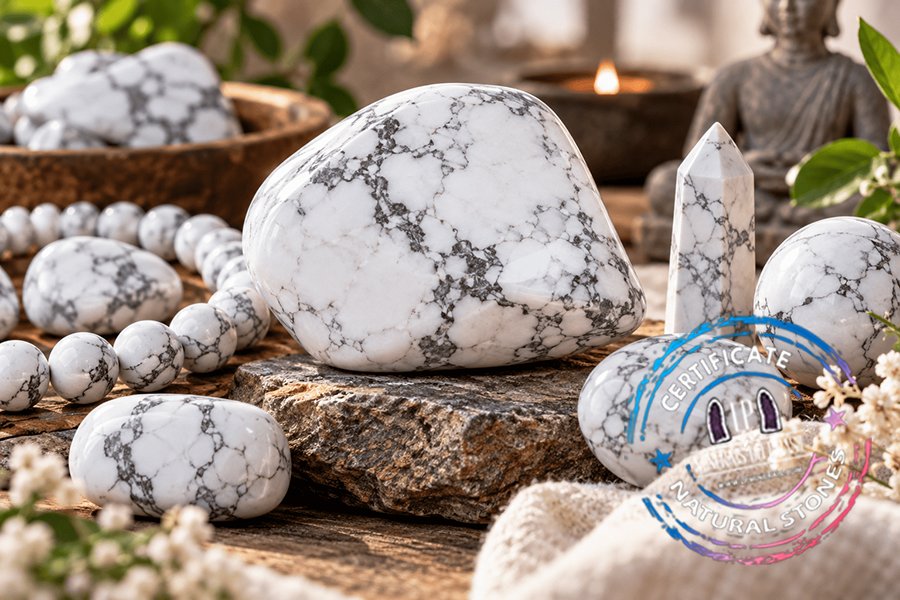
Howlite: what lies behind the Stone of Calm and Inner Silence?
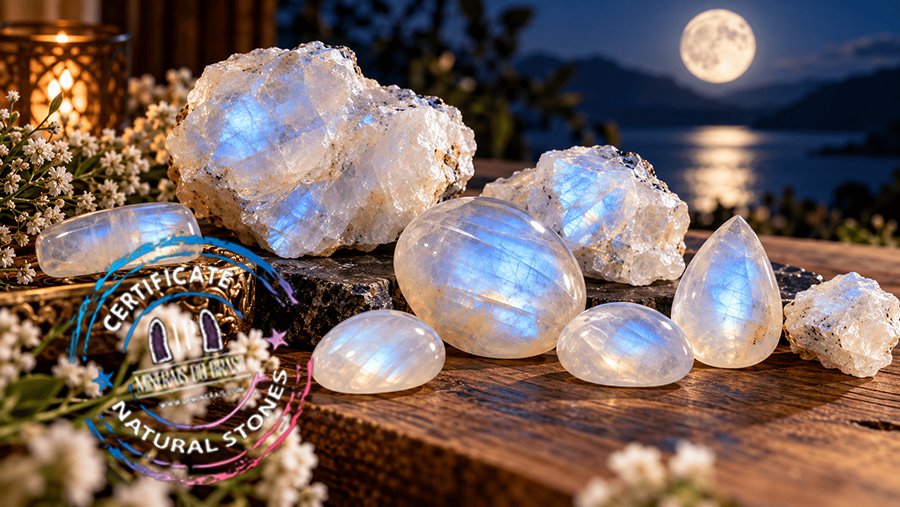
Moonstone: the Stone of Intuition, Feminine Energy, and the Mysteries of the Moon.
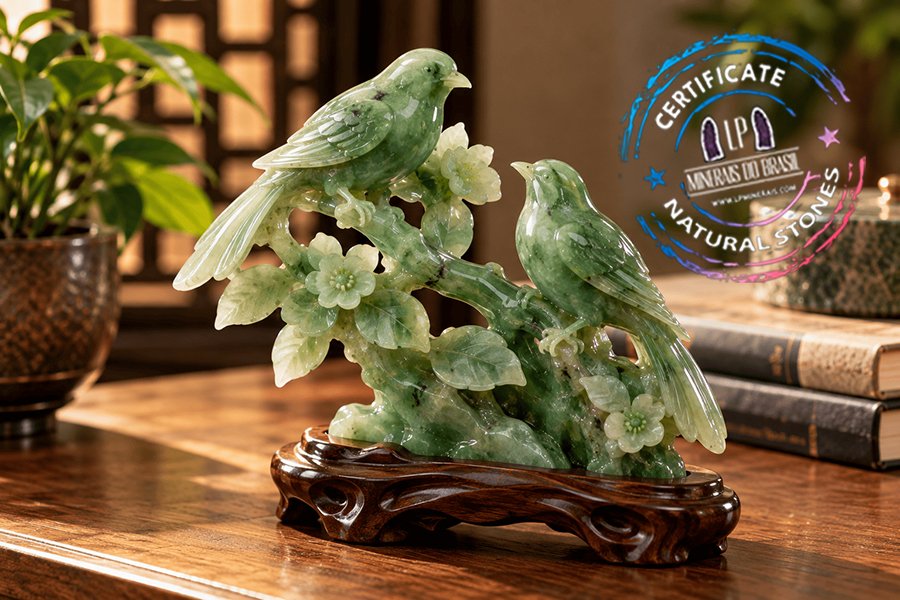
Jade: The Stone of Wisdom, Prosperity, and Harmony That Spans Millennia
Angelite: The Stone of Serenity, Intuition, and Spiritual Connection
Green Aventurine: the Stone of Prosperity, Opportunity, and New Paths
Orange Calcite: The Solar Energy That Awakens Creativity and Movement
Black Obsidian: origin, formation, properties, and meaning of one of the best-known protective stones.
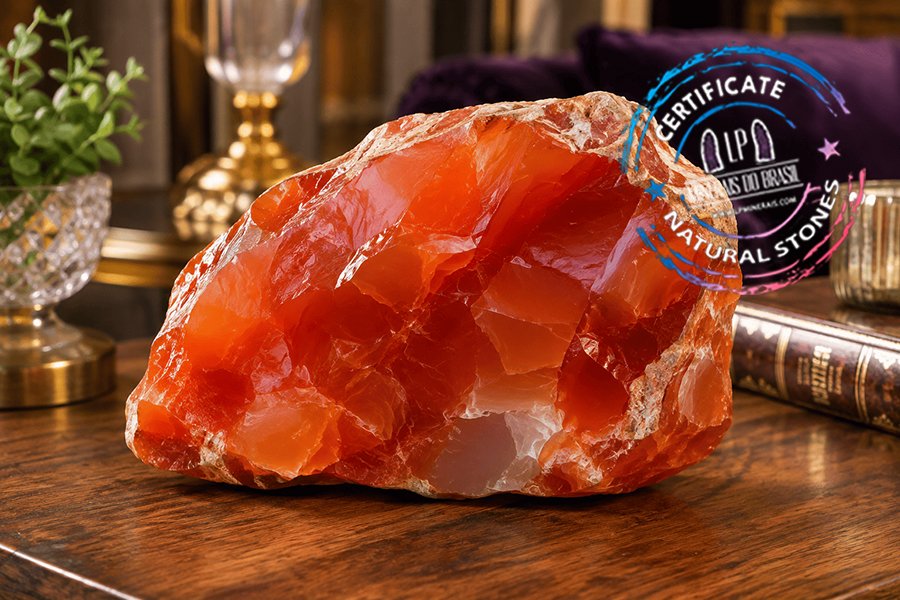
Carnelian: origin, formation, mineralogy, and the vibrant energy of a stone linked to action.
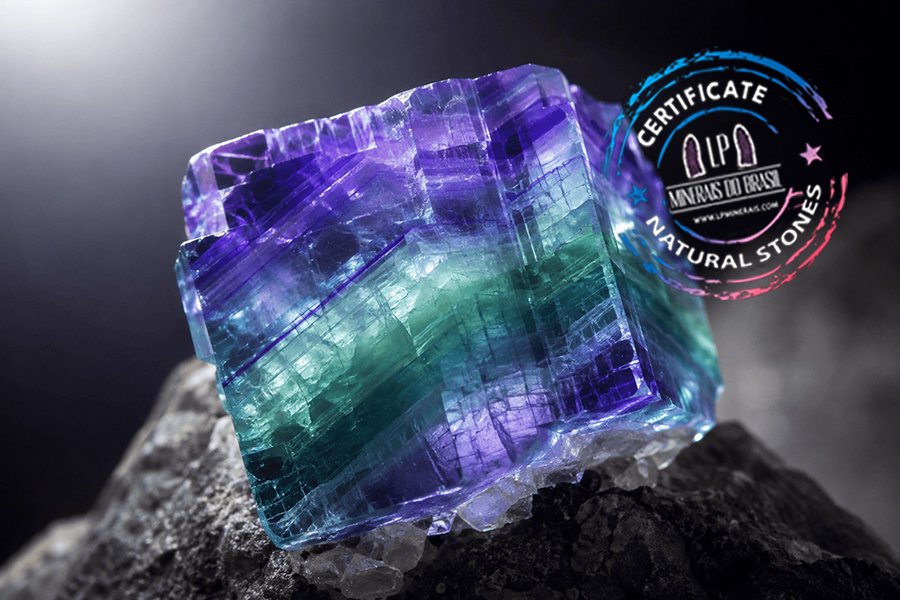
Fluorite: Mineralogy, Formation, Colors, and Meaning of a Mineral that Organizes Light and Color