








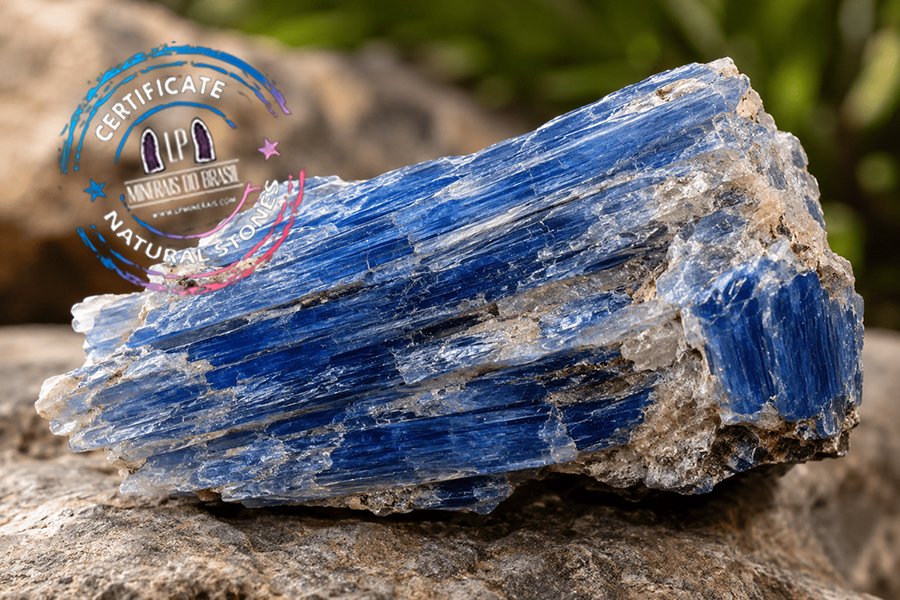
Blue Kyanite is one of the most widely recognized stones in crystal healing traditions for its symbolism of spiritual protection, energetic cleansing, chakra alignment, and enhanced communication. Popularly known in Brazil as the Sword of Archangel Michael, it arouses interest both for its spiritual interpretations and for its extraordinary geological formation, marked by intense pressures, elongated crystals, and a unique mineralogical structure.
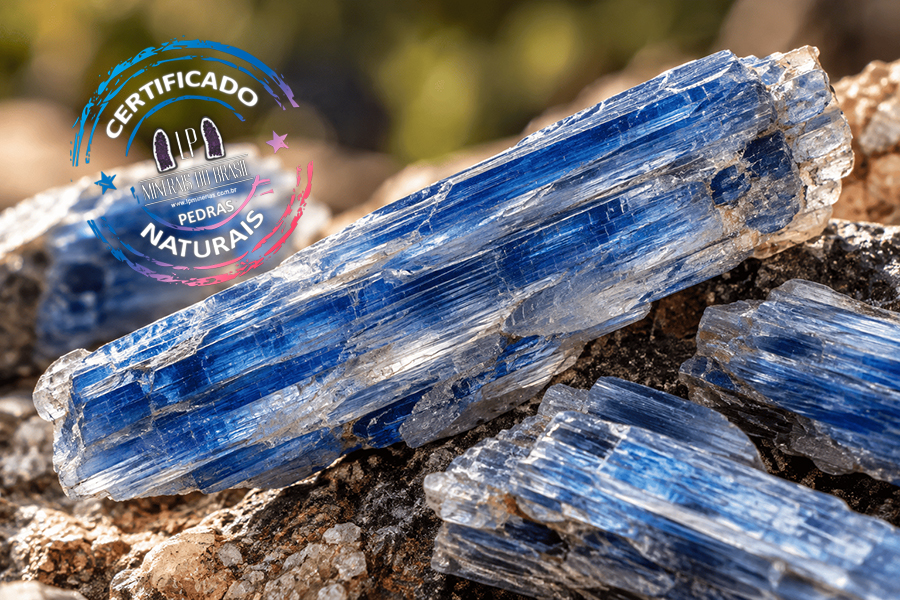
With hues ranging from sky blue to deep blue, Blue Kyanite possesses a natural beauty that seems to match its symbolic reputation. Its laminar crystals, often resembling small blades or swords, have contributed to its association with protection, courage, discernment, and the warding off of negative influences. This connection between mineral form and spiritual meaning has made the stone especially sought after by people interested in practices of harmonization, meditation, and the protection of environments.
However, its importance extends beyond the spiritual realm. Kyanite is an aluminum silicate with the chemical formula Al₂SiO₅, belonging to the triclinic crystal system. It forms primarily in metamorphic rocks subjected to high pressures, making it an important indicator of the transformations occurring within the Earth’s crust. One of its most interesting characteristics is that it exhibits different hardness values depending on the crystallographic direction, a property that requires special care during cutting and handling.
Brazil 🇧🇷 plays a significant role in the occurrence and commercialization of this mineral, particularly in the states of Minas Gerais and Bahia. The availability of rough specimens, ornamental pieces, and materials used in jewelry demonstrates kyanite’s versatility in the mineral sector. Its value is also determined by its origin, the integrity of the crystals, the intensity of its color, and the quality of its commercial presentation.
To truly understand Blue Kyanite, it is necessary to consider these two dimensions without confusing them: science, which explains its composition, formation, and physical properties; and spiritual tradition, which interprets its shape and color as symbols of protection, truth, and balance. It is precisely this combination of mineralogical knowledge and cultural significance that makes the stone so interesting.
Geological Origin of Blue Kyanite: The Transformation of Rocks Under High Pressure
The geological history of Blue Kyanite begins long before its crystals reach the Earth’s surface. Its formation is primarily related to the metamorphism of aluminum-rich rocks, subjected to conditions of pressure and temperature capable of reorganizing the existing minerals. During these processes, the rock’s chemical composition may remain relatively similar, while its mineralogical structure undergoes profound transformations.
Kyanite belongs to the group of aluminum silicate polymorphs, along with andalusite and sillimanite. These three minerals share the same basic chemical formula, Al₂SiO₅, but have different crystal structures. This characteristic is extremely important in geology, as it allows us to understand the physical conditions that acted upon certain rocks during their evolution.
Kyanite is particularly associated with conditions of relatively high pressure. Its presence in schists and gneisses can provide information about episodes of regional metamorphism, often related to tectonic processes and the formation of mountain ranges. However, accurate geological interpretation depends on its association with other minerals and an analysis of the regional context.
Over millions of years, tectonic movements, erosion, and processes that expose rocks can make these crystals accessible for observation and mineral exploration. Thus, a piece of blue kyanite represents not only an object of beauty but also a record of the conditions that shaped the Earth’s crust.
Where is Blue Kyanite found in Brazil and around the world?
Brazil has documented occurrences of kyanite, especially in metamorphic rocks in Minas Gerais and Bahia. The mineral also occurs in countries such as Nepal, India, the United States, and Switzerland, where different geological environments favor its formation.
Specimens can vary significantly in size, color, transparency, and crystalline structure. Some deposits produce well-defined individual crystals, while others feature lamellar aggregates associated with quartz, mica, garnet, and other metamorphic minerals.
Among the most relevant geological characteristics are:
- Predominant formation in aluminum-rich metamorphic rocks.
- Association with conditions of relatively high pressure.
- Crystals are often elongated, flattened, and lamellar.
- Brazilian occurrences of ornamental and commercial interest.
- Scientific importance as an indicator of metamorphic processes.
Provenance is a fundamental aspect of commercial valuation. Reliable information about origin allows for a better understanding of mineralogical identity and contributes to more transparent relationships between suppliers, dealers, and buyers.
Chemical Composition and Mineralogical Properties of Blue Kyanite
Blue Kyanite consists of an aluminum silicate with the chemical formula Al₂SiO₅. Its crystal structure belongs to the triclinic system and features an internal arrangement that favors the formation of elongated and flattened crystals. This geometry explains part of its characteristic appearance and directly influences its physical properties.
One of kyanite’s best-known characteristics is its anisotropic hardness. While many minerals exhibit relatively uniform scratch resistance, kyanite can register approximately 4.5 to 5 on the Mohs scale when tested parallel to the crystal’s elongation and about 6.5 to 7 in the appropriate transverse direction.
This difference stems from the arrangement of atoms and chemical bonds within the crystal. In mineralogy, it represents an important diagnostic property. In jewelry, it means the material requires special attention during cutting, polishing, and setting.
Kyanite also exhibits pronounced cleavage, a characteristic that facilitates its separation along certain structural planes. For this reason, specimens that appear sturdy may fracture when subjected to impacts or improper pressure.
Its main properties include:
- Chemical composition: Al₂SiO₅.
- Crystal system: triclinic.
- Mohs hardness: approximately 4.5–5 and 6.5–7, depending on the direction.
- Luster: vitreous to pearly.
- Crystal habit: elongated, flattened, and lamellar.
- Cleavage: pronounced.
- Color: light blue, deep blue, grayish blue, and other shades.
Why does kyanite exhibit different shades of blue?
The color of blue kyanite is related to the presence of trace elements and the mechanisms of light absorption within its crystal structure. Interactions involving iron and titanium can contribute to the formation of its characteristic blue hues.
The distribution of these elements is not always uniform, which is why some crystals exhibit bands of different colors. Dark blue regions may alternate with light blue or whitish areas, creating natural patterns that are highly prized in ornamental pieces.
Another important aspect is pleochroism, an optical property whereby certain hues vary depending on the direction of observation. This characteristic can influence the choice of orientation during the cutting of transparent specimens.
Color intensity, however, does not alone determine a piece’s authenticity or value. Crystalline integrity, transparency, origin, and presentation must also be considered.
Blue Kyanite and Spiritual Protection: The Meaning of Archangel Michael’s Sword
Among the spiritual interpretations associated with Blue Kyanite, protection holds a prominent place. In the Brazilian esoteric tradition, the stone is often called the Sword of Archangel Michael, an expression that relates its elongated shape to the symbolism of the spiritual sword, traditionally associated with defense, courage, and discernment.
In Christian iconography, the Archangel Michael is often depicted as a protective figure who confronts evil. The specific association between this image and Blue Kyanite, however, belongs to contemporary esoteric interpretations and does not constitute a mineralogical identification or a universal Christian doctrine.
The symbolism of the sword represents the ability to set boundaries, recognize unwanted influences, and distinguish what deserves to remain from what needs to be let go. In holistic practices, this image is interpreted as spiritual protection and the strengthening of personal intention.
Blue Kyanite is also traditionally associated with energy cleansing. In certain schools of crystal therapy, it is believed that its presence promotes the symbolic harmonization of environments and the warding off of energies considered negative. These interpretations belong to the realm of spiritual beliefs and do not correspond to scientifically proven physical effects.
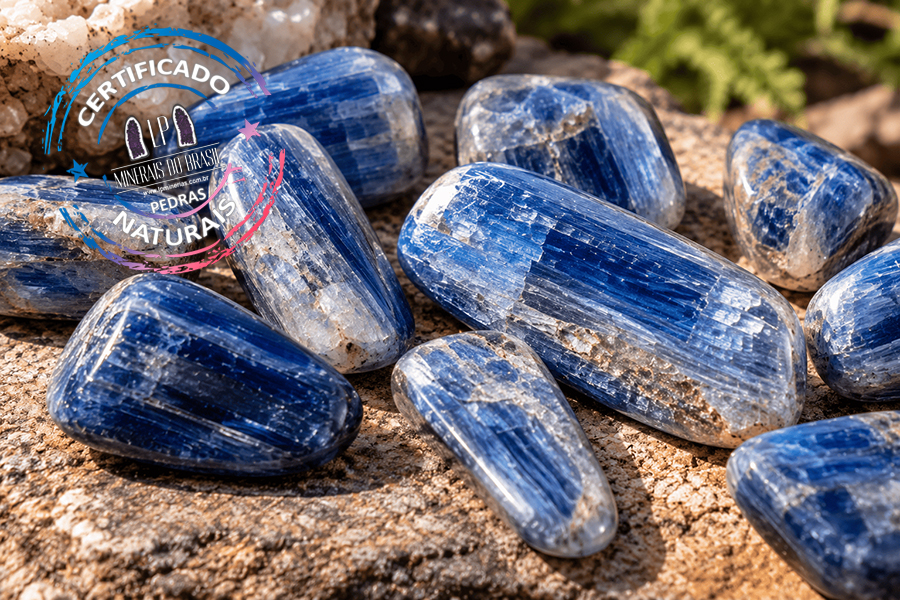
Protection against negative energies and external influences
In holistic literature, Blue Kyanite is often described as a stone of protection and alignment. Its symbolic use is related to the intention of preserving serenity, strengthening personal boundaries, and maintaining clarity in the face of emotionally demanding situations.
In professional settings, for example, some people use the stone as a symbol of discernment and balanced communication. At home, it can occupy a space for contemplation, symbolizing tranquility and spiritual protection.
The tradition that Blue Kyanite does not accumulate negative energies also appears in various crystal therapy interpretations. This belief explains why some practitioners consider certain energy-cleansing rituals unnecessary.
However, there is no scientific evidence that crystals absorb, store, or eliminate emotional or spiritual energies. The interpretation should remain in the symbolic realm, respecting both tradition and the limits of scientific knowledge.
Among its traditional meanings, the following stand out:
- Spiritual protection and symbolic warding off of negative influences.
- Strengthening personal boundaries.
- Clarity in the face of difficult situations.
- Energetic alignment in holistic practices.
- Courage, discernment, and the expression of truth.
The cultural power of these associations lies in the ability to transform the stone into an object of intention, contemplation, and personal meaning.
Blue Kyanite, Communication, and Emotional Balance
Although spiritual protection is one of the best-known meanings of Blue Kyanite, its connection to communication also holds an important place in the tradition of crystal therapy. The stone is often associated with conscious expression, honesty, and the ability to organize thoughts before putting them into words.
This interpretation is primarily related to its blue color, traditionally linked to the throat chakra in certain holistic systems. The symbolism involves clear communication, attentive listening, and the balanced expression of feelings.
In contemplative practices, Blue Kyanite can represent the intention to communicate with greater serenity, especially in situations that require dialogue, negotiation, or taking a personal stand. Using the stone does not guarantee emotional or behavioral changes, but it can accompany conscious exercises in reflection.
The meaning of protection also finds a natural connection with communication. Setting boundaries, recognizing needs, and expressing opinions respectfully are attitudes that can represent practical forms of self-protection.
For this reason, Blue Kyanite symbolically brings together two complementary concepts: protection associated with discernment and communication related to authenticity.
Chakras, Meditation, and Spiritual Harmonization with Blue Kyanite
In crystal therapy traditions, Blue Kyanite is often associated with the throat chakra, known as Vishuddha, which is symbolically linked to communication and expression. Some interpretations also link it to the third eye, represented as the center of intuition and inner perception.
The stone’s elongated shape has contributed to its symbolic use in chakra-alignment practices. In certain holistic rituals, the crystals are placed close to the body or used as objects of focus during meditation.
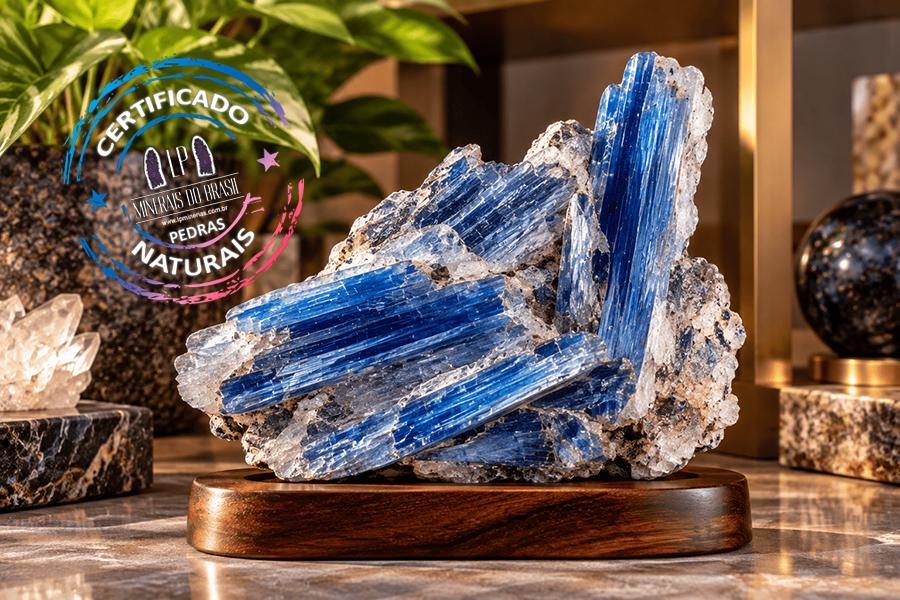
The contemplative experience may involve observing the stone’s color, focusing on one’s breath, and reflecting on personal intentions. In this context, the stone serves as a symbolic element, without the need to attribute proven therapeutic effects to it.
How can Blue Kyanite be used in meditation and for protecting spaces?
In spiritual practices, some people place Blue Kyanite on altars, desks, or spaces dedicated to meditation. Its protective meaning can be associated with the intention of maintaining a welcoming environment conducive to reflection.
The stone can also accompany moments of prayer, contemplation, or organizing one’s thoughts. When worn as jewelry, its meaning can represent a personal commitment to clarity, courage, and mindful communication.
Among the most common symbolic uses are:
- Home: a symbol of protection and tranquility.
- Work: a symbol of discernment and communication.
- Meditation: an object for concentration and contemplation.
- Altars: associated with spiritual protection.
- Personal use: a symbolic reminder of courage and authenticity.
These uses have not been proven to alter the physical or energetic conditions of an environment, but they may hold cultural and personal significance for those who practice these traditions.
Combinations of Blue Kyanite with Other Protective Stones
Blue Kyanite often appears in symbolic combinations with other minerals associated with protection, grounding, and contemplation. These combinations are common in holistic practices and also hold aesthetic appeal for collections and decorative pieces.
Black Tourmaline, traditionally linked to protection and grounding, can represent stability in a composition with Blue Kyanite. Amethyst adds symbolism of serenity and contemplation, while Clear Quartz is often associated with clarity of intention.
Selenite also features in symbolic harmonization practices, although its fragility and sensitivity to water require special care when used in combination with other materials.
The choice of combinations should take into account the symbolic intent and the physical properties of each mineral. Stones with different hardness levels can scratch one another when stored without protection.
Blue Kyanite in Jewelry, Decor, and Collecting
Blue Kyanite has significant ornamental applications, especially due to the beauty of its crystals and the intensity of certain hues. In jewelry, it can be used in pendants, earrings, rings, and custom pieces, provided its structural limitations are respected.
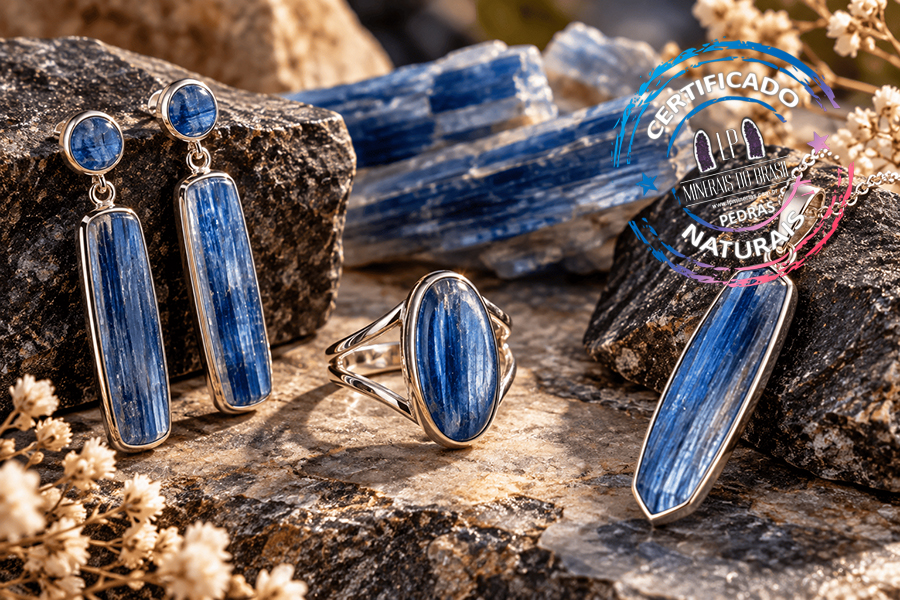
Its pronounced cleavage requires careful attention during cutting. High-quality transparent gemstones can yield interesting aesthetic results, but the cut must take into account the crystallographic orientation and the risk of fractures.
In handcrafted pieces, elongated rough crystals can also be used in settings that preserve their natural appearance. This presentation is particularly appreciated by consumers interested in the stone’s mineralogical identity and spiritual symbolism.
In interior design, Blue Kyanite can be incorporated into display cases, collections, and mineralogical arrangements. Its lamellar crystals offer an aesthetic distinct from that of prismatic minerals or massive aggregates.
In collecting, well-preserved specimens with individual crystals, interesting coloration, and documented provenance can attract special interest.
Market Value, Rarity, and Commercial Importance
Kyanite is not considered an extremely rare mineral species. However, the availability of specimens of superior gemological quality is more limited, especially when seeking transparent crystals, intense coloration, and dimensions suitable for cutting.
Commercial value depends on individual quality, size, integrity, provenance, and intended use. Materials intended for industrial use are evaluated according to different criteria than those applied to gemstones and ornamental pieces.
The Blue Kyanite market serves diverse audiences, including collectors, jewelers, designers, mineral dealers, and consumers interested in holistic practices.
For the Brazilian mineral sector, responsible trade involves accurate identification, documentation of origin, and transparency in relationships with suppliers. The Fair Trade principles upheld by LP MINERAIS contribute to a market vision committed to economic, social, and environmental responsibility.
For exports, commercial classification, documentation, and the requirements of the countries involved must be assessed according to the nature of the product.
Care, Preservation, and Cleaning of Blue Kyanite
Blue Kyanite must be handled with care due to its cleavage and varying hardness depending on the crystallographic direction. Thin, lamellar crystals may be more vulnerable to impact, especially when they have delicate edges or natural fissures.
Ideal storage should avoid direct contact with harder minerals. Jewelry pieces should be protected from drops and friction, while rough specimens can be kept on stable stands.
For physical cleaning, a soft, dry cloth or an extremely soft brush is recommended to remove dust. Ultrasonic cleaning, steam, harsh chemicals, and prolonged immersion are not recommended.
In holistic traditions, Blue Kyanite is often described as a stone that does not require frequent energetic cleansing. This statement represents a spiritual belief and should not be confused with the need for physical care.
⛏💎 Technical and Energetic Profile | LP MINERAIS
🗺 » ORIGIN: Brazil, Nepal, India, the United States, Switzerland, and other regions with suitable metamorphic terrain.
⚛️ » CHEMICAL COMPOSITION: Al₂SiO₅ — aluminum silicate.
🔩 » MOHS SCALE: Approximately 4.5–5 parallel to the crystalline elongation and 6.5–7 in the appropriate transverse direction.
🔢 » NUMEROLOGY: No universally established numerological correspondence.
🔅 » MEANING: Spiritual protection, discernment, symbolic energy cleansing, communication, and inner alignment.
🅰️ » SUMMARY: A blue metamorphic mineral, known for its lamellar shape and traditionally associated with the Sword of Archangel Michael.
✅ » SPECIFICATION: Aluminum silicate, triclinic system, pronounced cleavage, and anisotropic hardness.
🧩 » STATE: Crystalline solid, found as rough crystals, lamellar aggregates, polished pieces, and cut gemstones.
⚒ » FORMATION: Metamorphism of aluminum-rich rocks, primarily under conditions of relatively high pressure.
⚠️ » CARE: Avoid impacts, intense friction, pressure on lamellar crystals, and harsh chemicals.
🛁 » CLEANING: Soft, dry cloth. In holistic tradition, it is often considered a stone that does not require constant energetic cleansing.
🎨 » COLOR: Sky blue, deep blue, grayish blue, and variations with whitish bands.
☯️ » ZODIAC: Associations vary according to esoteric tradition; there is no universal correspondence.
🪐 » SOLAR SYSTEM: No traditional, universally accepted planetary association.
➰ » CHAKRAS: Throat and third eye, according to crystal therapy interpretations.
♻ » ELEMENT: Air, in symbolic associations related to communication and thought.
💎 » RARITY: A relatively common mineral in suitable metamorphic environments; high-quality gem-grade specimens are less common.
🗳 » CHARACTERISTICS: Elongated, lamellar crystals; blue color; pronounced cleavage; and traditional symbolism of spiritual protection.
Frequently Asked Questions About Blue Kyanite (FAQ)
1. Is Blue Kyanite a stone of spiritual protection?
Yes, in crystal healing traditions, it is often considered a stone of protection, energetic cleansing, and spiritual alignment. These associations belong to the symbolic realm and do not represent scientifically proven properties.
2. Why is Blue Kyanite called the Sword of Archangel Michael?
This association stems from the elongated shape of its crystals and the symbolism of Archangel Michael’s sword as an instrument of protection and discernment. This is an esoteric interpretation that is particularly widespread in Brazil.
3. How can you identify genuine Blue Kyanite?
Identification is based on its lamellar crystal habit, cleavage, anisotropic hardness, and optical properties. For cut stones or higher-value specimens, a specialized gemological evaluation may be necessary.
4. Where is Blue Kyanite found in Brazil?
There are documented occurrences in Minas Gerais and Bahia, primarily associated with aluminum-rich metamorphic rocks.
5. Does Blue Kyanite need energetic cleansing?
In certain holistic traditions, it is believed that the stone does not accumulate negative energy and, therefore, does not require frequent energy cleansing. This interpretation lacks scientific evidence. Physical cleaning remains necessary depending on the conditions of use.
6. Can Blue Kyanite be placed in a bedroom or workspace?
Yes. It can be used as a decorative piece, a collector’s item, or a personal symbol of protection and communication. Its presence has not been shown to alter the energetic conditions of the environment.
7. Which chakra is associated with Blue Kyanite?
The throat chakra is the most common association, especially due to its symbolism of communication. Some interpretations also link the stone to the third eye.
8. Can Blue Kyanite be combined with Black Tourmaline?
Yes. In holistic tradition, Black Tourmaline represents protection and grounding, while Blue Kyanite is associated with spiritual protection and clarity. The combination holds symbolic meaning, though no scientifically proven energetic interaction exists.
9. Is Blue Kyanite rare and valuable?
The mineral species is not extremely rare, but transparent, intensely colored specimens suitable for cutting may be more valuable. Origin, integrity, and quality also influence the price.
10. Can Blue Kyanite be used in jewelry?
Yes. It is used in pendants, earrings, rings, and handcrafted pieces. However, its cleavage and directional hardness require care during setting and wear.
11. What is the difference between blue kyanite and sapphire?
Blue Kyanite is an aluminum silicate with a triclinic crystal system, while Sapphire is a variety of corundum with a trigonal crystal system and a hardness of 9 on the Mohs scale. They are distinct minerals, despite certain similarities in color.
12. Can Brazilian Blue Kyanite be exported?
Yes, provided that all applicable legal, tax, documentation, and customs requirements are met. Origin and correct commercial identification are important for international transactions.
Conclusion: Blue Kyanite, the union of symbolic protection and mineralogical knowledge
Blue Kyanite possesses characteristics that make it special both for science and within the cultural world of natural stones. Its formation under metamorphic conditions of relatively high pressure, its triclinic crystal structure, and its anisotropic hardness reveal a unique mineralogical identity.
At the same time, its traditional association with spiritual protection, the Sword of the Archangel Michael, and conscious communication contributes to its presence in holistic practices. The meaning of protection can be understood as a symbolic representation of courage, discernment, and the strengthening of personal boundaries.
In jewelry, home décor, and collecting, Blue Kyanite offers significant commercial potential, especially when accompanied by accurate information regarding authenticity, provenance, and care.
For LP MINERAIS ⛏💎📦🗺, valuing Blue Kyanite means recognizing the richness of Brazil’s mineral heritage 🇧🇷 and the importance of commercial relationships guided by transparency, sustainability, and Fair Trade principles. Technical expertise and respect for the diverse cultural dimensions of gemstones reinforce responsible business practices in both the domestic and international markets.
More than just a stone associated with protection, Blue Kyanite represents the convergence of geology’s transformative power, the beauty of crystals, and the meanings that different traditions attribute to nature.
Doris S. Rosa
Rhodonite: Why Is It Known as the Stone of Forgiveness and Emotional Healing?
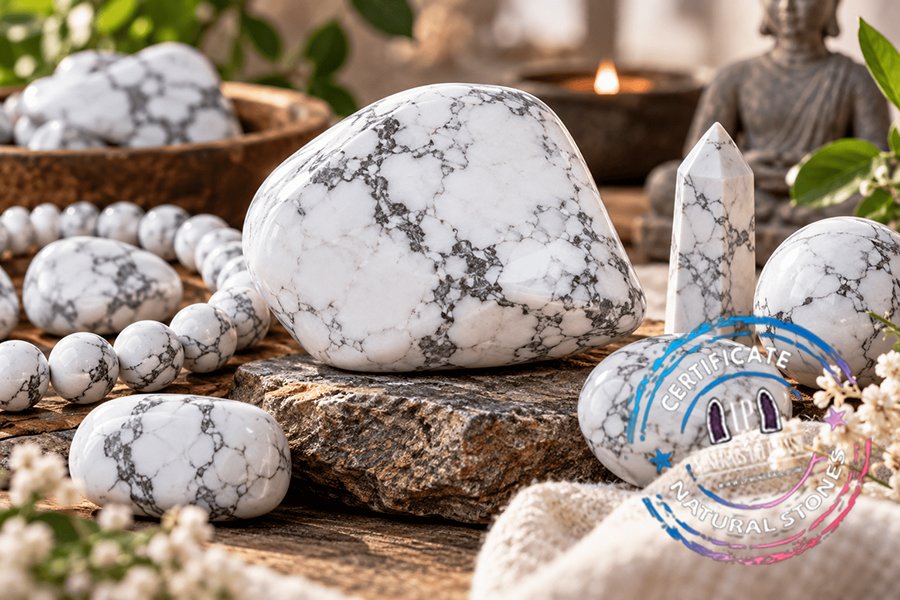
Howlite: what lies behind the Stone of Calm and Inner Silence?
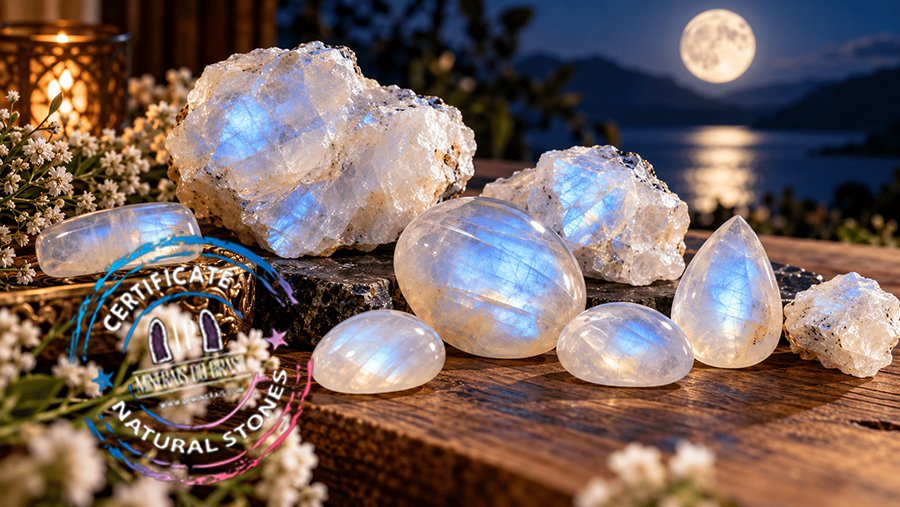
Moonstone: the Stone of Intuition, Feminine Energy, and the Mysteries of the Moon.
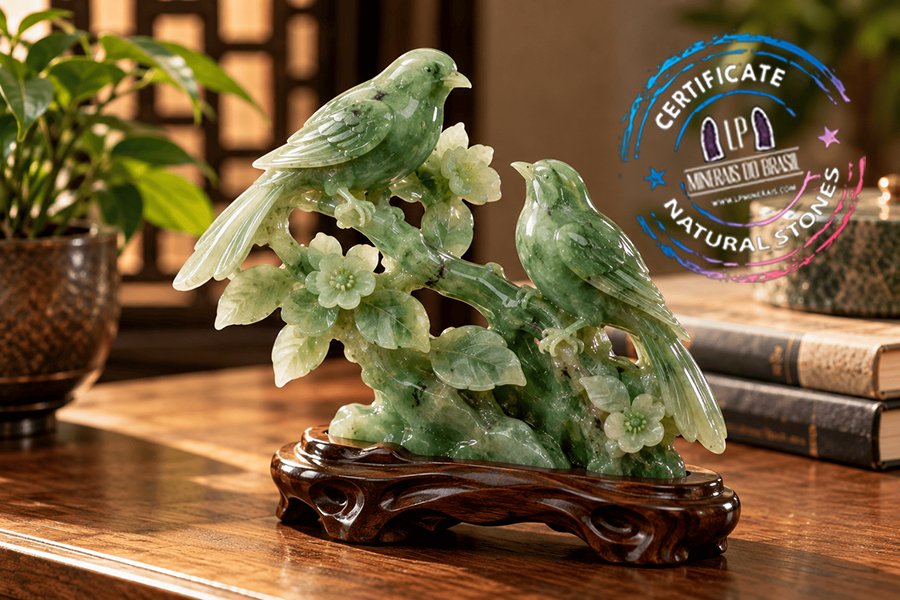
Jade: The Stone of Wisdom, Prosperity, and Harmony That Spans Millennia
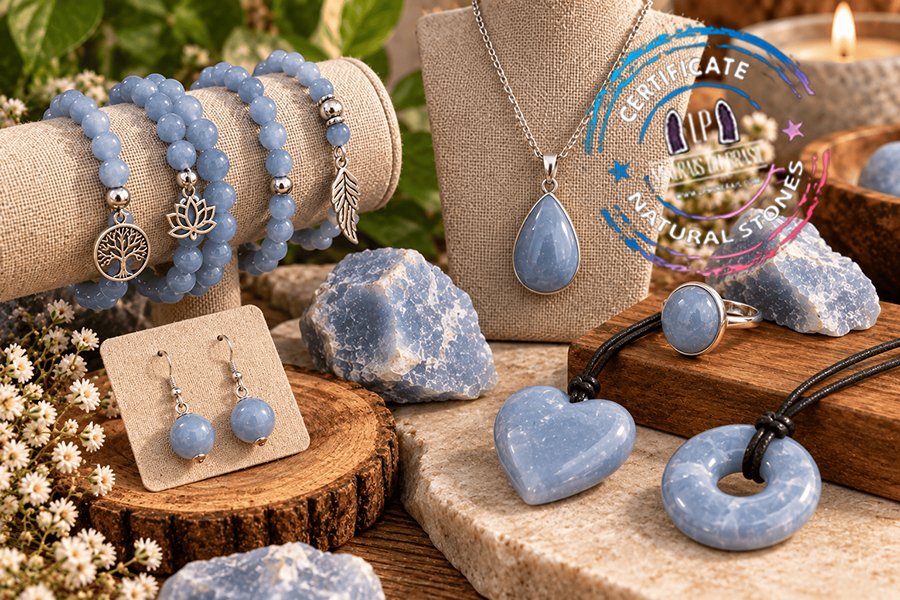
Angelite: The Stone of Serenity, Intuition, and Spiritual Connection
Green Aventurine: the Stone of Prosperity, Opportunity, and New Paths
Orange Calcite: The Solar Energy That Awakens Creativity and Movement
Black Obsidian: origin, formation, properties, and meaning of one of the best-known protective stones.
Carnelian: origin, formation, mineralogy, and the vibrant energy of a stone linked to action.
Fluorite: Mineralogy, Formation, Colors, and Meaning of a Mineral that Organizes Light and Color