



Few gemstones capture the feeling of tranquility as well as aquamarine. Its delicate bluish tones, ranging from an almost transparent blue to an intense blue with greenish hues, evoke the purity of crystal-clear waters and make this variety of beryl one of the most admired gemstones in the world. Far beyond its beauty, Aquamarine has a rich geological history, economic significance, and symbolism that spans centuries.
Belonging to the same mineral family as the emerald and morganite, Aquamarine is formed through extremely slow geological processes within beryllium-rich granitic pegmatites. Over millions of years, large crystals can develop in natural cavities, resulting in specimens of high transparency and excellent gemological quality—characteristics that have made it one of the most prized stones in international fine jewelry.
Its name derives from the Latin *aqua marina*, an expression meaning “sea water.” The choice could not be more fitting: since ancient times, its color has evoked the calm waters of tropical seas, leading Greek and Roman sailors to traditionally use it as a protective amulet during long sea voyages. This historical association remains alive today, reinforcing its symbolic connection to serenity, safety, and balance.
In the tradition of crystal therapy, authors such as Judy Hall and Robert Simmons & Naisha Ahsian often describe Aquamarine as a stone associated with calm communication, mental clarity, and the reduction of emotional tension. These interpretations belong to the field of holistic practices and complement—without replacing—scientific knowledge about the gemstone.
Today, Aquamarine holds a prominent position among collectors, jewelers, investors, and connoisseurs of natural minerals. Its transparency, excellent hardness, and timeless elegance make it an extremely versatile stone, found in both sophisticated jewelry and high-value mineralogical collections.
The blue variety of beryl
Aquamarine belongs to the beryl group, a class of silicate minerals that also includes some of the world’s most famous gemstones, such as the emerald, heliodor, and morganite.
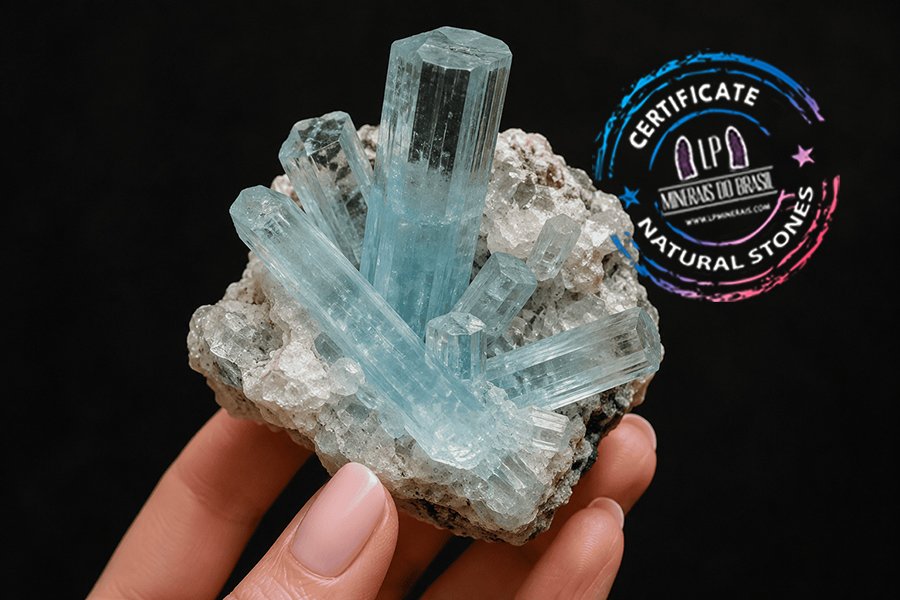
Its blue color results primarily from the presence of small amounts of iron in its crystalline structure. Natural alterations that occur during the cooling of magma and subsequent geological processes determine the intensity of the color, producing specimens that range from an extremely delicate blue to a deep blue of great commercial value.
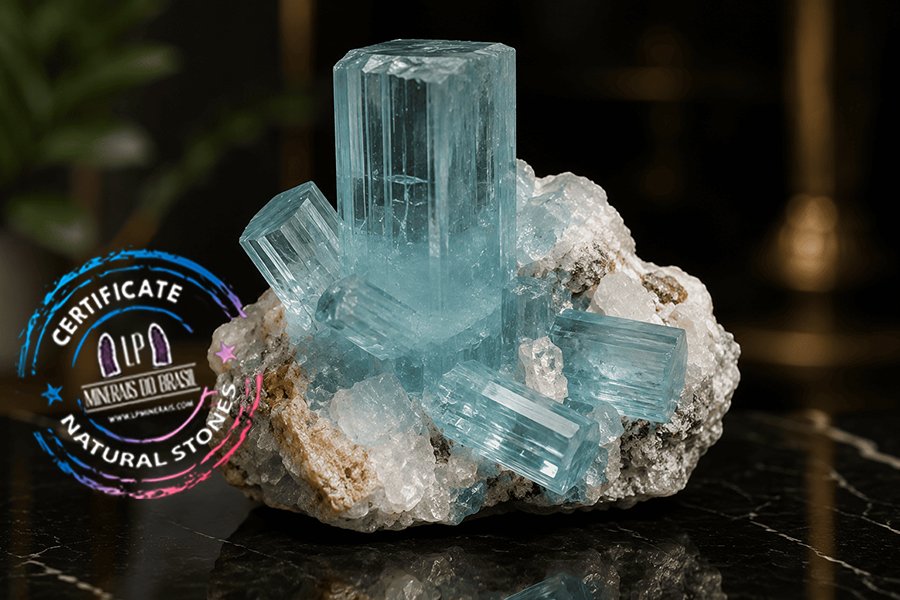
Its hexagonal crystal system favors the formation of well-developed prismatic crystals, often found in impressive sizes. Some specimens exceed tens of centimeters in length even before cutting, becoming true masterpieces of nature.
Among its most prized characteristics are:
- high transparency;
- intense vitreous luster;
- excellent visual clarity;
- uniform blue color;
- well-formed crystals;
- low number of inclusions.
These factors directly influence the gem’s value on the international market.
Where is Aquamarine Found?
Although it is found on several continents, only a few regions produce specimens considered exceptional by gemologists.
Among the leading producing countries are:
- Brazil;
- Pakistan;
- Nigeria;
- Mozambique;
- Madagascar;
- Afghanistan;
- Russia.
Brazil holds a privileged position in global aquamarine production. Minas Gerais, Bahia, Espírito Santo, and Rio Grande do Norte are home to significant pegmatite deposits that yield crystals internationally recognized for their transparency and delicate blue hue.
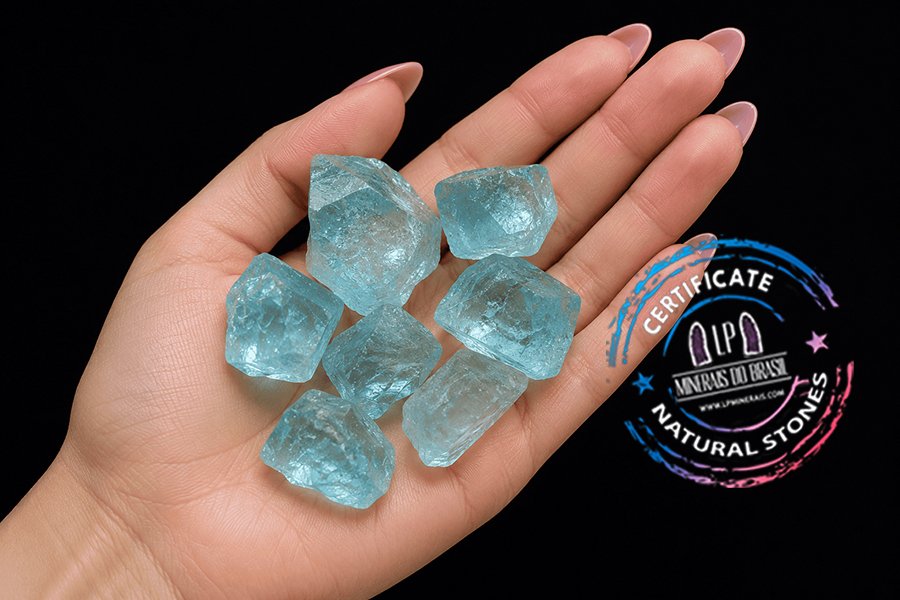
This mining tradition makes the country a leader in the extraction, cutting, and export of this precious gemstone, solidifying its importance to the Brazilian mining sector.
From high-end jewelry to mineralogical collections
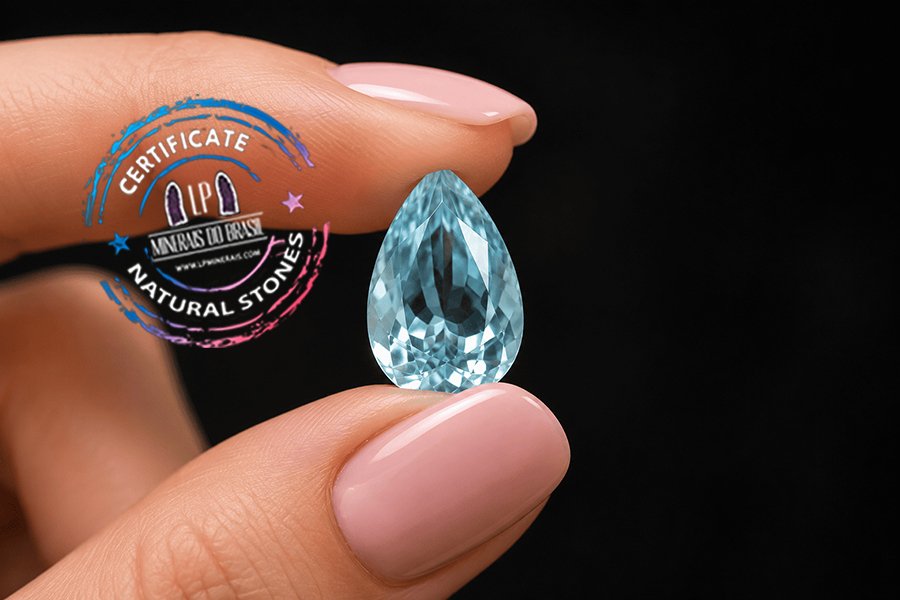
Thanks to its combination of beauty, durability, and ease of cutting, aquamarine has become one of the most widely used gemstones in jewelry.
Its hardness allows it to be used in rings, earrings, pendants, necklaces, and bracelets intended for frequent wear, maintaining its luster and elegance when properly cared for.
In addition to jewelry, natural specimens also attract great interest among collectors, museums, and investors, especially when they are large in size or feature fully preserved crystals.
Among its main applications are:
- high-end jewelry;
- engagement rings;
- earrings;
- necklaces;
- pendants;
- mineral sculptures;
- collectibles;
- investments in natural gemstones.
Its understated elegance makes it easy to pair with white gold, yellow gold, silver, and platinum, enhancing both classic and contemporary designs.
The Tradition and Symbolism of Aquamarine
Long before it found its place in jewelry stores, Aquamarine was already considered a stone of great cultural significance. Ancient peoples believed that its hue reflected the serenity of the sea and offered protection during sea voyages, which is why it was often used as an amulet by sailors.
In contemporary crystal therapy, it is often associated with emotional clarity, balanced communication, and inner tranquility. Judy Hall and Robert Simmons & Naisha Ahsian traditionally link this gemstone to strengthening sincere communication, trust, and serenity in the face of daily challenges. These interpretations are part of holistic practices and do not represent scientifically proven properties.
Traditionally, Aquamarine is associated with:
- serenity;
- balanced communication;
- mental clarity;
- calm courage;
- confidence;
- inner peace;
- emotional harmony;
- protection while traveling;
- inspiration;
- balance.
Its unique combination of natural beauty, historical significance, and gemological value explains why Aquamarine remains one of the most admired and sought-after gemstones worldwide.
From classic jewelry to mineral collecting
Aquamarine is considered one of the most elegant gemstones in the beryl family. Its high transparency, excellent luster, and hardness make it a frequent choice for both everyday jewelry and fine jewelry pieces. Unlike many ornamental stones, aquamarine combines sophistication with good durability, allowing for refined cuts without compromising its durability.
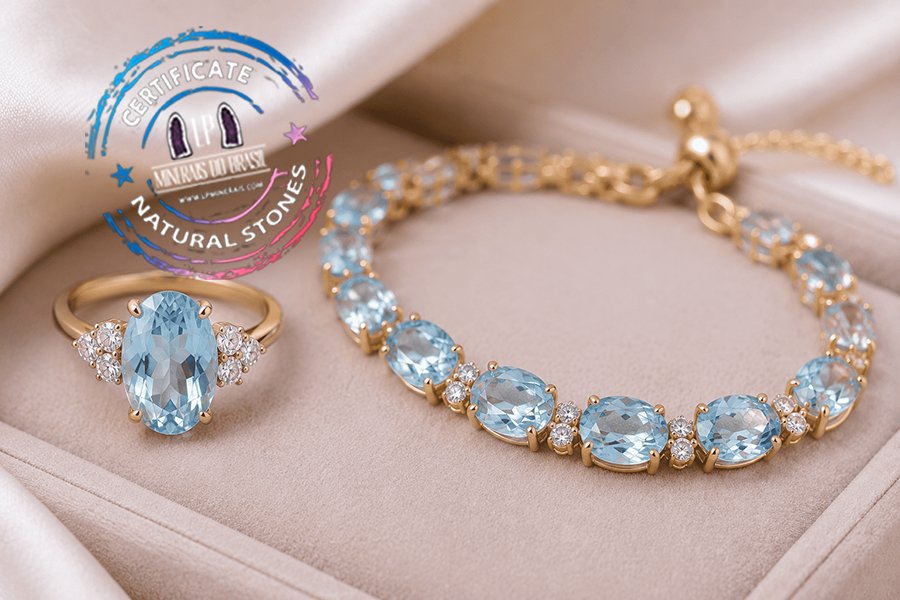
In addition to jewelry, large natural crystals attract enormous interest among collectors and museums. Specimens preserved in their raw state, especially those from Brazilian pegmatites, can attain high commercial value due to their rarity and natural beauty.
Among its most common applications are:
- rings;
- earrings;
- pendants;
- necklaces;
- bracelets;
- high-end gemstone jewelry;
- collectible crystals;
- mineral sculptures;
- cut decorative pieces.
Its soft blue hue pairs easily with white gold, yellow gold, silver, and platinum, allowing for both classic and contemporary designs.
The Traditional Meaning of Aquamarine
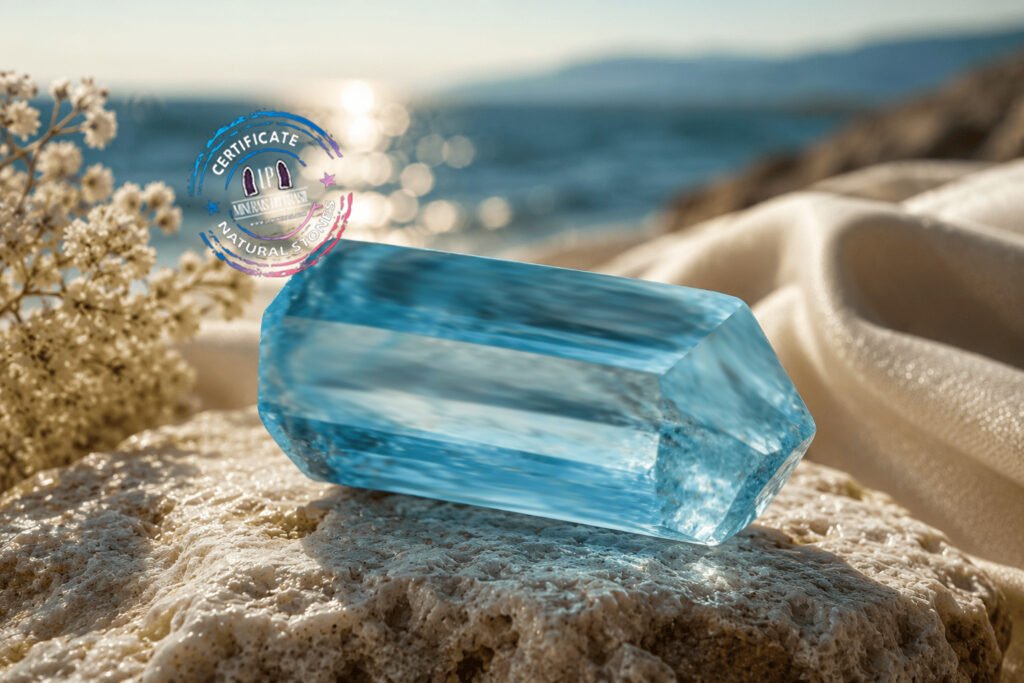
Over the centuries, Aquamarine has become one of the gemstones most closely associated with serenity. Many ancient cultures believed that its color represented the calm of the seas after storms, which is why sailors often carried it as a symbol of protection during long voyages.
In the tradition of crystal therapy, often described by authors such as Judy Hall and Robert Simmons & Naisha Ahsian, Aquamarine is traditionally associated with clarity of communication, emotional balance, and tranquility in the face of life’s challenges. It is also often linked to strengthening confidence, sincerity, and the ability to express feelings gently. These interpretations are part of holistic practices and do not constitute scientific proof.
Its symbolism also lends itself to environments that seek to convey peace, lightness, and inspiration, which is why it is widely used in spaces intended for rest, meditation, and contemplation.
Traditionally, Aquamarine is associated with:
- serenity;
- clear communication;
- emotional balance;
- calm courage;
- confidence;
- inspiration;
- inner peace;
- protection while traveling;
- harmony;
- sensitivity.
How can you identify a natural aquamarine?
Because it is a highly prized gemstone, aquamarine can be mistaken for synthetic glass, treated topaz, or other stones of similar color.
Certain characteristics help identify natural specimens:
✔ a soft, natural blue color;
✔ high transparency;
✔ intense vitreous luster;
✔ small natural inclusions in some specimens;
✔ absence of internal bubbles typical of glass.
Gemological certification and a reliable source remain the surest ways to guarantee the gem’s authenticity.
Care and Maintenance
With a hardness of 7.5 to 8 on the Mohs scale, aquamarine is highly durable for everyday use. Still, taking a few precautions will help preserve its luster and cut for many years.
It is recommended to:
- cleaning with warm water and mild soap;
- use a soft cloth to dry it;
- avoid impacts against hard surfaces;
- store it separately from other gemstones;
- avoid harsh chemicals.
These simple precautions will preserve the stone’s beauty for decades.
🗺 LP MINERAIS Technical Notes ⛏💎📦🗺
🗺 » ORIGIN — Brazil, Pakistan, Nigeria, Madagascar, Mozambique, Russia, and Afghanistan.
⚛️ » CHEMICAL COMPOSITION — Be₃Al₂Si₆O₁₈ (Beryllium Aluminum Silicate).
🔩 » MOHS SCALE — 7.5 to 8.
🔢 » NUMEROLOGY — Traditionally associated with the number 2.
🔅 » MEANING — Traditionally associated with serenity, communication, and emotional balance.
🅰️ » SUMMARY — A blue variety of beryl, recognized as one of the most elegant and prized gemstones in the global jewelry industry.
✅ » SPECIFICATION — Natural precious gemstone.
🧩 » STATE — Natural mineral.
⚒ » FORMATION — Crystallizes in beryllium-rich granitic pegmatites during slow magmatic cooling processes.
⚠️ » CARE — Avoid strong impacts and harsh chemicals.
🛁 » CLEANING — Warm water, mild soap, and a soft cloth.
🎨 » COLOR — Very light blue, sky blue, greenish blue, and deep blue.
☯️ » ZODIAC — Traditionally associated with Pisces, Aquarius, and Libra.
🪐 » SOLAR SYSTEM — Often associated with the Moon.
➰ » CHAKRAS — Traditionally associated with the Throat Chakra and the Heart Chakra.
♻ » ELEMENT — Water.
💎 » RARITY — Relatively rare in gem-quality; large, extremely transparent crystals are highly valued.
🗳 » CHARACTERISTIC — A precious gemstone belonging to the beryl group, prized for its transparency and delicate bluish hues.
Frequently Asked Questions About Aquamarine
Is Aquamarine a precious stone?
Yes. Aquamarine belongs to the group of precious gemstones in the beryl family, the same as the emerald.
Can Aquamarine be used in rings?
Yes. Its high hardness makes it suitable for use in rings, earrings, necklaces, and other jewelry intended for frequent wear.
How do you clean Aquamarine?
Warm water, mild soap, and a soft cloth are sufficient to maintain its luster.
Can aquamarine get wet?
Yes. Contact with water does not damage the gemstone, as long as harsh chemicals are avoided.
How can you tell if an Aquamarine is real?
Examine its transparency, natural color, and origin. A gemological certification provides greater assurance of authenticity.
What is the difference between Aquamarine and Blue Topaz?
Although both have similar hues, they belong to different mineral groups. Aquamarine is a beryl; topaz is an aluminum fluorosilicate.
What is the traditional meaning of Aquamarine?
Traditionally, it is associated with serenity, balanced communication, and inner peace in crystal therapy practices.
Is Aquamarine found in Brazil?
Yes. Brazil is one of the world’s largest producers of this gemstone, particularly in the states of Minas Gerais, Bahia, Espírito Santo, and Rio Grande do Norte.
Conclusion
Aquamarine represents one of the most elegant expressions of mineralogy. Its geological origin, linked to beryllium-rich pegmatites, results in crystals of extraordinary transparency and delicate bluish hues that enchant jewelers, collectors, and lovers of natural stones around the world.
In addition to its recognized gemological value, the tradition of crystal therapy associates it with serenity, harmonious communication, and emotional balance, broadening its significance for those who appreciate the world of crystals. Whether in a sophisticated piece of jewelry, a mineralogical collection, or as a symbol of tranquility, aquamarine remains one of the most admired gemstones produced by nature.
By: Doris S. Rosa
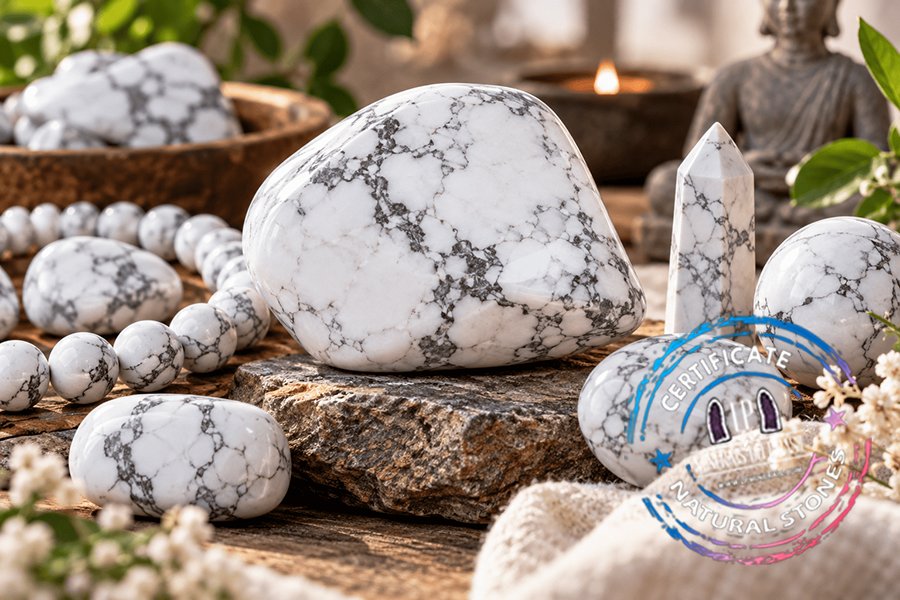
Howlite: what lies behind the Stone of Calm and Inner Silence?
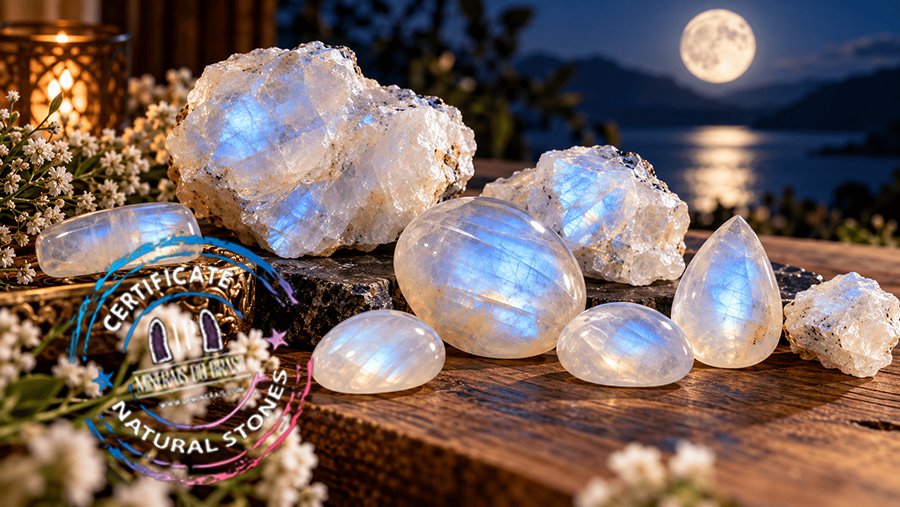
Moonstone: the Stone of Intuition, Feminine Energy, and the Mysteries of the Moon.
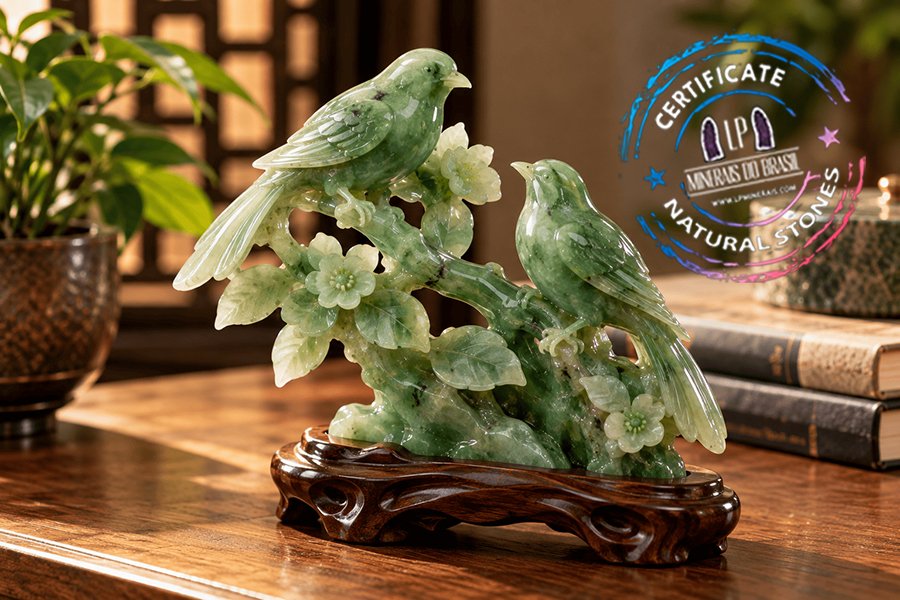
Jade: The Stone of Wisdom, Prosperity, and Harmony That Spans Millennia
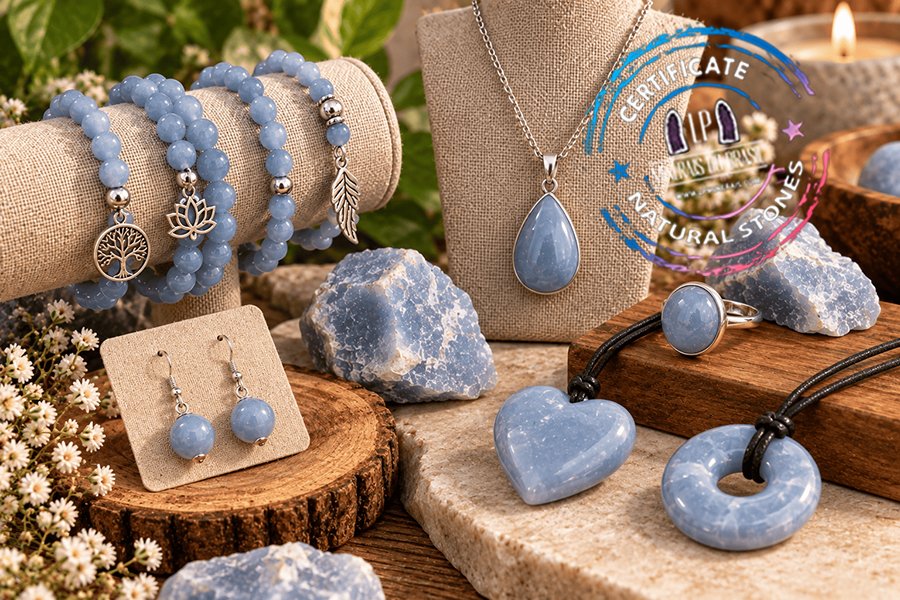
Angelite: The Stone of Serenity, Intuition, and Spiritual Connection
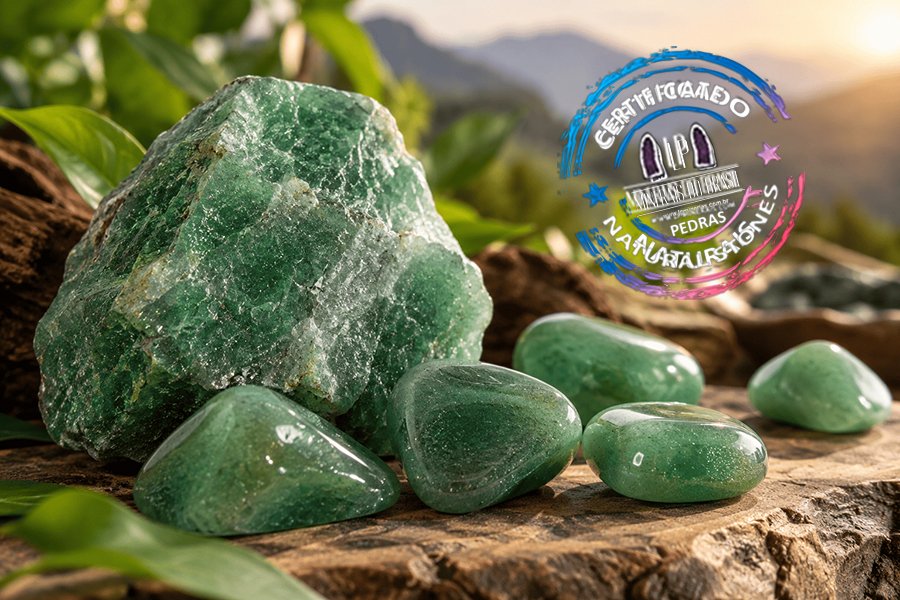
Green Aventurine: the Stone of Prosperity, Opportunity, and New Paths
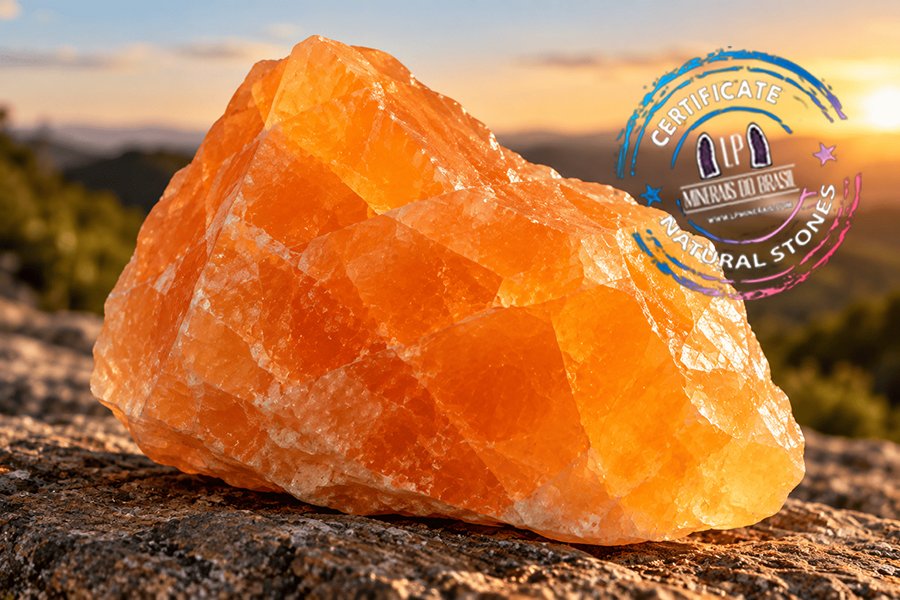
Orange Calcite: The Solar Energy That Awakens Creativity and Movement
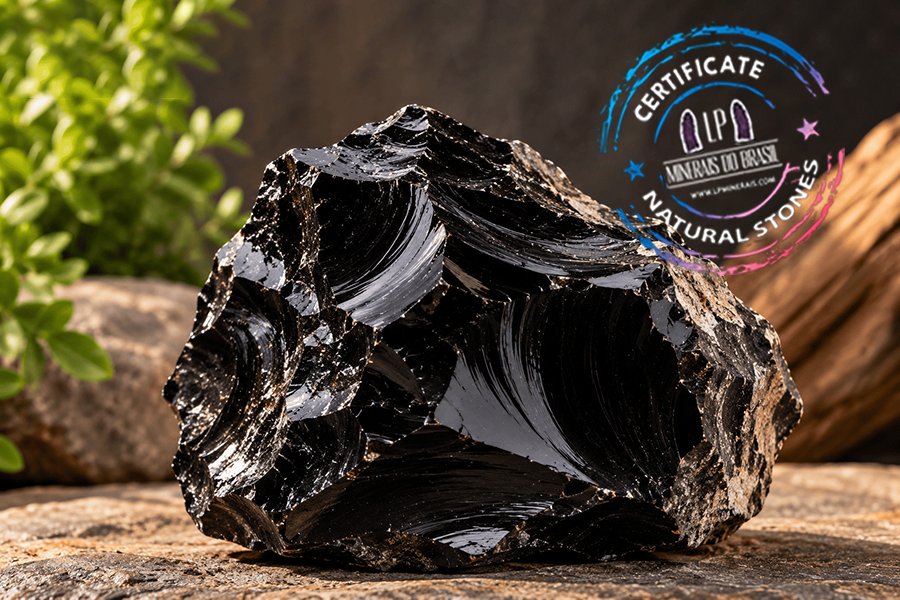
Black Obsidian: origin, formation, properties, and meaning of one of the best-known protective stones.
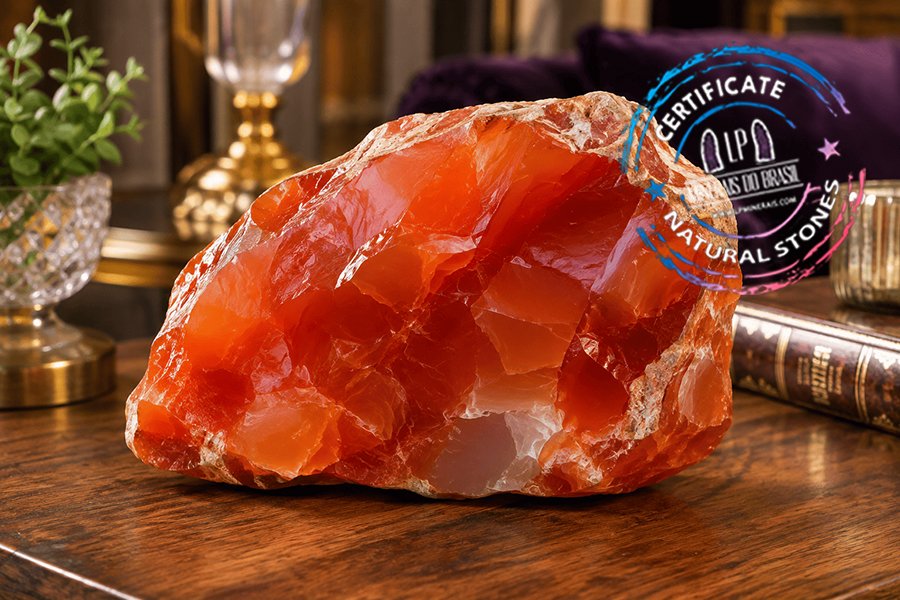
Carnelian: origin, formation, mineralogy, and the vibrant energy of a stone linked to action.
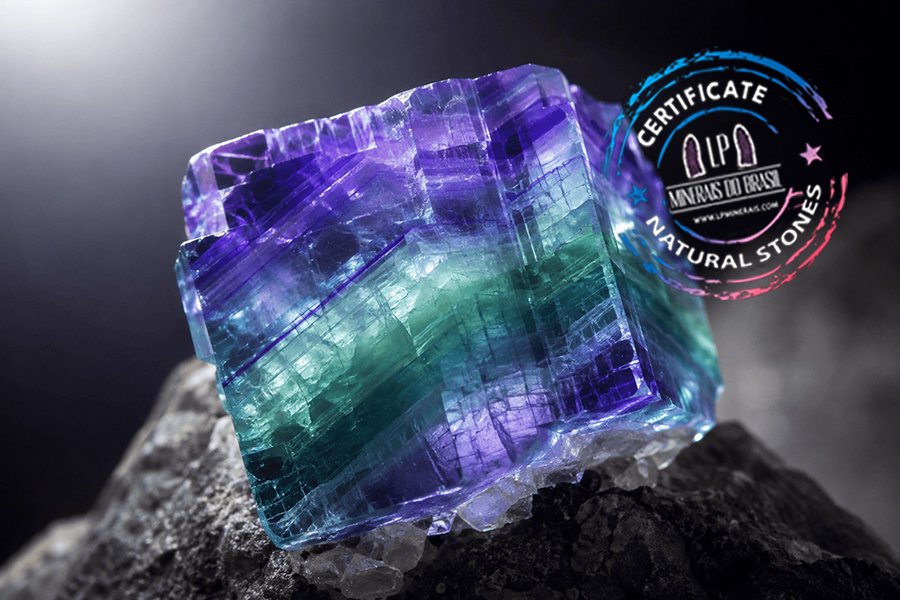
Fluorite: Mineralogy, Formation, Colors, and Meaning of a Mineral that Organizes Light and Color
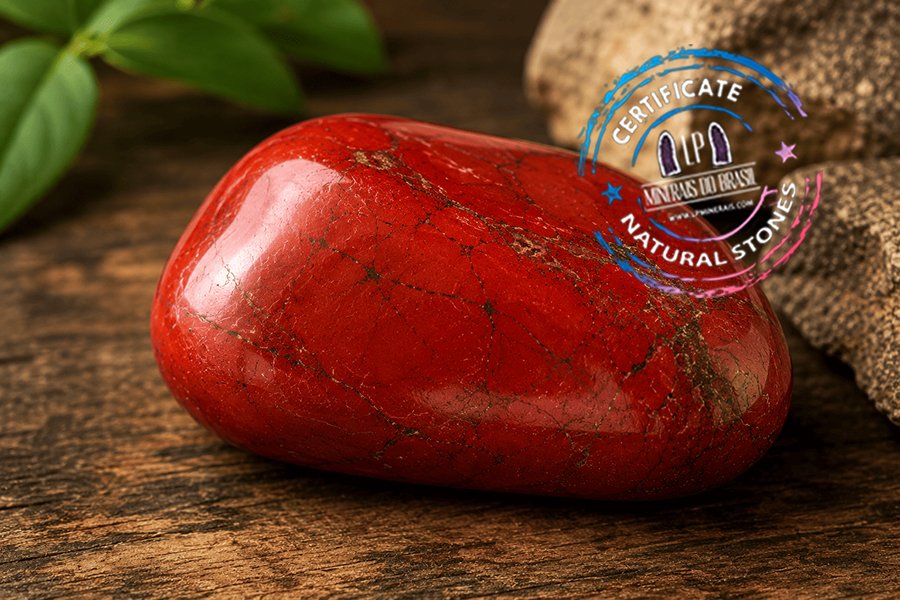
Red Jasper: Mineralogy, Vitality, and the Ancestral Strength of an Earth-Connected Stone