







Why is Black Tourmaline one of the most sought-after stones by those seeking energetic protection? This question surrounds one of the best-known minerals in the world of crystals and helps explain its enormous popularity among holistic therapists, collectors, jewelers, and lovers of natural minerals. Far beyond its striking appearance, Black Tourmaline has become, over the past few decades, one of the primary symbols of protection and emotional stability within the tradition of crystal therapy.
Its intense black color conveys a sense of strength, steadfastness, and security. It is no coincidence that it is frequently chosen to adorn interiors, jewelry, and meditation spaces by people who wish to create an atmosphere of balance and serenity. At the same time, its crystalline structure and chemical composition spark great interest among geologists and mineralogists, making it equally significant from a scientific perspective.
Known mineralogically as Schorl, Black Tourmaline is the most abundant variety within the tourmaline group. Its geological formation, durability, and physical properties make it one of the most fascinating minerals found in nature.
Far Beyond Protection: The Symbolism of Black Tourmaline
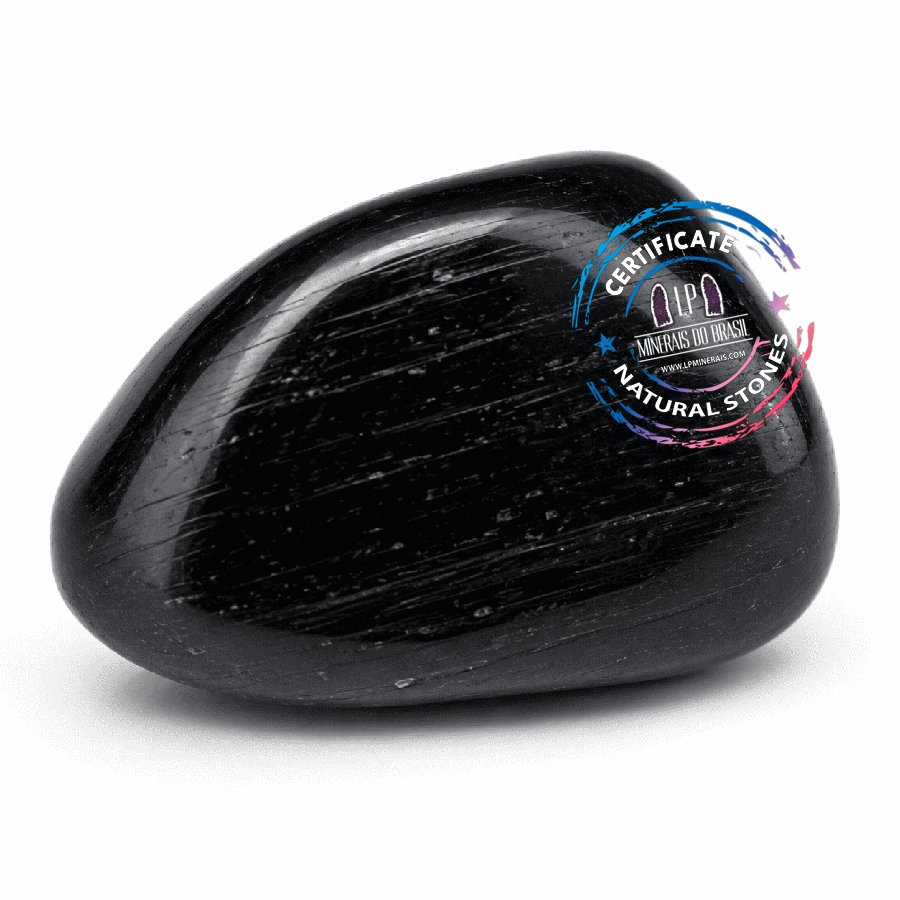
Throughout the recent history of crystal therapy, few stones have acquired such strong symbolism as Black Tourmaline. Traditionally, it is described as a stone associated with grounding, protection, and the strengthening of emotional stability. These interpretations belong to the realm of holistic traditions and do not constitute scientifically proven properties, but they remain widely accepted among practitioners and specialized authors.
Rather than promising to eliminate negative energies, Black Tourmaline is typically understood as a symbol of inner strength. Its presence is often used as a reminder to cultivate balance, set healthy boundaries, and maintain serenity in the face of everyday challenges.
For many people, carrying Black Tourmaline means taking a moment to pause in the midst of their routine, fostering a more mindful approach to challenging situations.
Traditionally, this stone is associated with qualities such as:
- energetic protection;
- grounding;
- emotional stability;
- inner strength;
- balance;
- sense of security.
More than just a decorative object or piece of jewelry, Black Tourmaline has become a symbol of the human capacity to remain steadfast even in the face of daily changes and pressures.
One of the most commonly used stones for harmonizing spaces
Among all the stones used in holistic practices, few appear as frequently in homes, offices, and therapeutic spaces as Black Tourmaline. Its presence is often associated with the intention of creating more balanced and welcoming environments, especially in places intended for rest, work, or meditation.
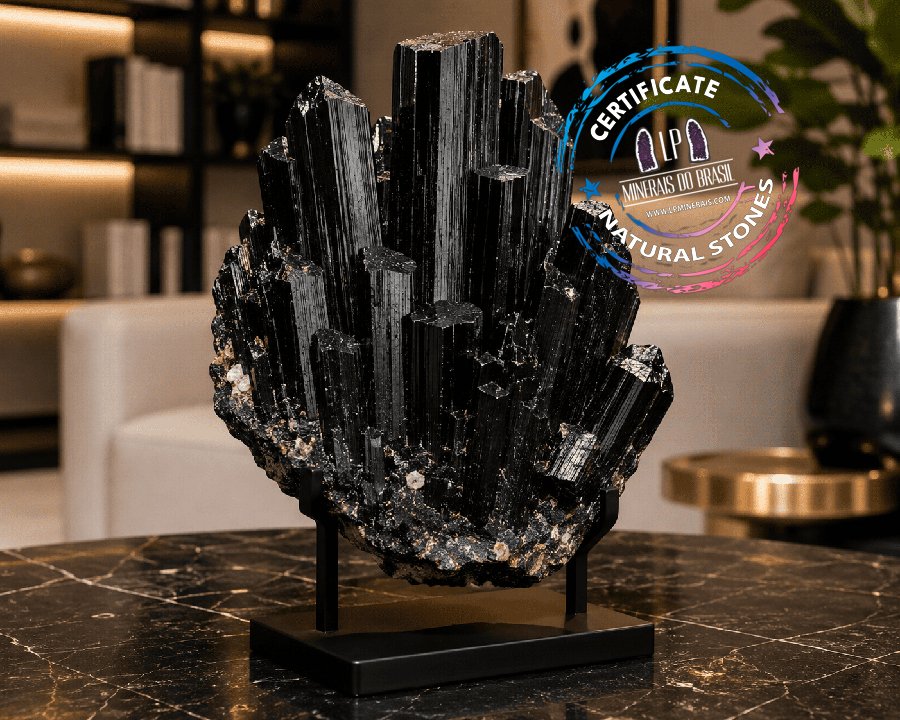
In many traditions, it is recommended to place specimens near the entrance of the home, on desks, or in spaces dedicated to silence and concentration. Regardless of individual beliefs, the stone also stands out for its striking visual impact, making it a prized decorative element in designs that highlight natural minerals.
How is Black Tourmaline traditionally used?
In crystal therapy practices, various methods of use are frequently mentioned, always in accordance with each person’s intention.
Among the best-known applications are:
- use in meditation;
- harmonizing spaces;
- personal altars;
- work desks;
- therapy offices;
- everyday jewelry.
These uses are part of the traditions associated with crystals and vary according to each practitioner’s experience and interpretation.
A stone that impresses by its very nature
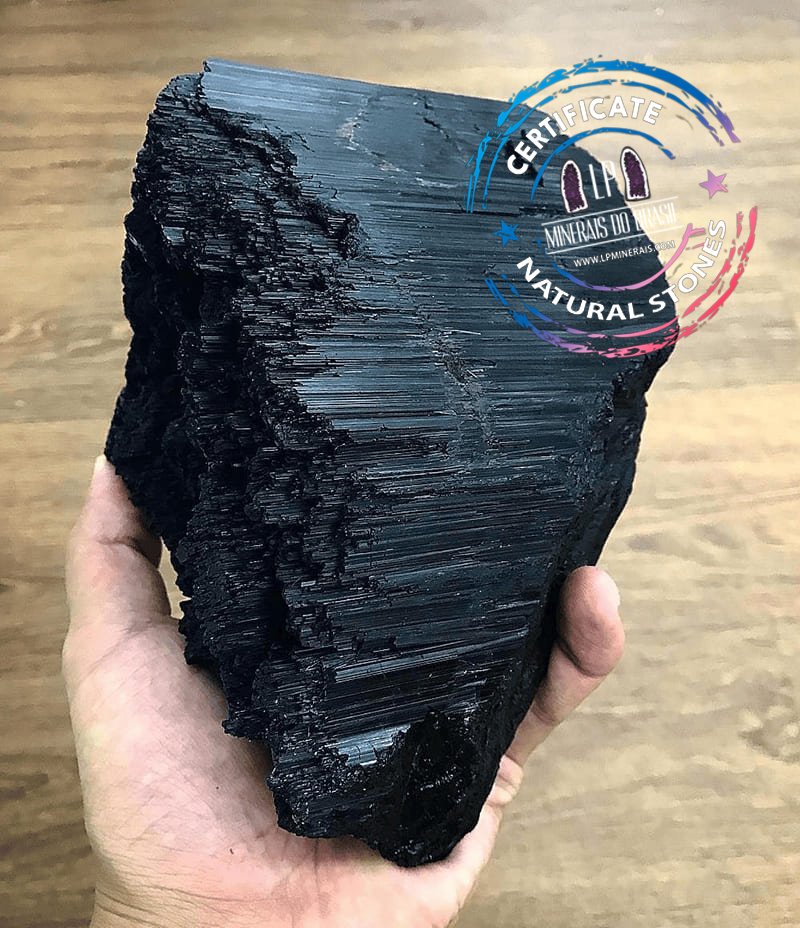
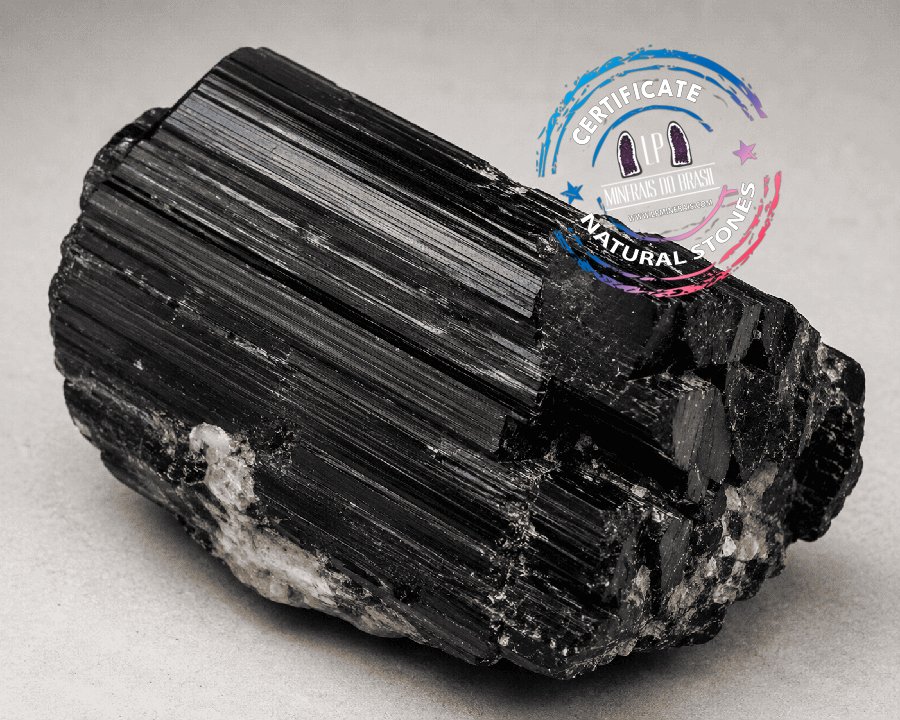
Even for those unfamiliar with the world of spirituality, Black Tourmaline draws attention for its unique appearance. Its prismatic crystals, typically elongated and marked by longitudinal striations, make it easily recognizable among various minerals.
These natural characteristics make well-crystallized specimens highly prized by collectors. Intact crystals of good size with preserved terminations often attract interest in both private collections and museums and mineralogical exhibitions.
Its beauty does not depend on transparency, intense luster, or vibrant colors. On the contrary, it is precisely the understated elegance of its black crystals that makes tourmaline one of the most admired mineral species in the world.
How is Black Tourmaline Formed?
Black tourmaline forms primarily in pegmatitic and metamorphic environments, where solutions rich in various chemical elements promote the growth of its characteristic prismatic crystals. This process takes place over thousands or millions of years, resulting in specimens that can range from small crystals to impressive, large-scale formations.
The tourmaline group has a highly complex chemical composition, which is why it exhibits a wide variety of colors. In the case of Black Tourmaline, the high iron content is responsible for its characteristic color and for distinguishing it from other varieties found in nature.
Brazil and Black Tourmaline
Brazil plays a leading role in global tourmaline production and is home to significant deposits distributed primarily across the states of Minas Gerais, Bahia, and Paraíba. The quality of Brazilian specimens has earned them widespread recognition in the international mineral market, supplying the jewelry industry as well as collectors and export markets.
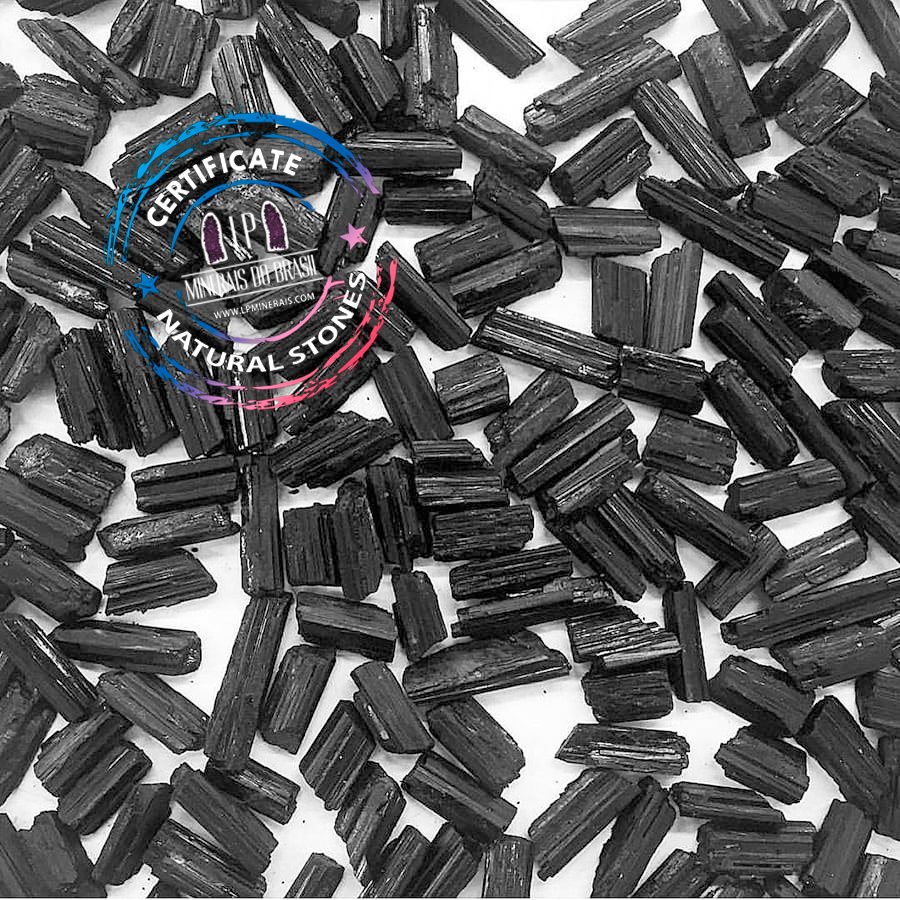
In addition to crystals intended for cutting, the country also produces rough specimens that are highly prized by collectors, interior designers, and companies specializing in ethically sourced natural minerals.
The promotion of responsible supply chains, aligned with Fair Trade principles, further strengthens the role of Brazilian Black Tourmaline as a mineral of economic, scientific, and cultural importance.
Black Tourmaline in Jewelry: Elegance, Personality, and Meaning
Although it is known primarily for its rough crystals, Black Tourmaline has also made a name for itself in contemporary jewelry. Its striking appearance allows for the creation of sophisticated, minimalist, and timeless pieces that appeal to both men and women.
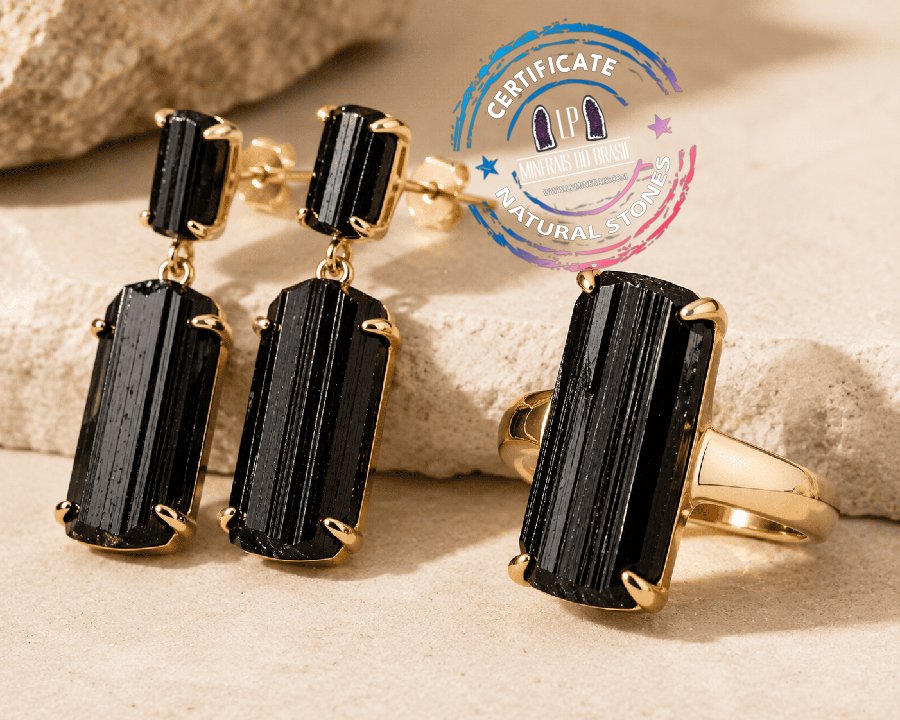
In jewelry, it is commonly found cut into cabochons, geometric shapes, or partially preserving the crystal’s natural appearance. Yellow gold, rose gold, and 925 sterling silver create excellent contrasts with the stone’s deep black color, resulting in elegant pieces that can be worn both in everyday life and on special occasions.
Beyond its aesthetic appeal, many people choose to wear Black Tourmaline for its traditional symbolism. Rings, pendants, bracelets, and necklaces are often worn as a daily reminder of the importance of maintaining balance, focus, and emotional stability in the face of life’s challenges.
LP MINERALS Fun Fact 💎
Black Tourmaline has a very interesting physical characteristic: it can develop piezoelectric and pyroelectric properties, generating small electrical charges when subjected to mechanical pressure or temperature changes. These properties are studied by science and differ completely from the energetic interpretations attributed to the stone in crystal therapy traditions.
Far Beyond Crystals: Decor, Collectibles, and the Mineral Market
The beauty of Black Tourmaline is not limited to jewelry. Preserved natural crystals, sculptures, cut columns, decorative pieces, and specimens in matrix occupy a prominent position in the international mineral market.
In interior design, its intense color creates an elegant contrast with natural woods, light-colored marbles, exposed concrete, and contemporary settings. Living rooms, offices, medical offices, and reception areas often feature Black Tourmaline specimens as focal points, highlighting both their appearance and the symbolism traditionally associated with protection and balance.
For collectors, well-formed crystals with preserved striations and intact natural terminations represent specimens of great mineralogical interest. In the international trade, Brazil plays a significant role as a supplier of natural materials for jewelry, interior design, collecting, and export.
How can you identify a natural Black Tourmaline?
Due to its popularity, Black Tourmaline also has imitations made from glass, resins, and other synthetic materials. Although some reproductions look similar from a distance, they typically do not reproduce the crystalline structure characteristic of the mineral species.
Natural crystals typically exhibit very distinct longitudinal striations, prismatic growth, and small irregularities formed over millions of years of crystallization. In addition, density, hardness, and various optical properties aid in identification by specialized professionals.
Whenever possible, it is recommended to purchase minerals from companies that clearly disclose their origin, authenticity, and commitment to responsible mining and marketing practices.
🗺 LP MINERAIS Technical Section ⛏💎📦🗺
🗺 » ORIGIN – Brazil, Madagascar, Pakistan, Afghanistan, Namibia, Mozambique, Nigeria, the United States, and Sri Lanka.
⚛️ » CHEMICAL COMPOSITION – NaFe²⁺₃Al₆(BO₃)₃Si₆O₁₈(OH)₄ (Schorl – the most common variety in the tourmaline group).
🔩 » MOHS SCALE – 7 to 7.5.
🔢 » NUMEROLOGY – There is no mineralogical or scientific consensus on a specific numerological value.
🔅 » MEANING – Traditionally associated with energetic protection, grounding, emotional stability, and inner strength.
🅰️ » SUMMARY – A black variety of tourmaline, known mineralogically as Schorl, widely used in mineralogy, jewelry, decoration, and crystal therapy practices.
✅ » SPECIFICATION – A mineral belonging to the tourmaline group.
🧩 » STATE – Natural mineral.
⚒ » FORMATION – Crystallizes in granitic pegmatites and boron-rich metamorphic environments.
⚠️ » CARE – Avoid strong impacts, drops, and prolonged contact with harsh chemicals.
🛁 » CLEANING – Soft cloth, running water, and mild soap. Dry thoroughly after washing.
🎨 » COLOR – Deep black to slightly brownish black.
☯️ » ZODIAC – Traditionally associated with Capricorn in various crystal therapy traditions. Some traditions also associate it with Scorpio. There is no universal consensus.
🪐 » SOLAR SYSTEM – Traditionally associated with the planet Saturn in various esoteric traditions.
➰ » CHAKRAS – Often associated with the Base (Root) Chakra in crystal therapy practices.
♻ » ELEMENT – Traditionally associated with the Earth element in various esoteric traditions.
💎 » RARITY – Not considered rare, but large, intact crystals with excellent formation are highly valued.
🗳 » CHARACTERISTICS – Elongated prismatic crystals, longitudinal striations, and intense black coloration.
Frequently Asked Questions About Black Tourmaline
Does Black Tourmaline really protect against negative energies?
In crystal healing traditions, it is one of the stones most frequently associated with protection and grounding. These interpretations belong to the field of holistic practices and lack scientific proof.
How can you tell if a Black Tourmaline is genuine?
Natural crystals feature longitudinal striations, a characteristic prismatic structure, good hardness, and specific physical properties. If in doubt, a gemological evaluation is recommended.
Can Black Tourmaline get wet?
Yes. Occasional contact with water is usually not a problem. After cleaning, it is recommended to dry the stone thoroughly.
Is black tourmaline rare?
No. It is the most abundant variety in the tourmaline group, although large, well-preserved crystals are highly valued.
Can Black Tourmaline be used in work environments?
Many people use the stone in offices, medical offices, and professional spaces because they appreciate its traditional symbolism related to focus, stability, and protection.
What is the difference between Black Tourmaline and Onyx?
Despite their similar appearance, they are completely different minerals. Black Tourmaline belongs to the tourmaline group and features striated prismatic crystals. Onyx is a variety of chalcedony belonging to the quartz group.
Does Brazil produce Black Tourmaline?
Yes. Brazil is one of the world’s leading producers of tourmalines, with particularly notable deposits located in Minas Gerais, Bahia, and Paraíba.
Does Black Tourmaline pair well with other stones?
In crystal healing traditions, it is often used in combination with Clear Quartz, Rose Quartz, Amethyst, and Selenite, depending on the intended use. These combinations fall within the realm of holistic practices.
Conclusion
Black Tourmaline has earned its place among the world’s most admired minerals by combining science, beauty, and symbolism in a single crystal. While mineralogy reveals a fascinating geological structure and unique physical properties, various spiritual traditions uphold its reputation as a stone associated with balance, grounding, and protection.
Whether as a rough crystal, a piece of jewelry, a decorative item, or a collector’s specimen, Black Tourmaline continues to spark interest among mineralogists, collectors, designers, and lovers of natural stones. Its discreet, elegant, and striking presence demonstrates that, often, the power of nature lies precisely in the simplicity of its forms.
By: Doris S. Rosa
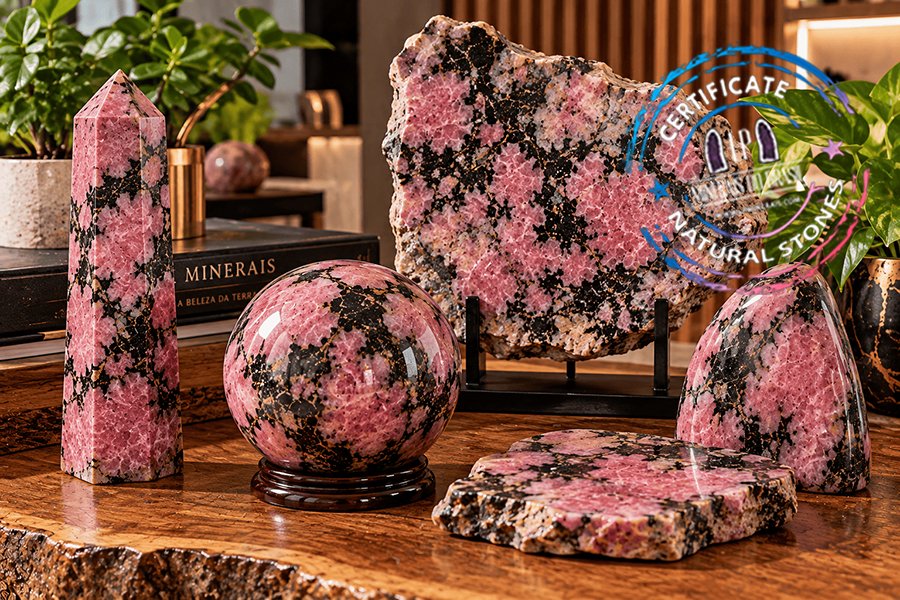
Rhodonite: Why Is It Known as the Stone of Forgiveness and Emotional Healing?
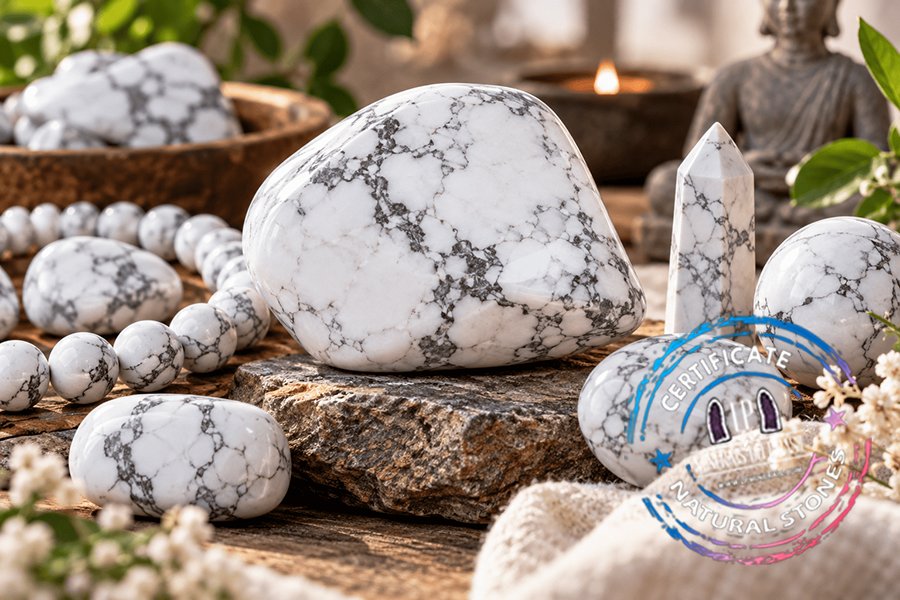
Howlite: what lies behind the Stone of Calm and Inner Silence?
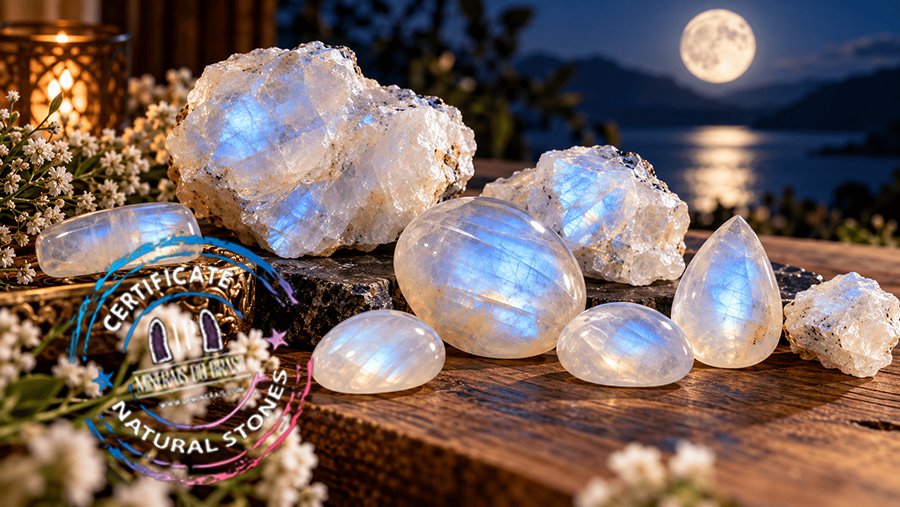
Moonstone: the Stone of Intuition, Feminine Energy, and the Mysteries of the Moon.
Jade: The Stone of Wisdom, Prosperity, and Harmony That Spans Millennia
Angelite: The Stone of Serenity, Intuition, and Spiritual Connection
Green Aventurine: the Stone of Prosperity, Opportunity, and New Paths
Orange Calcite: The Solar Energy That Awakens Creativity and Movement
Black Obsidian: origin, formation, properties, and meaning of one of the best-known protective stones.
Carnelian: origin, formation, mineralogy, and the vibrant energy of a stone linked to action.
Fluorite: Mineralogy, Formation, Colors, and Meaning of a Mineral that Organizes Light and Color