



Some stones impress with their intense luster. Others captivate with their rarity or gemological value. Chrysocolla inspires admiration for a different reason: it seems to bring together, on a single surface, the colors of the Earth itself. Deep shades of blue blend with lush greens, forming natural patterns that resemble landscapes viewed from above, tropical seas, or brushstrokes made by an artist. Even before learning about its geological origin, it’s common for the first reaction upon seeing a beautiful chrysocolla to be simply to gaze at it.
This unique appearance is no accident. Chrysocolla forms in copper-rich environments, where extremely slow geological processes allow for the formation of a mineral with a complex composition and an unmistakable appearance. Each specimen develops its own patterns, making it virtually impossible to find two pieces that are exactly alike.
In crystal healing traditions, chrysocolla is often associated with serenity, mindful communication, and emotional balance. These interpretations belong to the symbolic and spiritual realm, with no scientific proof, but they are part of a tradition established by authors such as Judy Hall and Robert Simmons, making it one of the most prized stones for those seeking to combine natural beauty with personal meaning.
Far beyond spirituality, chrysocolla holds a prominent place in mineralogy, artistic jewelry, interior design, and collecting. Its combination of colors, coupled with its origin linked to the planet’s large copper deposits, makes it one of the most fascinating ornamental stones ever produced by nature.
A stone born from the Earth’s transformation
The history of chrysocolla begins long before human presence. It forms in the so-called oxidation zones of copper deposits, where the action of water, oxygen, and various minerals slowly transforms the geological environment over thousands—and often millions—of years.

This process creates an environment extremely rich in chemical elements. It is precisely this interaction among copper minerals that produces the bluish and greenish hues so characteristic of chrysocolla.
In many deposits, it forms alongside equally famous minerals, such as:
- Malachite;
- Azurite;
- Cuprite;
- Quartz;
- Chalcedony;
- Turquoise (in some regions).
This coexistence results in countless specimens that are true natural works of art, combining different minerals within a single rock matrix.
From a geological standpoint, few stones manage to bring together such a wide variety of textures and colors in a single specimen.
A beauty that no cut can replicate
Unlike many traditional gemstones, chrysocolla does not rely on extremely complex cutting techniques to reveal its beauty.
In fact, many of the most highly valued specimens preserve their natural forms or receive only a careful polish that highlights the patterns formed during their creation.
Each piece functions almost like an abstract painting created by nature.
Some specimens resemble ancient maps.
Others seem to depict the meeting of oceans and continents.
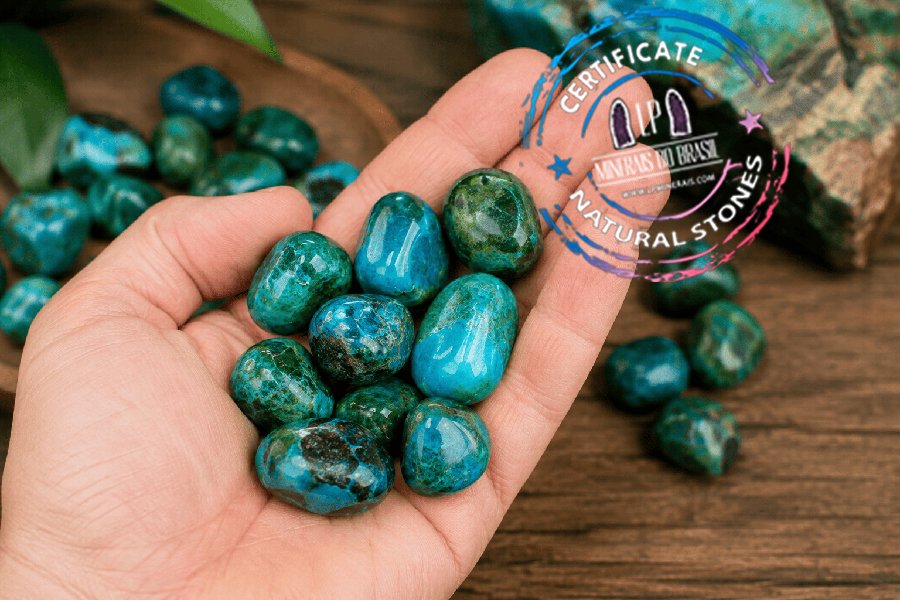
Some feature delicate transitions between emerald green, turquoise blue, brown, and black, creating contrasts that could hardly be imagined artificially.
It is precisely this unpredictability that makes chrysocolla one of the favorite stones of collectors and designers.
When Science and Symbolism Go Hand in Hand
There are minerals whose importance lies solely in geology. Others have gained prominence almost exclusively through spiritual traditions. Chrysocolla occupies a unique place: it sparks interest among mineralogists as well as holistic therapists, jewelers, and artists.
From a scientific perspective, it is a secondary mineral associated with the alteration processes of copper deposits.
From a symbolic perspective, it has traditionally been associated with authentic self-expression, emotional balance, and serene communication.
Perhaps this duality explains why it continues to fascinate such diverse audiences.
Anyone who looks at a beautiful chrysocolla may see an extraordinary mineral.
Or they may see a source of inspiration.
In many cases, they end up finding both at the same time.
A mineral that transforms spaces
Few stones have a decorative presence as striking as that of chrysocolla.
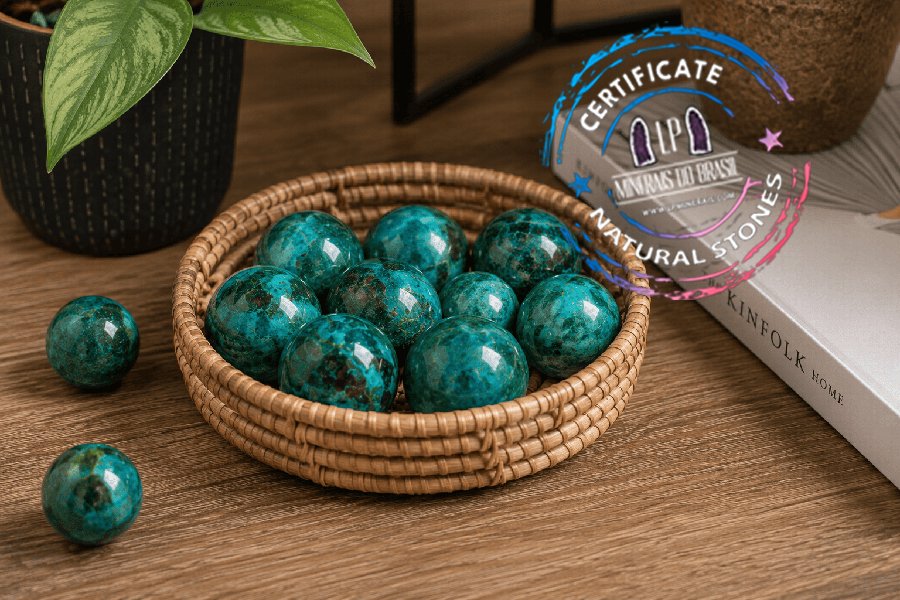
While some pieces draw attention with their luster, chrysocolla captivates with the richness of its natural colors. Even a small specimen can become the focal point of a bookshelf, a coffee table, or an office.
Architects and designers often use sculptures, polished slabs, spheres, and ornamental pieces to introduce an organic element into contemporary spaces.
Its color palette harmonizes particularly well with:
- natural wood;
- exposed concrete;
- light-colored marble;
- brushed metals;
- minimalist decor;
- biophilic designs.
The result usually conveys sophistication without excess, highlighting nature’s own handiwork.
Far beyond beauty: a traditional symbol of balance
In the major works of modern crystal therapy, Chrysocolla frequently appears as a stone associated with inner serenity and conscious communication.
Traditionally, it is used as a symbol for people who wish to develop more attentive listening skills, express their feelings with greater clarity, and cultivate relationships built on balance and respect.
It is also often described as a stone linked to feminine energy—not in the sense of gender, but as a symbolic representation of warmth, sensitivity, creativity, and intuitive wisdom.

Regardless of individual beliefs, this tradition helps explain why chrysocolla remains among the most sought-after minerals for those seeking pieces that combine geological history, aesthetic beauty, and personal meaning.
It’s not just its colors that are impressive.
It impresses because it transforms millions of years of geological processes into a true work of natural art.
A mineral marvel prized around the world
Chrysocolla sparks interest for different reasons, depending on who is observing it. For a geologist, it serves as an important indicator of the presence of copper deposits. For a collector, each specimen holds a unique combination of minerals. For jewelers and designers, however, it is a raw material capable of producing absolutely exclusive pieces.
This versatility explains why chrysocolla holds a special place among gemstones. There is no “perfect standard.” In many cases, it is precisely the pieces that display the greatest variety of colors and patterns that end up being the most highly valued.
A fine chrysocolla can combine, in a single block:
- deep blue;
- emerald green;
- turquoise green;
- brown matrix;
- black veins;
- partially silicified areas.
Each combination offers a true snapshot of that region’s geological history.
When Quartz Meets Chrysocolla
One of the most prized materials on the market is known commercially as Chrysocolla Quartz or Silicified Chrysocolla.
In this natural process, silica-rich solutions slowly penetrate the structure of chrysocolla, increasing its stability and hardness over thousands of years.
The result is a more durable material with excellent polishability and superior luster—characteristics that are highly sought after in high-end jewelry.
It is no coincidence that many cabochons used in rings, pendants, and earrings belong precisely to this silicified variety.
The Traditional Energy of Chrysocolla
Among the stones described by Judy Hall and Robert Simmons, few have an energy as focused on serenity as chrysocolla.
Traditionally, it is associated with compassionate communication, strengthening the inner voice, and the ability to express emotions in a balanced way. In various schools of crystal therapy, it is considered a stone that fosters dialogue, reduces emotional tension, and encourages a more mindful approach to everyday conflicts.
Its symbolism is also often linked to feminine energy, understood as an archetype of nurturing, creativity, intuition, and wisdom.
For this reason, many people choose to keep a piece of chrysocolla in spaces dedicated to rest, meditation, or intellectual work, using it as a visual reminder of the importance of cultivating calm and authenticity.
Traditionally, Chrysocolla is associated with:
- mindful communication;
- serenity;
- emotional intelligence;
- creativity;
- inner balance;
- authentic expression;
- intuitive wisdom;
- feminine energy;
- peace in relationships;
- strengthening of self-esteem.
These associations fall within the realm of holistic practices and vary depending on the tradition followed.
How can you identify natural chrysocolla?
Because of its extremely striking colors, chrysocolla can be mistaken for other copper-rich minerals or even for reconstituted materials.
Certain details help identify natural specimens:
✔ presence of a rock matrix;
✔ irregular transitions between blue and green;
✔ non-repetitive patterns;
✔ a predominantly waxy or vitreous luster, depending on the degree of silicification;
✔ absence of uniform artificial coloring.
Another important aspect is the country of origin. Countries such as Peru, Chile, the Democratic Republic of the Congo, Israel, Mexico, and the United States are known for producing some of the world’s finest chrysocolla. Brazil also has deposits of this mineral, although on a smaller commercial scale.
🗺 LP MINERAIS Technical Note ⛏💎📦🗺
🗺 » ORIGIN – Chile, Peru, the Democratic Republic of the Congo, Israel, Mexico, the United States, and Brazil.
⚛️ » CHEMICAL COMPOSITION – Hydrated copper silicate (with variable composition).
🔩 » MOHS SCALE – 2 to 4 (up to about 7 when naturally silicified).
🔢 » NUMEROLOGY – Traditionally associated with the number 5 in some esoteric traditions.
🔅 » MEANING – Traditionally associated with serenity, communication, inner wisdom, and emotional balance.
🅰️ » SUMMARY – A secondary copper mineral recognized for its intense blue-green hues and high ornamental value.
✅ » SPECIFICATION – A mineral belonging to the group of hydrated copper silicates.
🧩 » STATE – Natural mineral.
⚒ » FORMATION – Forms in the oxidation zones of copper deposits through the action of mineral-rich waters.
⚠️ » CARE – Avoid impacts, harsh chemicals, and prolonged exposure to moisture when not silicified.
🛁 » CLEANING – Soft, dry cloth. When necessary, use a slightly damp cloth and dry immediately.
🎨 » COLOR – Turquoise blue, deep blue, emerald green, bluish green, and a brown or black matrix.
☯️ » ZODIAC – Traditionally associated with Gemini, Virgo, and Taurus in different traditions.
🪐 » SOLAR SYSTEM – Traditionally associated with the planet Venus.
➰ » CHAKRAS – Often associated with the Throat Chakra and the Heart Chakra.
♻ » ELEMENT – Water.
💎 » RARITY – Moderately rare in gemological quality; silicified specimens are especially prized.
🗳 » CHARACTERISTICS – Intense blue-green colors, unique natural patterns, and frequent association with other copper minerals.
Frequently Asked Questions About Chrysocolla
Is Chrysocolla a rare stone?
In ornamental quality, it can be found in several countries. However, specimens with intense coloration, good stability, and an excellent polish are considerably more highly valued.
Can chrysocolla be used in jewelry?
Yes. Especially when naturally silicified, making it more durable for rings, earrings, pendants, and bracelets.
How do you clean chrysocolla?
Use a soft, dry cloth. Avoid leaving the stone submerged for long periods, especially if it is not silicified.
Are chrysocolla and turquoise the same stone?
No. Although they have similar colors, they are different minerals and have distinct chemical compositions.
Which minerals pair well with chrysocolla?
In collections and jewelry, it is commonly found naturally associated with malachite, azurite, quartz, cuprite, and chalcedony.
What is the traditional meaning of chrysocolla?
According to classical literature on crystal therapy, it typically symbolizes serenity, true expression, inner wisdom, and conscious communication.
How can you tell if a chrysocolla is genuine?
Examine the richness of its natural patterns, the presence of a mineral matrix, its origin, and, when necessary, seek a specialized gemological evaluation.
Conclusion
Few minerals manage to combine science, art, and symbolism as harmoniously as chrysocolla. Its origin, linked to large copper deposits, its unique combinations of blue and green, and its frequent association with other minerals transform each specimen into a true work of nature.
At the same time, its traditional significance—widely described in crystal therapy literature—makes it one of the most sought-after stones by people who value emotional balance, mindful communication, and inner growth.
Whether used to build a mineralogical collection, enhance a decor project, or create exclusive jewelry, chrysocolla continues to enchant for the same reason it fascinates geologists, artists, and collectors: no two pieces are alike.
By: Doris S. Rosa
Howlite: what lies behind the Stone of Calm and Inner Silence?
Moonstone: the Stone of Intuition, Feminine Energy, and the Mysteries of the Moon.
Jade: The Stone of Wisdom, Prosperity, and Harmony That Spans Millennia
Angelite: The Stone of Serenity, Intuition, and Spiritual Connection
Green Aventurine: the Stone of Prosperity, Opportunity, and New Paths
Orange Calcite: The Solar Energy That Awakens Creativity and Movement
Black Obsidian: origin, formation, properties, and meaning of one of the best-known protective stones.
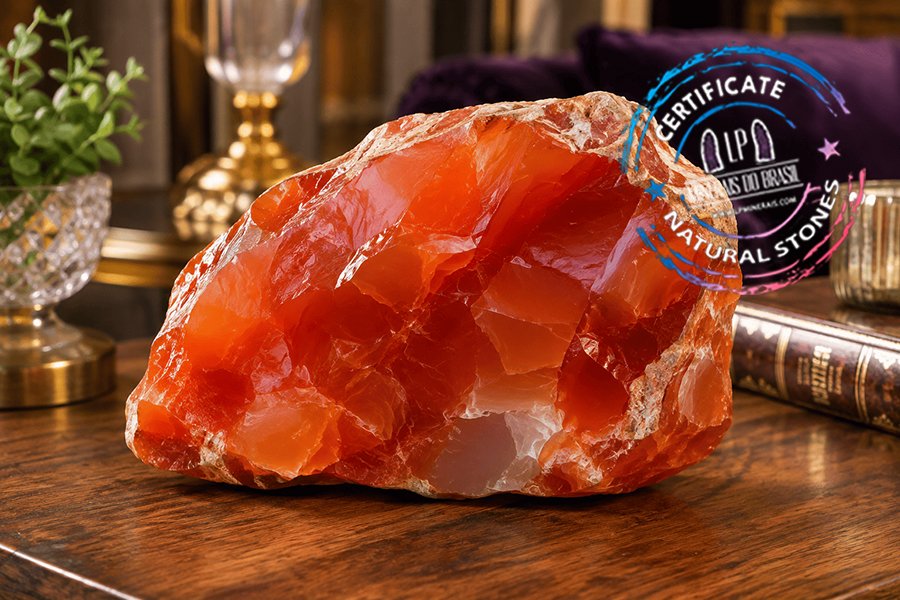
Carnelian: origin, formation, mineralogy, and the vibrant energy of a stone linked to action.
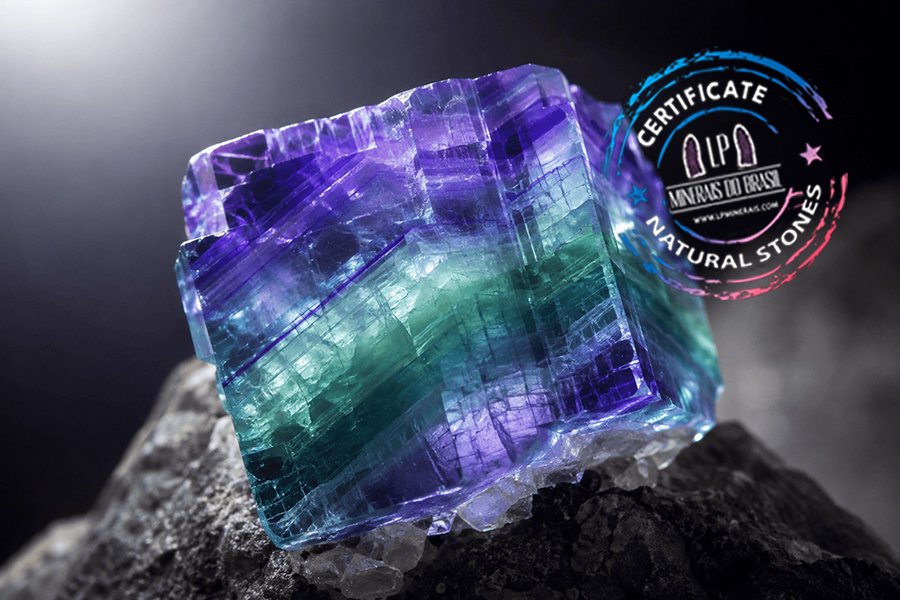
Fluorite: Mineralogy, Formation, Colors, and Meaning of a Mineral that Organizes Light and Color
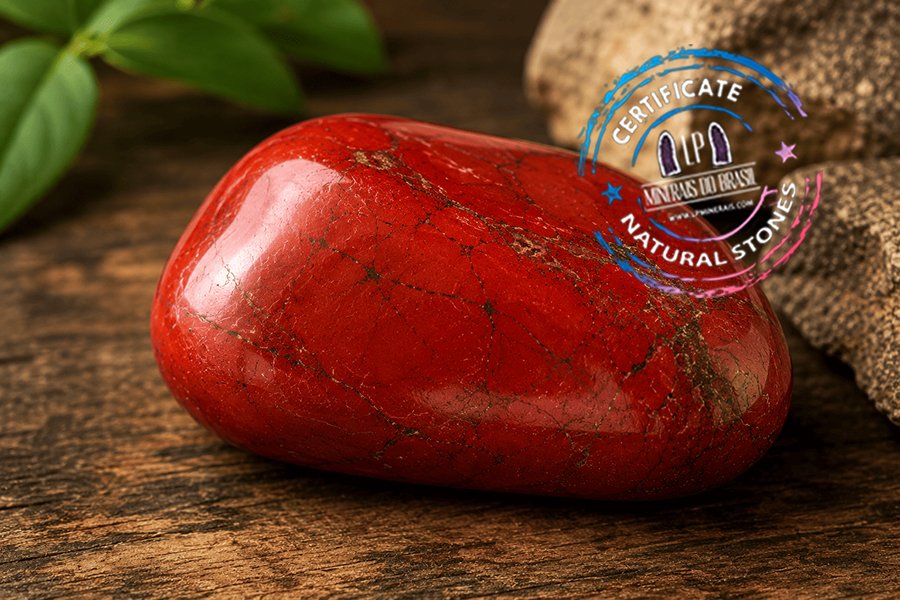
Red Jasper: Mineralogy, Vitality, and the Ancestral Strength of an Earth-Connected Stone