






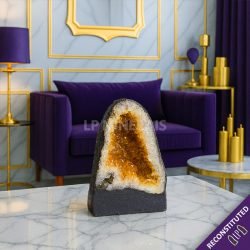


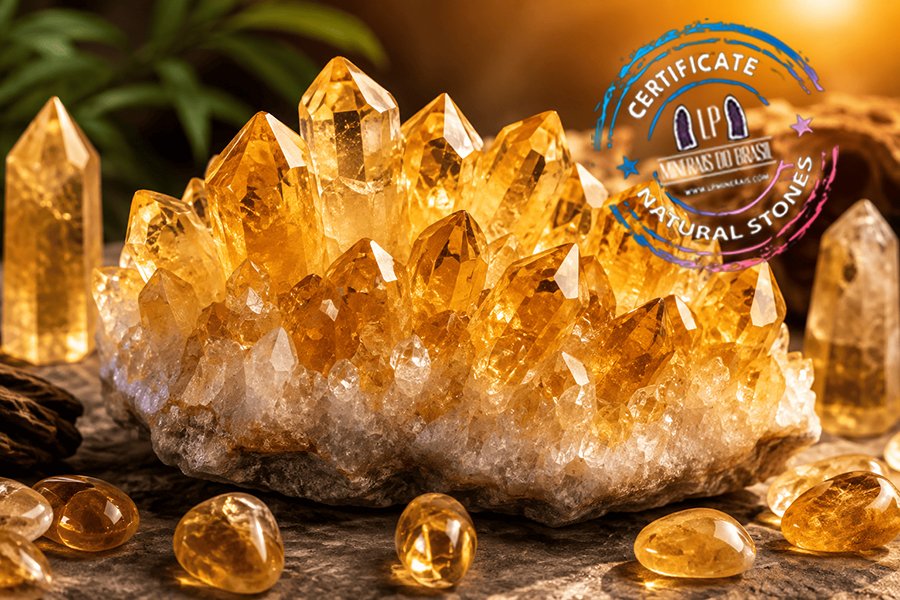
Some stones derive their identity from their rarity, while others impress with their geometry or unusual optical phenomena. Citrine has built its reputation in a different way: its luminosity seems to carry the hues of the sun within the crystal. Ranging from very light yellow to golden, with hints of orange and brown, it belongs to the large quartz family but has developed a history of its own that spans mineralogy, gemology, jewelry, and one of the best-known energetic traditions in the world of crystals.
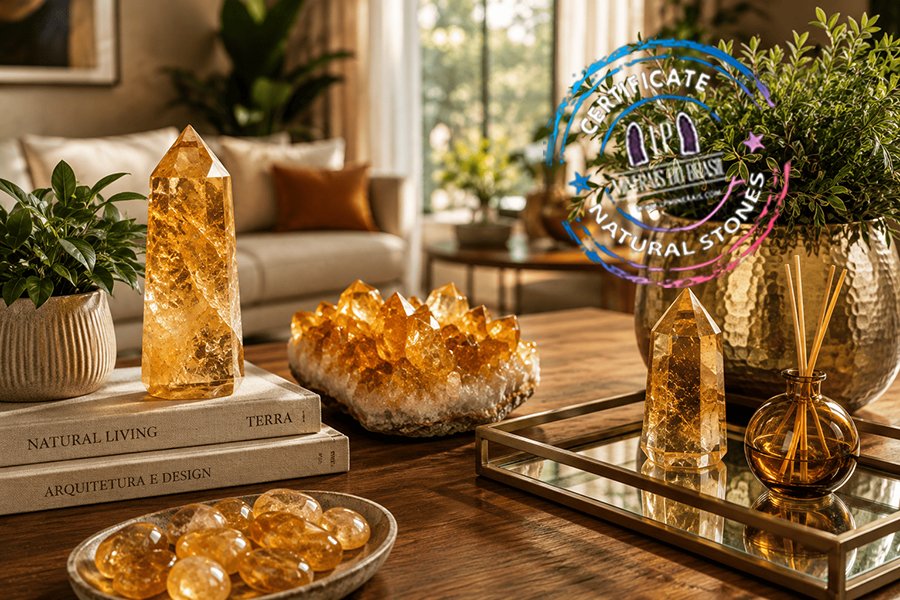
This popularity, however, has also led to a great deal of confusion. Citrine is one of those stones where understanding the origin of its color, treatments, and commercial nomenclature makes a huge difference. Not every yellow crystal sold as Citrine acquired its color through the same geological process, and the vast amount of heat-treated Amethyst on the market often leads the public to believe that natural Citrine is as abundant as store displays make it seem.
Energetically, its history is equally rich. In the crystal therapy tradition established by authors such as Judy Hall and Robert Simmons & Naisha Ahsian, Citrine is deeply connected to prosperity, manifestation, creativity, personal strength, confidence, and the ability to transform intention into reality. It is a stone of movement and expansion, very different from the energies of withdrawal or deep protection that characterize other crystals.
Before delving into this aspect, however, it is necessary to understand what a Citrine truly is. It is precisely when science and tradition converge that this stone becomes far more interesting than the well-known phrase “stone of prosperity” might suggest.
Citrine Is Quartz—But Not All Yellow Quartz Tells the Same Story
Mineralogically, Citrine is a variety of Quartz; therefore, it has the same fundamental chemical composition: silicon dioxide, SiO₂. It crystallizes in the trigonal system and has a hardness of 7 on the Mohs scale, a characteristic that significantly contributes to its use in jewelry. It has a vitreous luster, exhibits no true cleavage, and can develop a conchoidal fracture.
So far, its mineralogical profile appears very similar to that of other varieties of quartz. What radically changes its identity is its color.
In natural Citrine, the yellow hues are primarily related to color centers involving iron incorporated into the crystal and to the geological and structural processes that acted upon it. The subject is more complex than simply stating that “iron turns quartz yellow”: the form in which this element is present, its oxidation state, its structural position, and the thermal and geological conditions of the crystal all contribute to the formation of the color.
This is precisely where Citrine and Amethyst reveal a fascinating relationship. Both belong to the quartz family, and their colors are associated with processes involving iron and color centers, but different conditions produce distinct results.
Natural Citrine tends to exhibit a color that can range from very pale yellow to golden yellow and warmer tones. The distribution of color is also an important clue for gemologists and experienced buyers, although no single visual characteristic is sufficient to determine the origin of the color with absolute certainty.
This is an excellent example of how a seemingly simple stone can hold a rather sophisticated geochemical history.
How Citrine Forms in Nature
The formation of Citrine is part of the same major geological processes that produce Quartz crystals. Silica-rich fluids circulate through fractures, cavities, and hydrothermal systems, and under the right conditions of temperature, pressure, and chemistry, they allow the crystals to grow gradually.
During this growth, small amounts of elements may be incorporated into the structure. In the case of colored varieties of quartz, these elements and the subsequent alterations undergone by the crystal become decisive.
Natural citrine can occur in association with hydrothermal and pegmatitic environments. Depending on the deposit, it appears as isolated crystals, aggregates, or in association with other minerals. Brazil plays a particularly important role in the global market for quartz and its gem-quality varieties, having historically been one of the major sources of materials used by the gemstone industry and the mineral trade.
There is also a particularly interesting occurrence: Ametrine, in which purple zones of Amethyst and yellow zones of Citrine appear within the same crystal. In this case, the stone itself reflects different conditions within a single structure, producing a natural combination that extraordinarily demonstrates the mineralogical proximity between the two varieties.
The formation of Citrine, therefore, cannot be reduced to a simple formula. Temperature, iron, the geological environment, and the crystal’s subsequent history all play a role in a process in which small differences can profoundly alter its final appearance.
Natural Citrine, Heated Amethyst, and the Great Challenge of Authenticity
This is perhaps the most important chapter for anyone buying Citrine.
Much of the yellow to orange material marketed worldwide as Citrine is obtained by heat-treating Amethyst. When certain types of amethyst are heated under controlled conditions, changes in the color-bearing centers can transform the purple into yellow, orange, or reddish-brown hues.
The result can be very beautiful and has a legitimate market. The problem isn’t the treatment itself.
The problem is failing to disclose it.
A natural Amethyst that has been heated remains a natural mineral that has undergone a treatment. Commercially, however, transparency is essential so that the buyer knows exactly what they are purchasing.
Some heat-treated pieces are relatively easy to recognize. Druses that retain the typical morphology of amethyst and feature intensely orange or brownish tips, often with whitish bases, are very common in the market. This appearance is quite different from that of many natural Citrine crystals.
However, visual observation should not be taken as an absolute diagnosis. Cut stones or specimens with less obvious characteristics may require gemological expertise and, in cases involving higher-value stones, laboratory analysis.
There is yet another point that warrants clarification: “treated,” “synthetic,” and “reconstructed” are not synonyms.
- A treated material began as a natural material and had some characteristic modified.
- A synthetic material is artificially produced with a structure and composition corresponding to the natural material it is intended to reproduce.
- Reconstituted materials involve manufacturing processes using mineral raw materials or fragments, depending on the product and the technique used.
For a company that works with natural stone—operating a showroom, providing professional supply services, and exporting—this precision is not merely a technical detail. It is part of the trust between supplier and buyer.
Brazil and Citrine in the Mineral Market
To discuss Citrino without mentioning Brazil would be to overlook an important part of its commercial history. The country holds a historically prominent position in the production of quartz and various gem-quality varieties, with significant deposits found especially in geologically favorable regions of Brazil.
For decades, Brazilian material has supplied gem cutters, jewelers, collectors, wholesalers, and international markets. This presence has also helped solidify Brazil’s image as one of the world’s leading sources when it comes to quartz crystals.
In the market, the value of a citrine does not depend solely on its size. The origin of the color, naturalness, transparency, saturation, color distribution, crystal quality, inclusions, cut, polish, and provenance all influence its valuation.
Natural crystals with good transparency and attractive coloration can generate far greater interest than mass-produced, treated materials. Pieces intended for decoration, however, follow a different set of criteria: dimensions, shape, overall aesthetics, and visual impact carry significant weight.
For LP MINERAIS ⛏💎📦🗺, this is precisely an area where provenance, accurate information, and Fair Trade relationships add value. In the contemporary mineral market, selling a stone shouldn’t just mean handing over a beautiful object. It also means knowing how to explain what it is, where it comes from, and how it reached the buyer.
From Jewelry to Home Decor: Why Is Citrine So Versatile?
With a hardness of 7, good scratch resistance, and excellent polishability, Citrine possesses characteristics that are highly favorable for jewelry. It can be faceted in classic or contemporary cuts, used as cabochons, and set in earrings, rings, pendants, bracelets, and necklaces.
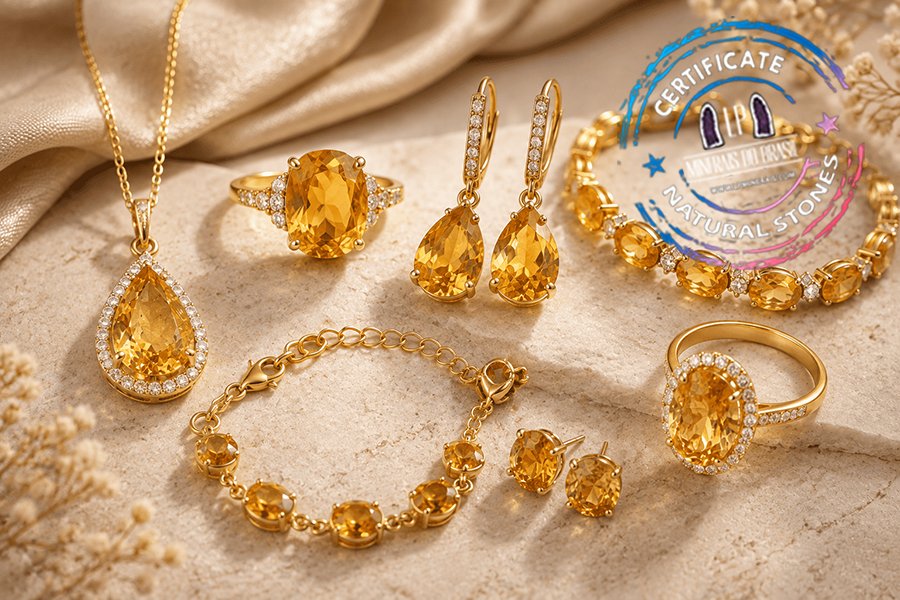
Its color offers another advantage: it pairs easily with both gold and silver metals. In yellow gold, its sunny hue can be intensified; in lighter metals, the contrast tends to highlight the gem’s transparency and its own color.
In interior design, crystals, free-form shapes, spheres, obelisks, and larger pieces introduce a warm presence without necessarily dominating the space. Golden tones work especially well with wood, natural fibers, warm metals, and neutral color palettes.
Its appeal is also quite broad. Citrine interests the mineralogical collector, the gemstone buyer, the designer, the jewelry consumer, and—most significantly—people who seek crystals for their energetic properties.
It is within this last group that its color ceases to be merely a visual characteristic and becomes part of a much deeper symbolism.
Citrine and the Energy of Prosperity
Simply calling Citrine the “money stone” is a very limited way of explaining a much more interesting energetic tradition.
In crystal therapy, Citrine is widely associated with prosperity and abundance, but prosperity here should not be understood merely as receiving resources unexpectedly. Its energy is traditionally linked to the ability to create, take action, trust one’s own potential, and recognize opportunities—qualities that help explain why it has become so closely associated with material fulfillment.
Citrine’s energy has an expansive nature. It symbolically encourages outward movement: presenting an idea, starting a project, developing a skill, taking the lead, and turning intention into action.
This marks an important difference from stones focused primarily on introspection. Citrine doesn’t just ask, “What do you want?” Its symbolism leads to a more concrete question:
What are you willing to do to turn that desire into reality?
It is at this point that prosperity and personal responsibility converge.
Personal Power and the Solar Plexus
Citrine’s association with the Solar Plexus Chakra is one of the most consistent correspondences in its energetic tradition. This center is related to willpower, identity, confidence, autonomy, and the ability to act in the world.
For this reason, Citrine is often chosen at times when a person needs to regain initiative or trust their own decisions more. Its energy is described as stimulating without necessarily carrying the intensity of stones associated with confrontation or profound transformation.
There is something solar about its symbolic language: occupying space without needing to diminish anyone around it.
This interpretation makes Citrine a particularly interesting stone for entrepreneurs, creative professionals, and people starting new projects. It represents the willingness to transform potential into achievement while maintaining a healthy relationship with one’s own self-worth.
Among its strongest traditional associations are:
- confidence and personal power;
- creativity;
- motivation;
- prosperity;
- manifestation;
- willingness to take action;
- openness to opportunities.
These attributes do not function as separate concepts. They form a sequence: confidence fosters action; action opens up possibilities; creativity finds paths; and prosperity comes to be understood as the consequence of a conscious movement toward expansion.
Creativity, Joy, and the Ability to Get Moving Again
There is a dimension of Citrine that is sometimes hidden behind its reputation as the stone of prosperity: its strong connection to creativity and joy.
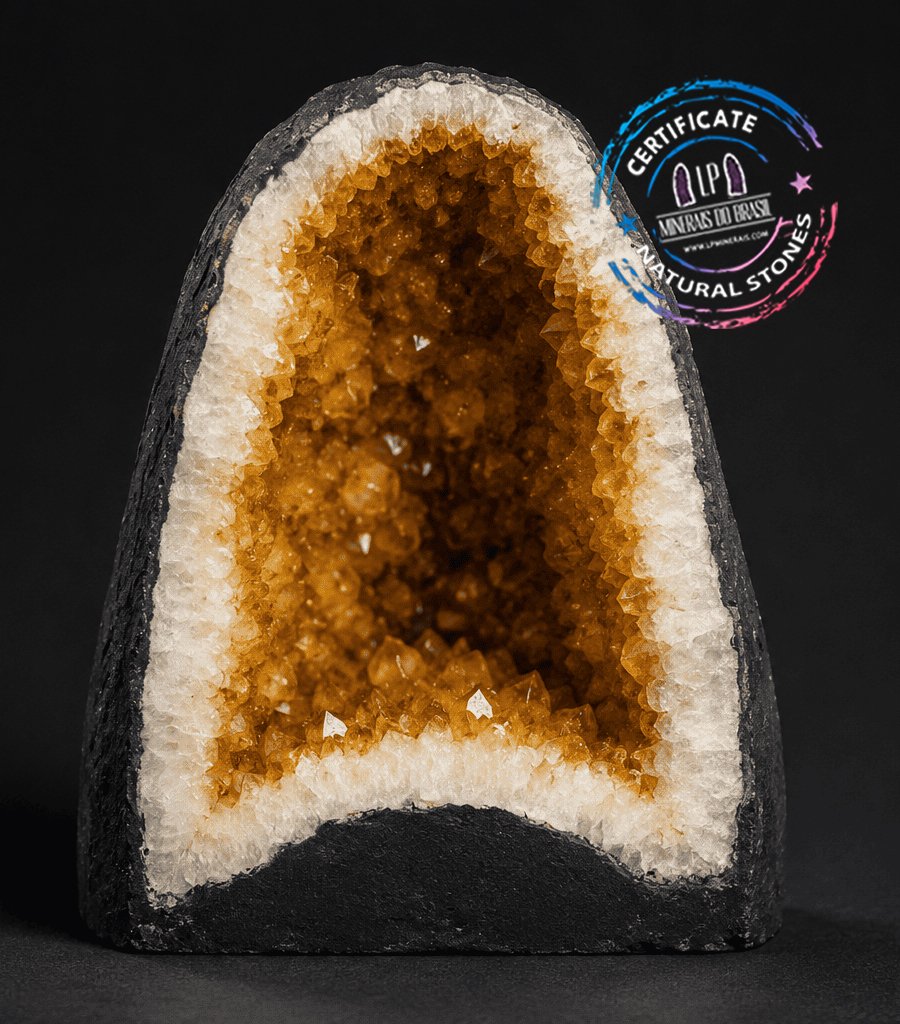
Creativity here is not limited to the arts. It can be the ability to find a different solution to a problem, imagine a new product, change a strategy, or see possibilities where before there was only repetition.
Traditionally, Citrine is associated with an energy capable of stimulating this movement. Its connection to the Solar Plexus also corresponds to the Sacral Chakra in some approaches, bringing together will and creativity.
This combination is particularly interesting because ideas without action remain mere possibilities, while action without creativity can turn into repetition.
Citrine symbolically brings the two together.
It also possesses a quality related to optimism, though not necessarily a naive optimism. The richest interpretation lies in the ability to recognize difficulties without allowing them to dominate one’s entire outlook.
The light of Citrine does not mean denying the shadow.
It means remembering that there is still a path ahead.
Citrine in the Workplace, in Business, and in Spaces of Prosperity
Few stones have become as closely associated with the professional environment as Citrine.
Offices, desks, business cabinets, administrative areas, and spaces where projects are planned are traditional places for its use. In crystal therapy, the intention is to foster prosperity, clarity of purpose, confidence, and the flow of opportunities.
In a business, a piece can be placed near where decisions are made. In a personal office, it can sit on the desk alongside objects related to important projects. For those in creative fields, it can be incorporated into the space used to develop ideas.
It also frequently appears in intention-based practices focused on abundance. In this context, the most interesting approach is not to treat the stone as a passive object to which one makes a request, but as part of a ritual that connects intention and action.
An intention for prosperity accompanied by Citrine can be linked to a concrete decision: organizing finances, developing a project, presenting a proposal, seeking new clients, or finally putting an idea into action.
Thus, the crystal ceases to be merely a symbol of desire and comes to represent a commitment to what one wishes to build.
Manifestation: Transforming Intention into Reality
Manifestation plays an important role in the energetic tradition of Citrine.
To manifest, in this context, means directing intention and energy toward a goal and creating the conditions for it to find concrete expression. That is why Citrine’s relationship with manifestation aligns so well with its connection to personal power.
In meditative practices, one can hold a stone while visualizing a project that has already taken shape—not merely imagining the final result, but also observing the steps necessary to achieve it.
This distinction is fundamental.
Citrine does not represent only the reward.
It represents the drive to build the path toward it.
On prosperity altars, it can be combined with elements that symbolize growth and fulfillment. In business settings, it can occupy a position related to cash flow or future projects. For personal use, pendants, bracelets, and small stones allow you to keep your intention close at hand throughout your daily life.
Energetic Combinations with Citrine
Citrine pairs particularly well with stones that complement its energy without overshadowing its expansive nature.
When paired with Pyrite, it forms one of the most traditional combinations for prosperity and material fulfillment. Citrine adds creativity, confidence, and expansion; Pyrite reinforces determination, structure, and fulfillment.
When paired with Clear Quartz, your intention gains a dimension of clarity and amplification. This combination is widely used in crystal grids, meditations, and altars focused on specific projects.
With Tiger’s Eye, Citrine finds focus, discernment, and stability. This pairing can be especially beneficial in professional settings, where enthusiasm must go hand in hand with sound decision-making.
With Carnelian, energy becomes more creative and dynamic, bringing together motivation, expression, and initiative.
The combination with Black Tourmaline, on the other hand, creates a balance between expansion and grounding. One directs toward growth and opportunity; the other helps maintain stability and boundaries.
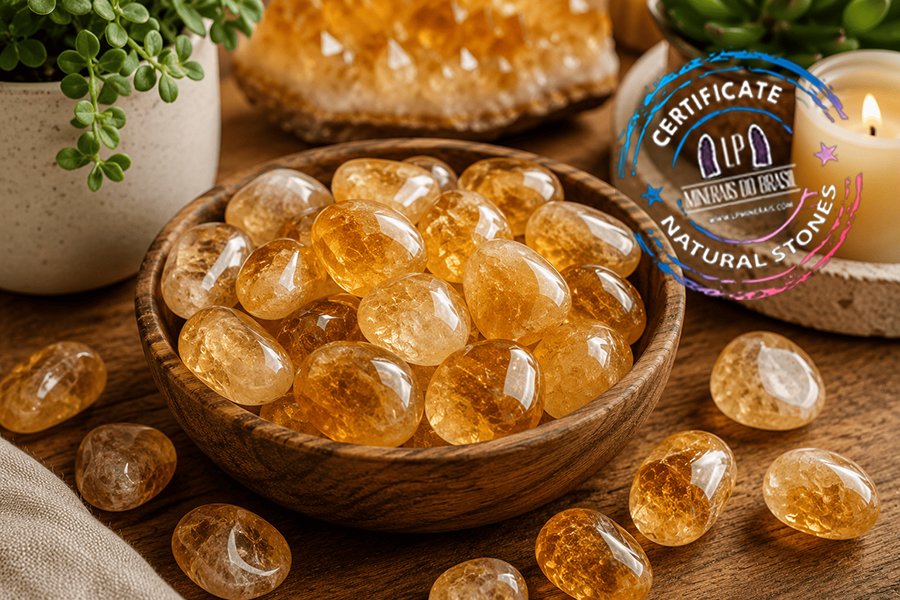
There is no need to combine all these stones at the same time. An energetic combination works best when there is a clear intention behind it.
The Solar Archetype of Citrine
Perhaps the best way to understand the energy of Citrine is to think of the Sun not only as light, but as a force that enables growth.
The Sun warms, drives cycles, and reveals what was hidden. This image emerges very naturally in Citrine’s energetic archetype.
It relates to the ability to recognize one’s own worth without constantly relying on external validation. To the willingness to create rather than merely wait. To the possibility of thriving without interpreting abundance as excess or competition.
For this reason, Citrine can represent a much broader concept of prosperity than just money.
Prosperity can mean having the resources to choose.
It can be turning talent into work.
It can be developing an idea that has been shelved for years.
It can be recognizing opportunities that previously went unnoticed.
It can mean learning to receive after spending so much time only giving.
It is in this sense that its energetic tradition becomes truly interesting. Citrine does not symbolize stagnant wealth.
It symbolizes energy in motion.
And perhaps it is precisely this idea that explains why, among so many stones associated with abundance, Citrine continues to hold such a special place: its prosperity does not begin with what comes from outside.
It begins with the light that a person chooses to set in motion.
Natural Citrine and Treated Citrine: Value Lies in the Information, Too
Citrine’s popularity has created a curious situation in the market: it’s very easy to find a stone being sold under that name, but it’s not always so easy to know exactly what the story behind that material is. To the average consumer, two yellow stones may seem equivalent; for those who work professionally with minerals, gemstones, and crystals, the origin of the color, treatment, provenance, and identification make all the difference.
Heating amethyst to produce yellow and orange hues is a well-known and widely used practice in the gemstone market. The treatment does not automatically make the piece “fake.” The key point is commercial transparency. Untreated natural material and natural material whose color has been altered by heating should not be presented to consumers as if they had exactly the same geological history.
Caution is also needed regarding the countless “rules” for identification circulating on the internet. Very intense color, a white base, a druse-like shape, or an orange appearance may raise suspicions and, in certain cases, are quite characteristic of heat-treated amethyst. However, a photograph or a single visual detail is no substitute for a proper evaluation when the origin of the color truly matters.
This distinction becomes even more important for higher-value specimens, in the world of collecting, and in professional transactions. For the mineral supply chain, information is also part of the product. Clear provenance, responsible nomenclature, and accurate descriptions foster more ethical business relationships—a principle that aligns directly with the Fair-Trade approach championed by LP MINERAIS ⛏💎📦🗺.
Value and Rarity: Why Do Some Citrines Cost So Much More?
Citrine should not be evaluated solely based on the intensity of its yellow color. In the gemological market, several factors come into play simultaneously: transparency, color saturation and uniformity, size, cut quality, the presence of inclusions, known origin, and, above all, the nature of the material and any treatments it may have undergone.
Good-quality natural citrine is less common than the enormous global supply of “citrine” might suggest. This perception is distorted precisely by the abundant presence of heat-treated quartz. Attractive natural specimens, especially those with good crystalline formation and documented provenance, are of interest both gemologically and as collector’s items.
In the ornamental market, the criteria may differ. A large, visually striking piece may be valued for its aesthetic appeal, even if it does not fall into the highest gemological category. In jewelry, transparency, color, and cut take center stage. For a mineralogical collector, however, natural formation, association with other minerals, and locality can be decisive factors.
This creates different buyer profiles for the same variety of quartz:
- collectors interested in natural crystals and provenance;
- jewelers and designers seeking material suitable for cutting;
- consumers of energy stones;
- interior designers and architects;
- therapists and holistic practitioners;
- retailers, wholesalers, and international buyers.
Understanding these differences helps avoid a common mistake: assuming there is a single “citrine price.” In the mineral industry, value depends on what the piece is, how it is presented, and for whom it is relevant.
Citrine Care and Maintenance
With a hardness of 7 on the Mohs Scale, Citrine has good scratch resistance and is much more suitable for everyday use in jewelry than extremely soft minerals. This, however, does not mean it is indestructible.
Strong impacts can cause chips or fractures, especially in cut stones. Harsh chemicals should also be avoided. For daily cleaning, water, mild soap, and a soft cloth or very soft brush are usually sufficient, followed by thorough rinsing and drying.
Another important precaution concerns prolonged exposure to intense light and heat.
Colored varieties of quartz may undergo color changes depending on the nature of their color centers and the exposure they receive. As a precaution, valuable pieces should not be left continuously in intense sunlight, especially in display cases and very warm locations.
In practice:
- protect jewelry from strong impacts;
- avoid harsh chemicals;
- do not use abrasive methods;
- opt for gentle cleaning;
- store cut gemstones separately when necessary;
- avoid prolonged exposure to heat and very intense sunlight.
These are simple precautions that help preserve both collectible crystals and decorative pieces and jewelry.
Energetic Cleansing and Intention
In the tradition of crystal therapy, Citrine has an interesting characteristic: it is often described as a stone of positive, expansive, and transformative energy, associated with the ability to work with dense energies without storing them—unlike many other crystals. Some traditions, therefore, consider that it requires little energetic cleansing.
This does not prevent the practitioner from establishing their own care rituals.
Sound, smudging, conscious intention, or the proximity of a selenite can be used when one wishes to symbolically renew the stone. The choice may depend on how the citrine is used: a piece kept solely in a collection has a different relationship than one used daily in meditative practices, healing sessions, or commercial settings.
More important than mechanically repeating a ritual is understanding the intention behind it. If Citrine represents prosperity, creativity, and movement, cleansing it can also serve as a moment to reassess your goals: Does what I’m trying to manifest still make sense? Are my actions aligned with my intentions? Am I creating space to receive what I say I desire?
In this way, caring for the stone also becomes an opportunity to nurture the purpose associated with it.
LP MINERAIS Technical-Energetic Section ⛏💎📦🗺
🗺 » ORIGIN: Found in various quartz-producing regions around the world. Brazil has a long tradition of producing quartz and associated gem-quality varieties.
⚛️ » CHEMICAL COMPOSITION: Silicon dioxide — SiO₂.
🔩 » MOHS SCALE: 7.
🔢 » NUMEROLOGY: Correspondences may vary depending on the numerological school used; there is no universally accepted mineralogical number for Citrine.
🔅 » MEANING: Prosperity, abundance, creativity, manifestation, confidence, joy, and personal power.
🅰️ » SUMMARY: A yellow-to-golden variety of quartz, highly valued in gemology and the crystal market. In energy traditions, it is strongly associated with solar energy, fulfillment, and the ability to set intentions in motion.
✅ » SPECIFICATIONS: A variety of quartz; trigonal crystal system, vitreous luster, and no true cleavage.
🧩 » FORM: Natural crystals, rough stones, tumbled stones, cut stones, free-form pieces, spheres, obelisks, druses, jewelry, and decorative objects. The market also contains a large quantity of treated material.
⚒ » FORMATION: Related to the crystallization processes of quartz in suitable geological environments, with the presence of iron and color centers contributing to the formation of natural yellow hues.
⚠️ » CARE: Avoid strong impacts, abrasive products, harsh chemicals, excessive heat, and prolonged exposure to intense sunlight.
🛁 » CLEANING: Physically, use water and mild soap, followed by careful drying. Energetically, it can be worked with intention, sound, smudging, or in combination with selenite, depending on the practice used.
🎨 » COLOR: Very light yellow, yellow, golden, and warmer shades, depending on the origin of the color and the characteristics of the material.
☯️ » ZODIAC: Correspondences vary across different traditions; it is often associated with signs of a solar and expansive nature.
🪐 » SOLAR SYSTEM: Sun.
➰ » CHAKRAS: Primarily the Solar Plexus; also related to the Sacral Chakra in certain crystal therapy approaches.
♻ » ELEMENT: Fire, especially due to its symbolism of heat, transformation, action, and solar energy.
💎 » RARITY: Quartz is abundant, but good-quality natural Citrine is considerably less common than the commercial supply labeled “Citrine” might suggest.
🗳 » CHARACTERISTIC: A stone with a strong solar identity, traditionally associated with prosperity, creativity, confidence, manifestation, and expansion.
Frequently Asked Questions About Citrine
What is Citrine used for energetically?
Citrine is traditionally associated with prosperity, abundance, creativity, confidence, and manifestation. Its energy is described as expansive and stimulating, closely related to the ability to set projects and intentions in motion.
This is an important distinction from the simplified notion that it merely “attracts money.” In the tradition of crystal therapy, prosperity also involves recognizing opportunities, developing talents, strengthening self-esteem, and acting in a way that aligns with what one wishes to build.
Is Citrine really the stone of prosperity?
This is one of its best-known energetic associations. Citrine is traditionally associated with material prosperity and abundance, which is why it is widely used in businesses, offices, and manifestation practices.
However, its symbolism should not be interpreted as an automatic promise of financial results. Its richest energetic meaning lies in the combination of intention, confidence, creativity, and action.
Is natural citrine rare?
Quartz, as a mineral species, is extremely abundant. Good-quality natural citrine, however, is much less common than the number of pieces sold under that name might suggest.
This is because a significant portion of the material available on the market is produced by heating amethyst.
Is heated amethyst “fake” citrine?
“Fake” is not the most accurate description. It is natural quartz whose color has been altered by heat treatment. The material does not turn into plastic or glass as a result of being heated.
The commercial issue lies in the information provided. The buyer should know when they are purchasing treated material, especially when the product is presented or priced as untreated natural Citrine.
How can you tell if a Citrine is real?
Observing the color, color distribution, crystal habit, and other characteristics can provide clues, but there is no simple visual test capable of determining authenticity in every case.
For important pieces, a gemological evaluation is the safest option. For everyday purchases, a reliable source and transparency from the supplier are essential.
Can citrine be left in the sun?
It is best to avoid prolonged exposure to intense sunlight, especially for valuable pieces. Color stability may vary depending on the material’s origin and its color centers. For energizing, there is no need to leave citrine under strong sunlight for hours.
Can you wash citrine with water?
Yes. Quartz is not as sensitive to water as minerals such as selenite. Water and mild soap can be used for physical cleaning, provided the piece does not have components, adhesives, or settings that require special care.
Where should Citrine be placed in the home?
According to energetic tradition, it can be placed in areas associated with projects, work, creativity, and prosperity. Offices, study areas, and spaces used for planning are common choices.
It can also be incorporated into altars or energy displays focused on abundance and fulfillment.
Is Citrine good for the workplace?
It is one of the stones traditionally most commonly used in this context. Its association with confidence, creativity, fulfillment, and prosperity makes Citrine particularly well-suited for offices, commercial spaces, and creative environments.
Which chakra is associated with Citrine?
Its primary correspondence is the Solar Plexus Chakra, related to personal power, confidence, willpower, and the ability to achieve. Some traditions also link it to the Sacral Chakra, especially when the focus is on creativity.
Does Citrine go well with Pyrite?
Yes. It is a classic combination for practices focused on prosperity and fulfillment. Citrine adds expansion, creativity, and confidence, while Pyrite traditionally reinforces determination, willpower, and material manifestation.
What is the energetic difference between Citrine and Pyrite?
Although both are closely associated with prosperity, their energies are distinct. Citrine has a more solar, creative, and expansive nature. Pyrite embodies a more structured, determined symbolism linked to manifestation.
From a symbolic perspective: Citrine illuminates possibilities; Pyrite helps to build.
Can Citrine be used in jewelry?
Yes. With a hardness of 7, it is a gemstone well-suited for jewelry. Still, strong impacts should be avoided, especially in rings and pieces worn daily.
Conclusion
Citrine is a great example of why understanding a stone deeply changes the way we see it.
At first glance, it is a yellow quartz of great beauty. When we investigate its history, we encounter geological processes involving silica, iron, temperature, and color centers; we discover its closeness to amethyst; we enter a market where naturalness and treatment must be explained responsibly; and we realize why its transparency and durability have earned it a place in jewelry.
Then we arrive at its energetic tradition—and the well-known “stone of prosperity” reveals a much greater identity.
Citrine speaks of abundance, but it also speaks of capability.
It speaks of the confidence needed to present an idea, the creativity that finds new possibilities, and the willingness to turn intention into action. Its solar symbolism doesn’t simply mean waiting for something good to happen. It means illuminating what already exists within us and setting it in motion.
This is perhaps one of the most beautiful interpretations of prosperity.
It’s not just about having more.
But creating, accomplishing, sharing, receiving, and allowing energy to keep flowing.
Across mineralogy, the market, and the tradition of crystal therapy, Citrine remains one of the world’s most recognized stones precisely because it manages to combine beauty and symbolism into an extremely human message: there are times to protect, times to gather, and times to transform.
And there are moments to shine and build.
For LP MINERAIS ⛏💎📦🗺, this understanding also comes with a responsibility: to value natural stones through information, provenance, conscious business relationships, and a commitment to Fair Trade, strengthening a mineral supply chain where beauty and knowledge go hand in hand—from Brazil 🇧🇷 to the showroom, from professional curation to export.
By: Doris S. Rosa.
Rhodonite: Why Is It Known as the Stone of Forgiveness and Emotional Healing?
Howlite: what lies behind the Stone of Calm and Inner Silence?
Moonstone: the Stone of Intuition, Feminine Energy, and the Mysteries of the Moon.
Jade: The Stone of Wisdom, Prosperity, and Harmony That Spans Millennia
Angelite: The Stone of Serenity, Intuition, and Spiritual Connection
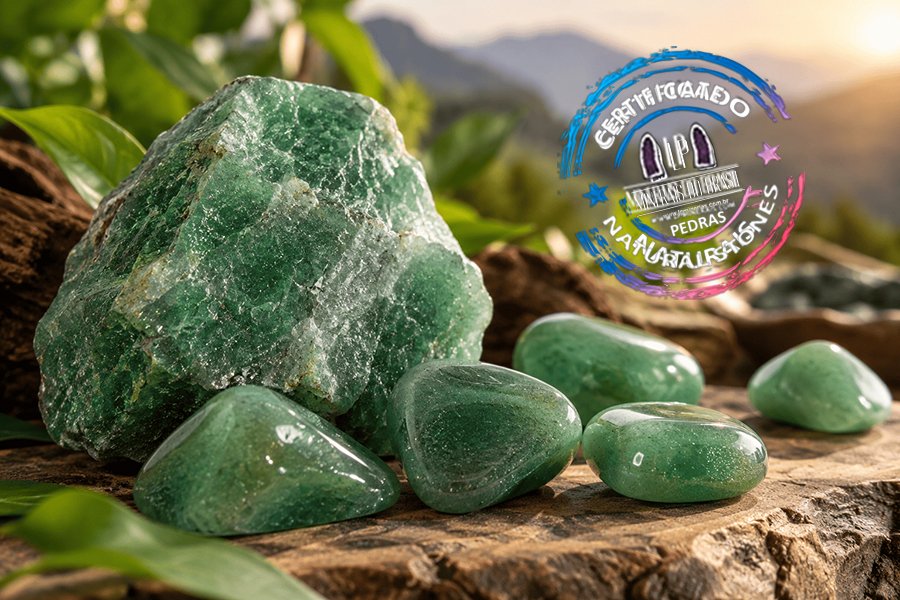
Green Aventurine: the Stone of Prosperity, Opportunity, and New Paths
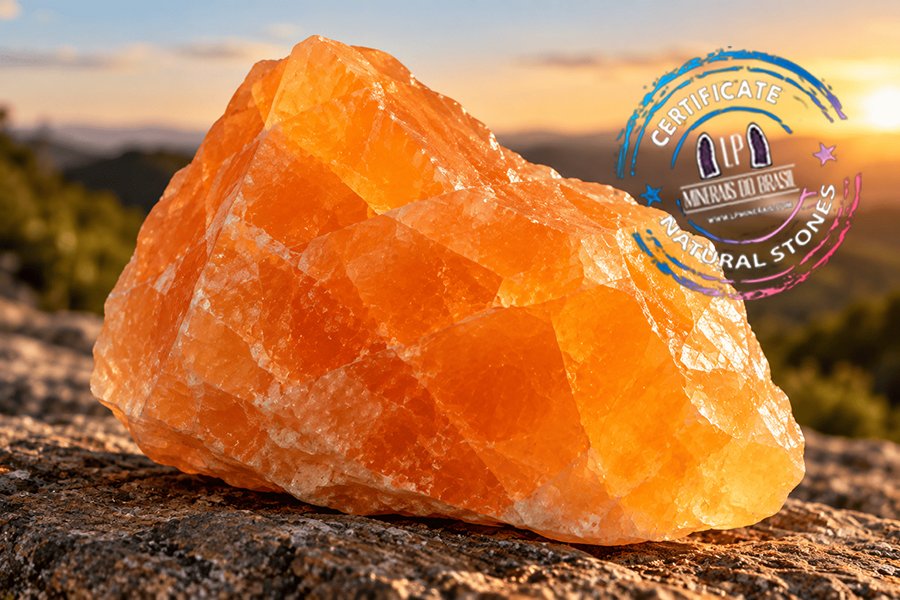
Orange Calcite: The Solar Energy That Awakens Creativity and Movement
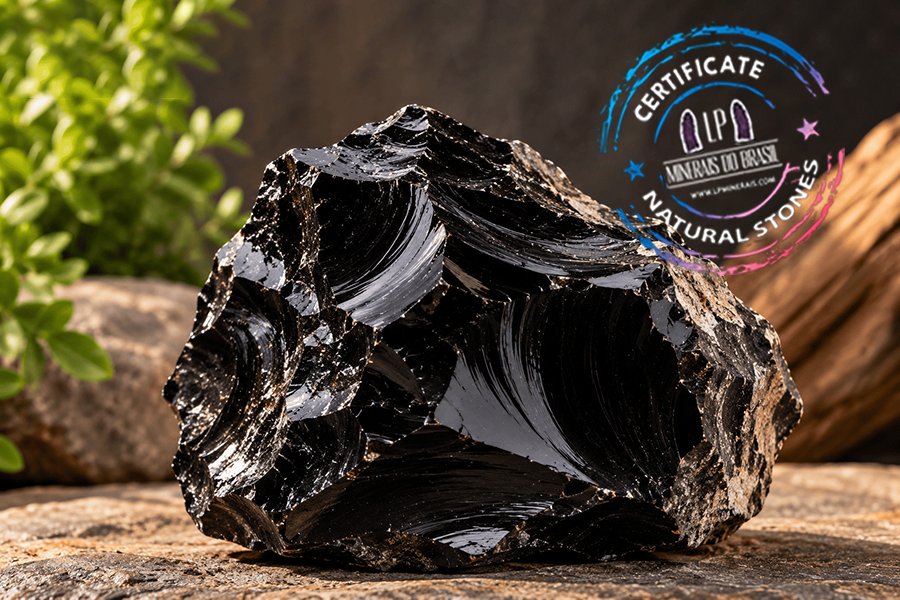
Black Obsidian: origin, formation, properties, and meaning of one of the best-known protective stones.
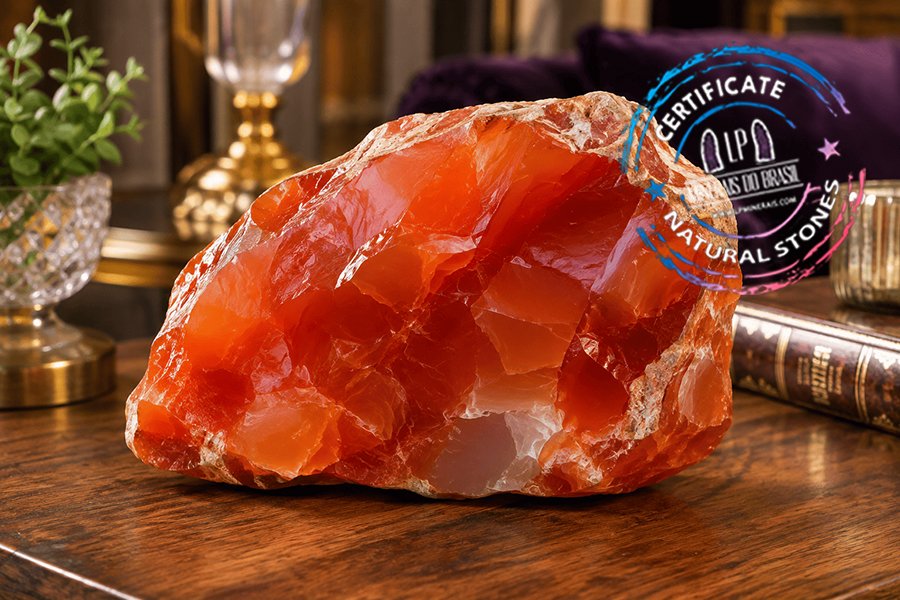
Carnelian: origin, formation, mineralogy, and the vibrant energy of a stone linked to action.
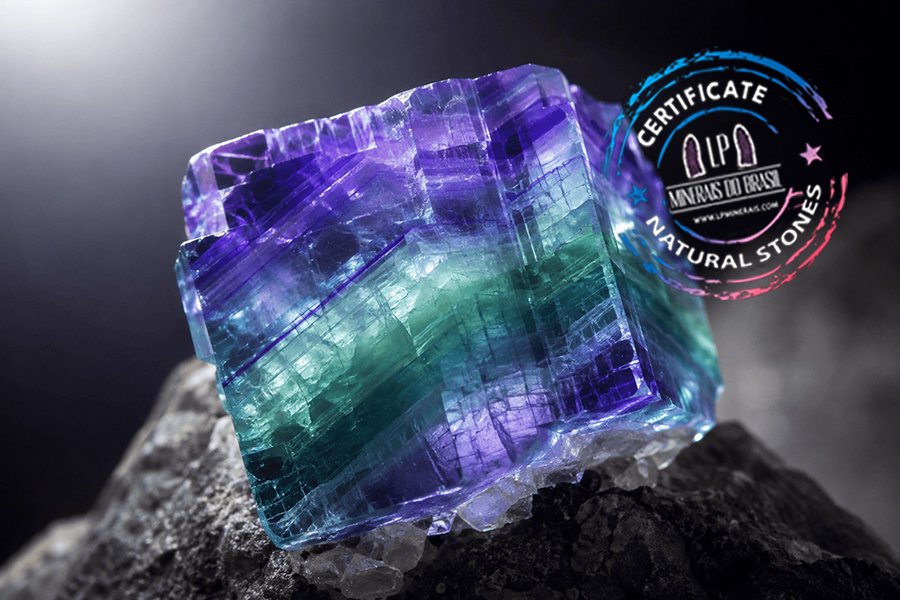
Fluorite: Mineralogy, Formation, Colors, and Meaning of a Mineral that Organizes Light and Color